News|Articles|March 4, 2025

Smart Farming Using AI, IoT, and Remote Sensing

A study by researchers at Universidad de Talca in Chile explores the integration of artificial intelligence (AI), the Internet of Things (IoT), and remote sensing to modernize modern farming. The research highlights how these technologies optimize resource use, improve crop yields, and promote sustainable agricultural practices.

In an era where environmental and resource issues pose significant challenges to global food production, researchers have explored how cutting-edge technologies can enhance smart crop management. A new study, published in the Journal of Sensor and Actuator Networks, emphasizes how the fusion of artificial intelligence (AI), the Internet of Things (IoT), and remote sensing is shaping the future of digital agriculture (1).

Conducted by Fernando Fuentes-Peñailillo, Karen Gutter, Ricardo Vega, and Gilda Carrasco Silva of the Universidad de Talca the study examines the role of these transformative tools in improving farming efficiency and sustainability. The researchers emphasize that by leveraging real-time data collection, predictive analytics, and automation, farmers can make informed decisions that optimize irrigation, fertilization, and pest control (1).

Smart Crop Monitoring Using IoT and Sensor Networks

One of the key innovations discussed in the study is the use of IoT-based sensor networks for real-time crop monitoring. Sensors deployed in agricultural fields continuously measure crucial factors such as soil moisture, temperature, humidity, and plant health (1,2). This wealth of data allows farmers to fine-tune irrigation schedules and nutrient application, reducing water waste and improving overall crop yields.

Additionally, smart irrigation systems (SIS), enhanced with IoT connectivity, ensure precise water distribution, maximizing water-use efficiency (WUE). These systems can automatically adjust irrigation levels based on soil and weather conditions, preventing overwatering and conserving valuable resources.

Remote Sensing Using Satellite and Aerial Imaging for Precision Farming

The study highlights the critical role of remote sensing technologies in large-scale crop monitoring. By utilizing satellite and aerial imagery, farmers can assess soil moisture levels, detect pest infestations, and monitor crop growth with unparalleled accuracy (1).

High-resolution satellite platforms, such as National Aeronautics and Space Administration’s (NASA’s) Landsat 9 and ESA’s Sentinel-2, provide extensive coverage for large-scale agricultural analysis. However, limitations such as cloud cover, coarse pixel resolutions, and delayed data delivery have led to the increased adoption of unmanned aerial vehicles (UAVs) or drones. These drones, equipped with multispectral and near-infrared (NIR) cameras, can capture real-time images of crops, enabling farmers to identify problem areas and take targeted corrective actions (1,2).

The study presents compelling evidence of how UAV-based spectral analysis enhances field assessments. By using vegetation indices such as the Normalized Difference Vegetation Index (NDVI), farmers can classify crops, detect plant stress, and optimize pesticide application to affected areas only. This targeted approach minimizes chemical use and reduces environmental impact (1).

AI and Big Data to Enhance Decision-Making in Agriculture

The integration of AI and big data analytics is revolutionizing how farmers interpret vast amounts of agricultural information. AI-driven models can analyze past and present farming data to identify patterns, predict crop yields, and optimize resource allocation.

Machine learning (ML) algorithms assist in early disease detection by analyzing spectral data from satellite and drone imagery. These AI-driven insights help farmers take proactive measures to protect crops before visible symptoms appear, preventing large-scale losses. Furthermore, AI-powered automation supports farm machinery in executing precision tasks, such as automated harvesting and targeted spraying, reducing labor costs and increasing efficiency (1).

Challenges and Future Prospects in Digital Agriculture

Despite the promising advancements, the study acknowledges several challenges that hinder widespread adoption. High initial investment costs for IoT sensors, UAVs, and AI-driven analytics tools remain a barrier for small-scale farmers. Moreover, managing vast datasets requires specialized knowledge, emphasizing the need for training programs to equip farmers with the necessary digital skills (1).

Data privacy and security are also critical concerns, as extensive data collection raises issues of unauthorized access and cyber threats. The study suggests that robust regulatory frameworks must be established to protect agricultural data and ensure ethical AI implementation (1).

The research underscores the importance of continued collaboration between scientists, agribusinesses, and policymakers to drive the widespread adoption of digital agriculture. As AI, IoT, and remote sensing technologies continue to evolve, their potential to enhance food security and sustainability becomes increasingly evident (1).

By integrating these technologies, agriculture is poised for a paradigm shift, where data-driven decision-making enhances productivity while minimizing environmental impact. The findings provide a roadmap for farmers seeking to embrace digital agriculture and navigate the future of smart farming.

References

(1) Fuentes-Peñailillo, F.; Gutter, K.; Vega, R.; Silva, G. C. Transformative Technologies in Digital Agriculture: Leveraging Internet of Things, Remote Sensing, and Artificial Intelligence for Smart Crop Management. J. Sens. Actuator Netw. 2024, 13 (4), 39. DOI: 10.3390/jsan13040039

(2) Pal, A.; Dubey, S. K.; Goel, S.; Kalita, P. K. Portable Sensors in Precision Agriculture: Assessing Advances and Challenges in Soil Nutrient Determination. TrAC, Trends Anal. Chem. 2024, 180, 117981. DOI: 10.1016/j.trac.2024.117981



Related to this article

2026 SciX Conference Summary ©   Bos Amico -chronicles-stock.adobe.com
SciX 2026, the annual conference presented by the Federation of Analytical Chemistry and Spectroscopy Societies (FACSS), ran October 4–9, 2026, at the Nugget Casino Resort in Sparks, Nevada. The program spanned atomic and molecular spectroscopy, mass spectrometry, chemometrics, and bioanalysis. This report follows the meeting day by day, from Monday's clinical Raman plenaries to Friday's closing talks, drawing on the online program and Spectroscopy coverage of award winners, highlighting efforts to move Raman, SERS, LIBS, and single-particle ICP-MS toward clinical, environmental, and field use.
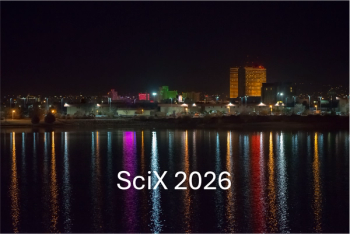
Sparks near Reno Nevada – Site of 2026 SciX Conference ©   DTM Media  -chronicles-stock.adobe.com
Wednesday's program at SciX 2026 kept returning to one question: can spectroscopy perform outside the controlled laboratory? Speakers took surface-enhanced Raman scattering (SERS), laser-induced breakdown spectroscopy (LIBS), mid-infrared photonics, chemometrics, and fluorescence excitation–emission matrix (EEM) spectroscopy into clinics, food plants, reactor coolant loops, brine fields, and drinking water supplies.
NIR Spectroscopy of the Brain and Other Complex Analyses, ©   Navaporn  -chronicles-stock.adobe.com
Near-infrared spectroscopy has quietly stopped being a niche calibration exercise and started acting like an autonomous diagnostic partner, reading consciousness in an injured brain, steering a fermenter without a human hand, and hunting invisible plastic in a glass of water. The tool chemists once used to check moisture in grain is now fusing with artificial intelligence to make decisions no spectrometer could make alone.
FACSS 2026 Award Interviews ©  Erin -chronicles-stock.adobe.com
Eight FACSS award winners at SciX 2026, One LIBS trailblazer. Forty-eight questions. And not one of them is a softball. Award season in spectroscopy usually means polite applause, a plaque, and a photo. We're not completely interested only in the award sessions. The eight scientists honored at SciX 2026 in Sparks, Nevada, along with LIBS researcher Alessandro De Giacomo, are pushing Raman into operating rooms, flying LIBS on drones, reading chemistry off Mars, and tracing toxic metals downwind of industrial sites. Their work makes big claims. In the coming days, Spectroscopy will sit down with eight of these researchers and ask whether those claims hold up. The interviews that follow won't just celebrate. They'll press on the gaps between simulation and experiment, between the lab bench and the clinic, and between a clever paper and an instrument someone will actually buy and use.
2026 SciX Conference Innovation ©   Dilok -chronicles-stock.adobe.com
Four finalists for the FACSS Innovation Award presented on the afternoon of October 8, 2026, at SciX 2026. Their work spanned drone-mounted laser-induced breakdown spectroscopy (LIBS), a touch-and-sound virtual reality system for blind scientists, polarized infrared (IR) imaging of shape memory polymers, and an ultrasound-activated plasmonic nanoplatform aimed at Parkinson’s disease.