Jerome Workman, Jr.

Jerome Workman, Jr. is an Executive Editor for Spectroscopy. Direct correspondence about this article to jworkman@mjhlifesciences.com

Articles by Jerome Workman, Jr.

Liquid pharmaceutical  production line © KamokamoZa - stock.adobe.com

Researchers from the University of Liege have demonstrated the potential of surface-enhanced transmission Raman spectroscopy (SETRS) for detecting impurities in pharmaceuticals. The study highlights SETRS’s superior sensitivity, precision, and efficiency in quantifying toxic impurities like 4-aminophenol (4-AP), offering a promising alternative to traditional methods.

3D render of a protein structure © VRAYVENUS - stock.adobe.com

A recent study by researchers from the University of Belgrade highlights the transformative potential of attenuated total reflectance Fourier transform infrared (ATR-FT-IR) spectroscopy for analyzing protein structures. This versatile method not only provides insights into secondary structures but also excels at tracking aggregation processes, offering advantages over traditional techniques like X-ray crystallography and nuclear magnetic resonance (NMR) spectroscopy.

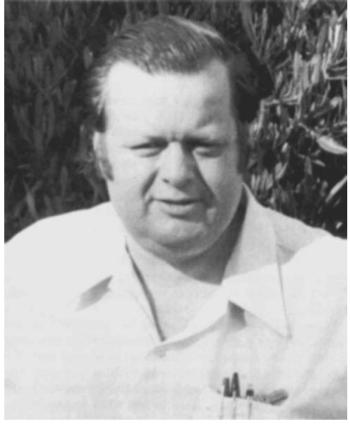
Sir David McMurtry

The world of engineering and innovation mourns the loss of a towering figure with the passing of Sir David McMurtry, CBE, RDI, FREng, FRS, CEng, FIMechE, co-founder and Non-Executive Director of Renishaw. Known for his brilliance, humility, and groundbreaking contributions to metrology and manufacturing, McMurtry leaves a legacy that has profoundly shaped modern engineering.

The future portable and wearable technology © Nicolas - stock.adobe.com

The following is a summary of selected articles published recently in Spectroscopy on the subject of handheld, portable, and wearable spectrometers representing a variety of analytical techniques and applications. Here we take a closer look at the ever shrinking world of spectroscopy devices and how they are used. As spectrometers progress from bulky lab instruments to compact, portable, and even wearable devices, the future of spectroscopy is transforming dramatically. These advancements enable real-time, on-site analysis across diverse industries, from healthcare to environmental monitoring. This summary article explores cutting-edge developments in miniaturized spectrometers and their expanding range of practical applications.

Highlighting artificial intelligence and data analysis applications © Gophotograph - stock.adobe.com

Over the past two years Spectroscopy Magazine has increased our coverage of artificial intelligence (AI), deep learning (DL), and machine learning (ML) and the mathematical approaches relevant to the AI topic. In this article we summarize AI coverage and provide the reference links for a series of selected articles specifically examining these subjects. The resources highlighted in this overview article include those from the Analytically Speaking podcasts, the Chemometrics in Spectroscopy column, and various feature articles and news stories published in Spectroscopy. Here, we provide active links to each of the full articles or podcasts resident on the Spectroscopy website.

Fine powdery brown mixture of fishmeal showing grainy texture © fotogurmespb - stock.adobe.com

Researchers from the University of Iceland and Matis Food and Biotech R&D in Reykjavík have unveiled an innovative study leveraging near-infrared (NIR) spectroscopy for real-time monitoring of fishmeal and oil processing. This advanced method promises to optimize product quality and streamline production, particularly in lipid composition and protein concentration—key markers for high-value fishmeal products.

Spectroscopic Measurements of Microplastics and Nanoplastics in Our Environment © trattieritratti - stock.adobe.com

Microplastics (MPs) and nanoplastics (NPs) are emerging contaminants requiring robust analytical techniques for identification and quantification in diverse environmental and biological matrices. This review highlights various spectroscopy methods, such as Raman, FT-IR, NIR, ICP-MS, Fluorescence, X-ray, and NMR detailing their methodologies, sample handling, and applications for characterizing MPs and NPs.

Microplastic debris floating in ocean water © Arsenii - stock.adobe.com

A novel method using fluorescence labeling and differential Raman spectroscopy claims to offer a more efficient, accurate approach to detect microplastics in seawater. Developed by researchers at the Ocean University of China, this method improves both the speed and precision of microplastic identification, addressing a key environmental issue affecting marine ecosystems.

Caution Sign for invisible near-infrared ytterbium laser ©  Seetwo - stock.adobe.com

A team from Auburn University has developed an innovative ultrabroadband near-infrared (NIR) transient absorption (TA) spectrometer capable of detecting across a wide spectral range of 900–2350 nm in a single experiment. This advancement improves the study of ultrafast processes in low-bandgap materials and opens doors to new insights in photochemistry and charge dynamics.

Hazelnuts displayed near an oil bottle of hazelnut oil ©  OBSIMAGES AI - stock.adobe.com

A recent study showcases the potential of Fourier transform near-infrared (FT-NIR) spectroscopy and spatially offset Raman spectroscopy (SORS) in detecting raw material defects in hazelnuts caused by improper storage conditions. FT-NIR spectroscopy proved especially effective, while SORS offered complementary insights in certain scenarios. These spectroscopic methods could modernize the speed and accuracy of hazelnut inspections in the food industry.

Courtroom in session ©  Kamonwan - stock.adobe.com

A review by researchers from Curtin University comprehensively explores how chemometrics can revolutionize forensic science by offering objective and statistically validated methods to interpret evidence. The chemometrics approach seeks to enhance the accuracy and reliability of forensic analyses, mitigating human bias and improving courtroom confidence in forensic conclusions.

Diagram of a catalysis process, illustrating how a catalyst speeds up a chemical reaction without being consumed  ©  Thirawat - stock.adobe.com

A new review highlights the use of ultraviolet–visible–near infrared (UV–vis–NIR) absorption spectroscopy in studying catalytic processes. The research discusses how this technique uncovers reaction mechanisms, structural properties, and reaction kinetics, particularly in heterogeneous and photocatalysis, and explores its potential for broader applications.

Depiction of medical imaging scan of a human hand and forearm ©  cac_tus - stock.adobe.com

Hyperspectral imaging (HSI) is revolutionizing fields such as agriculture, food safety, and medical analysis by providing high-resolution spectral data. This emerging technology is proving invaluable in diverse applications, including plant stress detection, weed discrimination, and flood management. A new review explores HSI’s fundamental principles, applications, and future research directions.

Scientific facial skin hyperspectral imaging measurements ©  fizkes - stock.adobe.com

Researchers from the University of Minho (Portugal) have developed a hyperspectral imaging database of human facial skin, aimed at improving various scientific applications such as psychophysics-based research and material modeling. The database includes 29 participants with diverse skin tones, providing detailed spectral reflectance data under controlled conditions.

Big data concept. | Image Credit: © your123 - stock.adobe.com.

This column is the continuation of our previous column that describes and explains some algorithms and data transforms beyond those most commonly used. We present and discuss algorithms that are rarely, if ever, seen or used in practice, despite that they have been proposed and described in the literature.

Man holding up a gold trophy cup | Image Credit: © Jag_cz - stock.adobe.com.

This year’s Emerging Leader in Molecular Spectroscopy Award recipient is Joseph P. Smith of Merck, whose research is significantly influencing pharmaceutical process development through his work in various spectroscopic techniques, biocatalysis, protein engineering, vaccine production, and advanced data analysis methods.