
The most viewed Spectroscopy DOI-registered articles from January 2025.

Jerome Workman, Jr. is former Senior Technical Editor of LCGC. He is on the Editorial Advisory Board of Spectroscopy and is the current Assoc. Editorial Director. He is the co-host of the Analytically Speaking podcast and has published multiple reference text volumes, including the three-volume Academic Press Handbook of Organic Compounds, the five-volume The Concise Handbook of Analytical Spectroscopy, the 2nd edition of Practical Guide and Spectral Atlas for Interpretive Near-Infrared Spectroscopy, the 2nd edition of Chemometrics in Spectroscopy, and the 4th edition of The Handbook of Near-Infrared Analysis. He is the recipient of the 2020 NY/NJ SAS Gold Medal Award (with Howard L. Mark). Mark and Workman have written over 250 Statistics and Chemometrics columns for Spectroscopy. Direct correspondence to [email protected]
The most viewed Spectroscopy DOI-registered articles from January 2025.

Researchers highlight the growing role of Internet of Things (IoT) and sensor technologies in enhancing food security and agricultural sustainability. The study, published in Ain Shams Engineering Journal, explores the applications, benefits, and challenges of smart agriculture, emphasizing the potential of optical sensors in monitoring and optimizing farming practices.
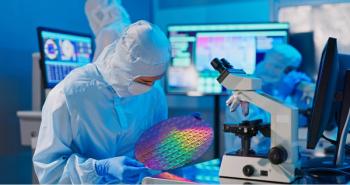
A recent study provides an in-depth overview of the latest advancements in infrared (IR) semiconductor sensor technology, highlighting new materials, enhanced detection capabilities, and expanding applications across industrial, medical, security, and environmental fields. The research explores how quantum dots, graphene, and novel nanomaterials are revolutionizing IR detection, paving the way for more efficient and versatile sensor systems.

Researchers have explored the Raman spectral properties of HgPSe3 thin flakes, revealing their structural uniformity and potential for high-performance ultraviolet-to-visible (UV-Vis) photodetectors. Their study, published in the Chinese Journal of Physics, highlights the material’s strong optoelectronic properties and fast response times.
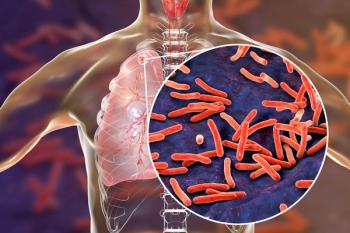
Scientists explore the potential of dilute III-V NIR semiconductors for Tuberculosis diagnostics, offering improved sensitivity and efficiency.
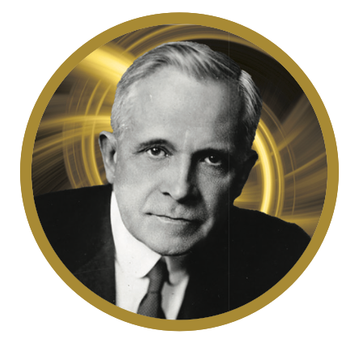
W. W. Coblentz was one of the preeminent researchers in the field of infrared spectroscopy with work spanning a broad range of physics, chemistry, spectroscopic theory, instrumentation, applications, and sample handling. The Coblentz Society was established in his name in 1954 by Norman E. Wright and Van Zandt Williams.

Benjamin T. Manard has won the 2025 Emerging Leader in Atomic Spectroscopy Award for his pioneering research in nuclear material characterization and isotope ratio analysis, with expertise in advanced atomic spectrometry techniques such as inductively coupled plasma optical emission spectroscopy (ICP-OES), inductively coupled plasma mass spectrometry (ICP-MS), and laser ablation.

This “Chemometrics in Spectroscopy” column traces the historical and technical development of these methods, emphasizing their application in calibrating spectrophotometers for predicting measured sample chemical or physical properties—particularly in near-infrared (NIR), infrared (IR), Raman, and atomic spectroscopy—and explores how AI and deep learning are reshaping the spectroscopic landscape.

Researchers have developed a novel approach to improve the accuracy of near-infrared spectroscopy (NIRS or NIR) in quantifying highly porous, patient-specific drug formulations. By combining machine learning with advanced Raman imaging, the study enhances the precision of non-destructive pharmaceutical analysis, paving the way for better personalized medicine.
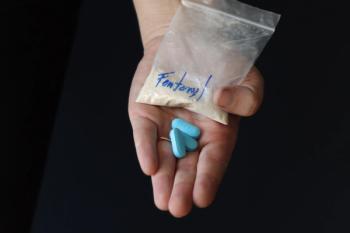
Researchers have successfully demonstrated that human nails can serve as a reliable biological matrix for detecting fentanyl use. By combining attenuated total reflectance-Fourier transform infrared (ATR FT-IR) spectroscopy with machine learning, the study achieved over 80% accuracy in distinguishing fentanyl users from non-users. These findings highlight a promising, noninvasive method for toxicological and forensic analysis.
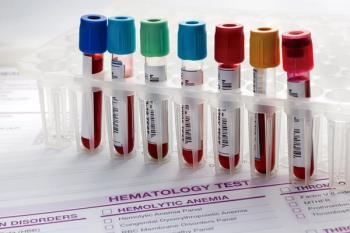
Scientists from China and Finland have developed an advanced method for detecting cardiovascular drugs in blood using surface-enhanced Raman spectroscopy (SERS) and artificial intelligence (AI). This innovative approach, which employs "molecular hooks" to selectively capture drug molecules, enables rapid and precise analysis, offering a potential advance for real-time clinical diagnostics.
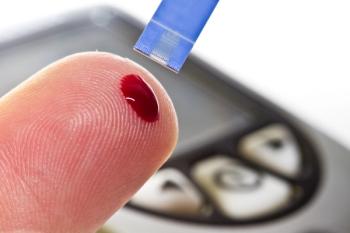
Researchers at the Institute of Photonics and Photon-Technology, Northwest University, China, have described a non-invasive method for monitoring blood glucose using Raman spectroscopy. Their study, published in Spectrochimica Acta Part A: Molecular and Biomolecular Spectroscopy, explores the technique’s effectiveness in both animal models and human subjects, showing promise for future clinical applications.
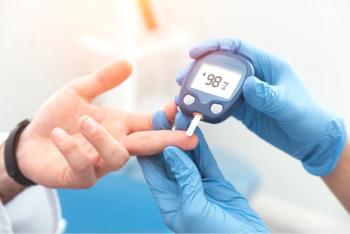
Researchers have developed a small near-infrared (NIR) spectrometer dedicated to achieve painless, accurate glucose measurements.

A research team is claiming significantly enhanced accuracy of non-invasive blood-glucose testing by upgrading Fourier transform infrared spectroscopy (FT-IR) with multiple-reflections, quantum cascade lasers, two-dimensional correlation spectroscopy, and machine learning. The study, published in Spectrochimica Acta Part A, reports achieving a record-breaking 98.8% accuracy, surpassing previous benchmarks for non-invasive glucose detection.

A team of researchers from Nankai University has developed an advanced method to classify tea types using near-infrared spectroscopy (NIRS) and artificial intelligence (AI). Their approach, involves a fine-tuned 1DResNet model, outperforms traditional methods, and offers an accurate, non-destructive, and efficient classification solution for the tea industry.
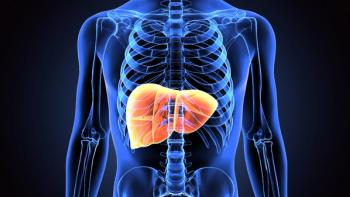
Researchers have explored the potential of combining near-infrared spectroscopy (NIRS) with machine learning (ML) to create a non-invasive, rapid diagnostic tool for liver fibrosis detection, a key factor in transplant surgery planning. These approaches could offer a more accurate and accessible alternative to traditional methods like biopsy.

Scientists demonstrate a self-supervised learning framework that dramatically improves near-infrared spectroscopy classification results, even with minimal labeled data.

In this "Icons of Spectroscopy" column, executive editor Jerome Workman Jr. details how Van Zandt Williams from Perkin-Elmer Corporation and American Cyanamid, and Norman E. Wright from the Dow Chemical Company, have made significant contributions to the field of vibrational spectroscopy.
This excerpt from The Concise Handbook of Analytical Spectroscopy, which spans five volumes, serves as a comprehensive reference, detailing the theory, instrumentation, sampling methods, experimental design, and data analysis techniques for each spectroscopic region.
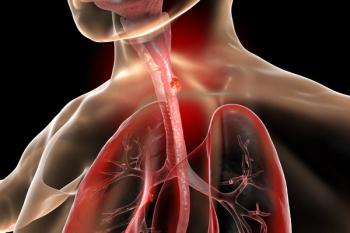
Researchers from Tsinghua University have developed an innovative dual-wavelength Raman spectroscopy method that eliminates fluorescence interference in measuring esophageal tissue samples. This development enables precise identification of molecular changes in these tissues, with potential applications in early esophageal cancer diagnosis.
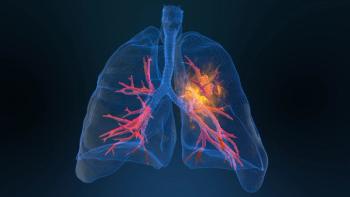
A new study highlights the use of Raman spectroscopy to detect lung cancer and evaluate the effects of the PCV13 vaccine. Researchers found distinct biochemical changes in lung cancer patients and healthy individuals, revealing the vaccine's significant impact on immune response.
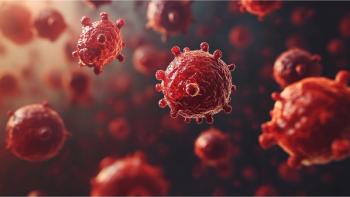
A combination of surface-enhanced Raman spectroscopy (SERS) and machine learning on microfluidic chips has achieved an impressive 98.6% accuracy in classifying leukemia cell subtypes, offering a fast, highly sensitive tool for clinical diagnosis.
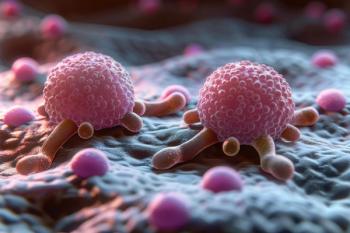
Researchers at the Chinese Academy of Sciences have developed an optical detection strategy for circulating tumor cells (CTCs), combining machine learning (ML) and dual-modal surface-enhanced Raman spectroscopy (SERS). This approach offers high sensitivity, specificity, and efficiency, potentially advancing early cancer diagnosis.

Researchers from the University of Liege have demonstrated the potential of surface-enhanced transmission Raman spectroscopy (SETRS) for detecting impurities in pharmaceuticals. The study highlights SETRS’s superior sensitivity, precision, and efficiency in quantifying toxic impurities like 4-aminophenol (4-AP), offering a promising alternative to traditional methods.

Researchers have developed a rapid, reagent-free method to estimate the saponification value (SV) of edible oils using handheld Raman spectroscopy. This innovative approach simplifies oil quality testing, cutting time and costs while enhancing accuracy and portability.


Researchers from Italy have developed a Raman spectroscopy-based method for the rapid detection of Clostridium spores in milk. This technique offers significant advantages over traditional methods, reducing detection time by nearly half while maintaining sensitivity and reliability.

A recent study by researchers from the University of Belgrade highlights the transformative potential of attenuated total reflectance Fourier transform infrared (ATR-FT-IR) spectroscopy for analyzing protein structures. This versatile method not only provides insights into secondary structures but also excels at tracking aggregation processes, offering advantages over traditional techniques like X-ray crystallography and nuclear magnetic resonance (NMR) spectroscopy.

The world of engineering and innovation mourns the loss of a towering figure with the passing of Sir David McMurtry, CBE, RDI, FREng, FRS, CEng, FIMechE, co-founder and Non-Executive Director of Renishaw. Known for his brilliance, humility, and groundbreaking contributions to metrology and manufacturing, McMurtry leaves a legacy that has profoundly shaped modern engineering.