

A new model corrects errors in analyzing complex mixtures using ATR FT-IR, paving the way for more accurate chemical insights.

Jerome Workman, Jr. is former Senior Technical Editor of LCGC. He is on the Editorial Advisory Board of Spectroscopy and is the current Assoc. Editorial Director. He is the co-host of the Analytically Speaking podcast and has published multiple reference text volumes, including the three-volume Academic Press Handbook of Organic Compounds, the five-volume The Concise Handbook of Analytical Spectroscopy, the 2nd edition of Practical Guide and Spectral Atlas for Interpretive Near-Infrared Spectroscopy, the 2nd edition of Chemometrics in Spectroscopy, and the 4th edition of The Handbook of Near-Infrared Analysis. He is the recipient of the 2020 NY/NJ SAS Gold Medal Award (with Howard L. Mark). Mark and Workman have written over 250 Statistics and Chemometrics columns for Spectroscopy. Direct correspondence to [email protected]
A new model corrects errors in analyzing complex mixtures using ATR FT-IR, paving the way for more accurate chemical insights.
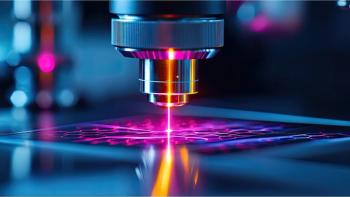
Scientists have developed a novel and creative mid-infrared (MIR) hyperspectral microscope using single-pixel imaging (SPI) technology and a quantum cascade laser (QCL). This innovation offers faster, more cost-effective chemical analysis compared to traditional methods, promising new frontiers in microscopic imaging.

HSI is widely applied in fields such as remote sensing, environmental analysis, medicine, pharmaceuticals, forensics, material science, agriculture, and food science, driving advancements in research, development, and quality control.

This review provides an overview of LIB technology and the spectroscopic techniques employed in LIB analysis.

The following is a summary of selected articles published recently in Spectroscopy on the subject of handheld, portable, and wearable spectrometers representing a variety of analytical techniques and applications. Here we take a closer look at the ever shrinking world of spectroscopy devices and how they are used. As spectrometers progress from bulky lab instruments to compact, portable, and even wearable devices, the future of spectroscopy is transforming dramatically. These advancements enable real-time, on-site analysis across diverse industries, from healthcare to environmental monitoring. This summary article explores cutting-edge developments in miniaturized spectrometers and their expanding range of practical applications.

Over the past two years Spectroscopy Magazine has increased our coverage of artificial intelligence (AI), deep learning (DL), and machine learning (ML) and the mathematical approaches relevant to the AI topic. In this article we summarize AI coverage and provide the reference links for a series of selected articles specifically examining these subjects. The resources highlighted in this overview article include those from the Analytically Speaking podcasts, the Chemometrics in Spectroscopy column, and various feature articles and news stories published in Spectroscopy. Here, we provide active links to each of the full articles or podcasts resident on the Spectroscopy website.

Researchers from the University of Iceland and Matis Food and Biotech R&D in Reykjavík have unveiled an innovative study leveraging near-infrared (NIR) spectroscopy for real-time monitoring of fishmeal and oil processing. This advanced method promises to optimize product quality and streamline production, particularly in lipid composition and protein concentration—key markers for high-value fishmeal products.

Despite its widespread adoption in food quality analysis, near-infrared (NIR) spectroscopy lags behind in regulatory recognition. A study led by researchers from Italy and Spain highlights the disparity between its scientific applications and official methods, urging standardized regulations to fully leverage NIR's sustainability benefits.

Microplastics (MPs) and nanoplastics (NPs) are emerging contaminants that require robust analytical techniques for identification and quantification across diverse environmental and biological matrices. This review highlights various spectroscopy methods, including Raman, FT-IR, NIR, ICP-MS, Fluorescence, X-ray, and NMR, and details their methodologies, sample handling, and applications for characterizing MPs and NPs.

A novel method using fluorescence labeling and differential Raman spectroscopy claims to offer a more efficient, accurate approach to detect microplastics in seawater. Developed by researchers at the Ocean University of China, this method improves both the speed and precision of microplastic identification, addressing a key environmental issue affecting marine ecosystems.

Researchers from UCLA have developed a novel method to synthesize and stabilize anti-Bredt olefins (ABOs), defying long-held beliefs about their instability. This breakthrough, published in Science, paves the way for new applications in synthetic chemistry by leveraging the unique reactivity of these geometrically distorted molecules.

Researchers from the University of Cordoba have validated a novel spectroscopy technique to help distinguish between extra virgin and virgin olive oils. This approach could support existing panel-based tests, which are often slow, costly, and subjective, by providing a faster, non-destructive screening option.

A new review highlights the promising role of non-destructive spectroscopy techniques in enhancing olive and extra virgin olive oil (EVOO) quality assessments. By combining spectroscopy with imaging, researchers uncover innovative ways to determine product authenticity and improve quality control in olive oil production.

A leading-edge review highlights the potential of Raman spectroscopy for fast, non-invasive diagnostics in hematology and oncology. By mapping biochemical fingerprints, this technology could one day help detect cancers, monitor treatments, and even predict immune responses.

Recent research highlights the potential of infrared (IR) spectroscopy as a noninvasive diagnostic tool for cancer detection through blood derivatives. However, significant confounding factors pose challenges to its clinical adoption, necessitating rigorous standard operating procedures.
A team from Auburn University has developed an innovative ultrabroadband near-infrared (NIR) transient absorption (TA) spectrometer capable of detecting across a wide spectral range of 900–2350 nm in a single experiment. This advancement improves the study of ultrafast processes in low-bandgap materials and opens doors to new insights in photochemistry and charge dynamics.

A recent study showcases the potential of Fourier transform near-infrared (FT-NIR) spectroscopy and spatially offset Raman spectroscopy (SORS) in detecting raw material defects in hazelnuts caused by improper storage conditions. FT-NIR spectroscopy proved especially effective, while SORS offered complementary insights in certain scenarios. These spectroscopic methods could modernize the speed and accuracy of hazelnut inspections in the food industry.

A review by researchers from Curtin University comprehensively explores how chemometrics can revolutionize forensic science by offering objective and statistically validated methods to interpret evidence. The chemometrics approach seeks to enhance the accuracy and reliability of forensic analyses, mitigating human bias and improving courtroom confidence in forensic conclusions.

A new review highlights the use of ultraviolet–visible–near infrared (UV–vis–NIR) absorption spectroscopy in studying catalytic processes. The research discusses how this technique uncovers reaction mechanisms, structural properties, and reaction kinetics, particularly in heterogeneous and photocatalysis, and explores its potential for broader applications.
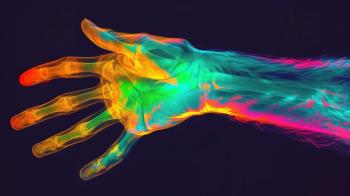
Hyperspectral imaging (HSI) is revolutionizing fields such as agriculture, food safety, and medical analysis by providing high-resolution spectral data. This emerging technology is proving invaluable in diverse applications, including plant stress detection, weed discrimination, and flood management. A new review explores HSI’s fundamental principles, applications, and future research directions.

Researchers from the University of Minho (Portugal) have developed a hyperspectral imaging database of human facial skin, aimed at improving various scientific applications such as psychophysics-based research and material modeling. The database includes 29 participants with diverse skin tones, providing detailed spectral reflectance data under controlled conditions.

This column is the continuation of our previous column that describes and explains some algorithms and data transforms beyond those most commonly used. We present and discuss algorithms that are rarely, if ever, seen or used in practice, despite that they have been proposed and described in the literature.

Researchers from the Shanghai Institute of Technology have developed a leading-edge method using surface-enhanced Raman scattering (SERS) to accurately differentiate between amino acid enantiomers. This breakthrough could revolutionize applications in pharmaceutical synthesis, disease diagnosis, and quality control of chiral compounds.

This year’s Emerging Leader in Molecular Spectroscopy Award recipient is Joseph P. Smith of Merck, whose research is significantly influencing pharmaceutical process development through his work in various spectroscopic techniques, biocatalysis, protein engineering, vaccine production, and advanced data analysis methods.

Researchers from the Max Planck Institute for Polymer Research and the University of Cambridge have revealed new insights into the behavior of water molecules at the surface of saltwater using advanced vibrational sum-frequency generation spectroscopy (VSFG). Their findings challenge long-standing assumptions about ion distribution at these interfaces, which are critical in environmental and chemical processes.

Recent James Webb Space Telescope (JWST) observations have revealed intricate details about the surface compositions of dwarf planets Sedna, Gonggong, and Quaoar. Using spectroscopy, researchers have detected a rich variety of ices and organic compounds, shedding light on the effects of size and orbit on these distant solar system bodies.

Joseph P. Smith, Director of Process R&D Enabling Technologies at Merck has been awarded the 2024 Emerging Leader in Molecular Spectroscopy Award, recognizing his significant contributions to the advancement of molecular spectroscopy in the pharmaceutical industry.

A team of researchers has developed a new machine learning (ML) method to classify asteroid spectra by analyzing meteorite spectroscopic data. Using logistic regression, the model accurately grouped meteorites into eight categories, helping to better understand the distribution of asteroid compositions in the asteroid belt. The study, published in Icarus, opens new avenues for predicting asteroid composition using spectroscopy.

NASA’s OSIRIS-REx spacecraft embarks on a new mission—OSIRIS-APEX—to study asteroid Apophis after its anticipated close flyby of Earth on Friday, April 13, 2029. Utilizing advanced spectroscopy and other instruments, the mission will provide unprecedented insights into how planetary encounters reshape small bodies in our solar system.

A pioneering study integrates laser-induced breakdown spectroscopy (LIBS) with Raman spectroscopy (RS) and applies machine learning (ML) to achieve exceptional accuracy in mineral identification. The combined approach not only leverages the strengths of both techniques but also enhances classification precision, achieving up to 98.4% accuracy.