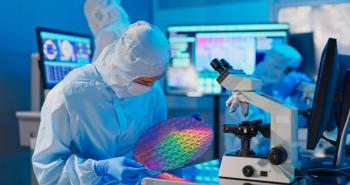
Scientists at Saint Petersburg Electrotechnical University introduced a new method for leveraging Fourier Transform Infrared Reflection Anisotropy Spectroscopy for the analysis of semiconductors.

Jerome Workman, Jr. is former Senior Technical Editor of LCGC. He is on the Editorial Advisory Board of Spectroscopy and is the current Assoc. Editorial Director. He is the co-host of the Analytically Speaking podcast and has published multiple reference text volumes, including the three-volume Academic Press Handbook of Organic Compounds, the five-volume The Concise Handbook of Analytical Spectroscopy, the 2nd edition of Practical Guide and Spectral Atlas for Interpretive Near-Infrared Spectroscopy, the 2nd edition of Chemometrics in Spectroscopy, and the 4th edition of The Handbook of Near-Infrared Analysis. He is the recipient of the 2020 NYSAS Gold Medal Award (with Howard L. Mark). Mark and Workman have written their 250th Statistics and Chemometrics column for Spectroscopy. Direct correspondence to [email protected]

Scientists at Saint Petersburg Electrotechnical University introduced a new method for leveraging Fourier Transform Infrared Reflection Anisotropy Spectroscopy for the analysis of semiconductors.

Researchers at the Leibniz Institute of Photonic Technology have developed a rapid method to correct infrared attenuated total reflection (ATR) infrared spectra, essential for accurate analysis in various scientific fields. By bypassing iterative processes, this approach enhances efficiency and precision.

Spectroscopy spoke with a senior scientist at Google to understand how the company is using light wearable technology like the Fitbit.

Two distinct baseline correction methods: frequency-domain polynomial fitting, and time-domain molecular free induction decay (m-FID) are compared to determine which approach is more effective in reducing baseline errors in infrared absorption spectra.

Researchers in China have developed a cutting-edge machine learning approach that can detect chylous blood in blood intended for transfusion with more than 90% accuracy. This development promises to significantly reduce the risks associated with blood transfusions and improve the efficiency of blood donation centers.

Researchers from Kyoto University and Japan's National Institute of Advanced Industrial Science and Technology have developed innovative probes to monitor the chemical composition of biodegradable polymer blends during injection molding. This breakthrough could lead to improved production efficiency and reduced waste in the polymer industry.

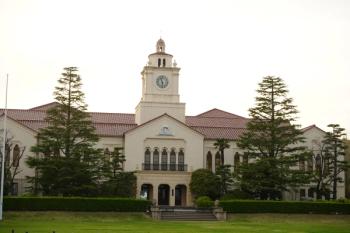
Researchers from Peking University and Kwansei Gakuin University are developing a new approach to analyze intermolecular interactions using two-dimension correlation spectroscopy.

Scientists from Florida International University and Escola Universitària Salesiana de Sarrià Passeig are working on a novel approach to differentiate the structure of fentanyl analogues.

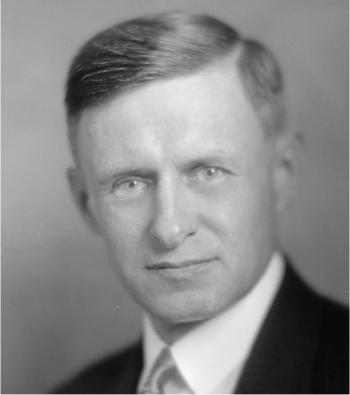
William Frederick Meggers, honored as the Dean of American Spectroscopists by the US National Bureau of Standards (NBS), dedicated over five decades of his career to NBS, which later became the US National Institute of Standards and Technology (NIST) in 1988 under the United States Department of Commerce. We profile his contributions to spectroscopy here.

The award is presented annually at Pittcon to an industrial spectroscopist who has made significant contributions to the field of vibrational spectroscopy while working in industry.

This award is given annually to a researcher who has demonstrated outstanding achievements in the field of spectroscopy.

In this column and its successor, we describe and explain some algorithms and data transforms beyond those commonly used. We present and discuss algorithms that are rarely, if ever, used in practice, despite having been described in the literature. These comprise algorithms used in conjunction with continuous spectra, as well as those used with discrete spectra.

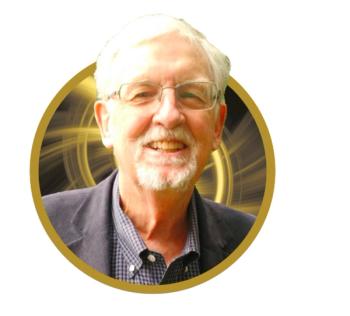
Spectroscopy is publishing a series of feature articles highlighting the lives and careers of the most influential spectroscopists over the past 100 years. These individuals were selected by our Editorial Advisory Board and team of editors to represent the leading figures in spectroscopy over the century. Our second featured Icon of Spectroscopy is Peter R. Griffiths.

Spectroscopy is publishing a series of feature articles highlighting the lives and careers of the most influential spectroscopists over the past 100 years. These individuals were selected by our Editorial Advisory Board and the editors to represent the leading figures in spectroscopy over the century. Our first featured Icons of Spectroscopy Laureate is Professor Gary Hieftje.

In November, Spectroscopy announced the acquisition of Spectroscopy Europe and Spectroscopy World, two leading publications in the spectroscopy space. We remember Ian Michael, the long-time publisher of both magazines, for the contributions he made to the industry.

This year’s Emerging Leader in Atomic Spectroscopy Award recipient is Eduardo Bolea-Fernández. For the past decade, Bolea-Fernández’s research has focused on the development of a newly introduced technique, termed tandem ICP-mass spectrometry (ICP-MS/MS), for ultra-trace elemental and isotopic analysis. Senior technical editor Jerome Workman discusses Bolea-Fernández’s work here.

In our second article in our Icons of Spectroscopy laureate series, we are providing details of the individuals having their names associated with the major awards in spectroscopy (eponyms).

Spectroscopy's laureate series will highlight the lives and careers of some of the most influential vibrational and atomic spectroscopists.

This tutorial illustrates spectroscopic imaging principles, applications, advantages, and limitations for UV-vis, FL, NIR, IR, THz, Raman, XRF, ICP-MS, and LIBS techniques. It provides a guide for understanding spectroscopic imaging for diverse sample types and applications.

At SciX 2023, Robbyn K. Anand will receive the Mid-Career Award from the AES (Electrophoresis Society). Here’s a summary of the award session.

At SciX2023, Maria Montes-Bayón received the Lester W. Strock Award from the New England Society for Applied Spectroscopy. Here’s a summary of the award session.

There is a variation of the MLR calibration algorithm that can reduce sensitivity to repacked sample measurements. We explore that MLR method here in detail.

The James Webb Space Telescope's near-infrared spectrograph (NIRISS) has introduced the single object slitless spectroscopy (SOSS) mode, enhancing our ability to study exoplanet atmospheres with high resolving power. This innovation holds great promise for advancing our understanding of distant worlds and their compositions.

India's Chandrayaan-3 mission is the first successful attempt to land on the moon’s southern region and has uncovered several noteworthy discoveries on the lunar south pole using laser-induced breakdown spectroscopy (LIBS) and other spectroscopic techniques.

Researchers from the Institute of Atomic and Molecular Physics in China looked at MNC dissolved in water and 1,4-dioxane.

Dmitry Kurouski is this year’s recipient of the 2023 Emerging Leader in Molecular Spectroscopy Award for his work in using Raman spectroscopy for noninvasive, nondestructive analyses of biological materials.

A group of scientists in China are using LIBS technology to help accurately classify recyclable waste.

With more than four decades of experience, Larsen made significant contributions to the field of analytical chemistry.

A study published in Scientific Reports has given intricate details into the production and composition of Roman Egyptian blue pigment. Using advanced Raman microspectroscopy, researchers explored pigment balls and murals from ancient Swiss cities, uncovering evidence of raw material provenance, crystal lattice disorder, and the formation of a copper-bearing green glass phase, revealing the sophisticated techniques employed by Roman artisans.

Researchers from Humboldt-Universität in Berlin have utilized ultraviolet resonance Raman (UVRR) spectroscopy to differentiate between bovine serum albumin (BSA) and human serum albumin (HSA) based on their similar structures and amino acid composition. By comparing the UVRR spectra of the proteins with those of specific amino acids, they have identified distinctive features that allow for accurate discrimination and provide insights into the secondary structure and binding sites of serum albumins.