John Chasse

John Chasse is the Managing Editor of Spectroscopy and LCGC. Direct correspondence to: jchasse@mjhlifesciences.com

Articles by John Chasse

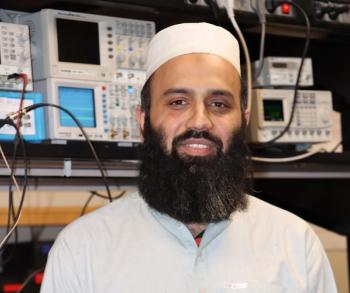
Analytical chemists are continually striving to advance techniques to make it possible to observe and measure matter and processes at smaller and smaller scales. Professor Vartkess Ara Apkarian and his team at the University of California, Irvine have made a significant breakthrough in this quest: They have recorded the Raman spectrum of a single azobenzene thiol molecule. The approach, which breaks common tenets about surface-enhanced Raman scattering/spectroscopy (SERS) and tip-enhanced Raman spectroscopy (TERS), involved imaging an isolated azobenzene thiol molecule on an atomically flat gold surface, then picking it up and recording its Raman spectrum using an electrochemically etched silver tip, in an ultrahigh vacuum cryogenic scanning tunneling microscope. For the resulting paper detailing the effort [1], Apkarian and his associates are the 2021 recipients of the William F. Meggers Award, given annually by the Society for Applied Spectroscopy to the authors of the outstanding paper appearing in the journal Applied Spectroscopy. We spoke to Apkarian about this research, and what being awarded this honor means to him and his team. This interview is part of an ongoing series with the winners of awards that are presented at the annual SciX conference. The award will be presented to Apkarian at this fall’s event, which will be held in person in Providence, Rhode Island, September 28–October 1.

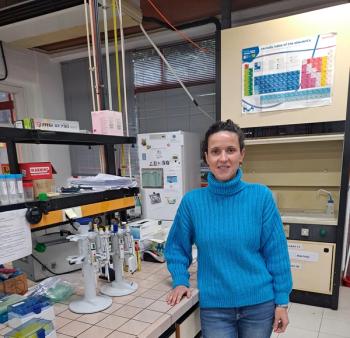
Metallomics approaches based on mass spectrometry have become increasingly important in the support of developing metal-based anticancer drugs. This area is a key focus for Gunda Koellensperger and her colleagues at the University of Vienna (Austria) and they recently published an article discussing this state-of-the-art instrumentation, as well as highlighting recent analytical advances, focusing especially on the latest developments in inductively coupled plasma-–mass spectrometry (ICP-MS).

Tobias Konz of Nestlé Research, Lausanne, Switzerland and various associates have developed and validated what they describe as a reliable, robust, and easy-to-implement quantitative method for multielemental analysis of low-volume samples. The ICP-MS-based method comprises the analysis of 20 elements (Mg, P, S, K, Ca, V, Cr, Mn, Fe, Co, Cu, Zn, Se, Br, Rb, Sr, Mo, I, Cs, and Ba) in 10 μL of serum and 12 elements (Mg, S, Mn, Fe, Co, Cu, Zn Se, Br, Rb, Mo, and Cs) in less than 250,000 cells, and involved the analysis of elemental profiles of serum and sorted immune T cells derived from naıv̈e and tumor-bearing mice. The results indicate a tumor systemic effect on the elemental profiles of both serum and T cells. Konz and his colleagues believe their approach highlights promising applications of multielemental analysis in precious samples such as rare cell populations or limited volumes of biofluids that could provide a deeper understanding of the essential role of elements as cofactors in biological and pathological processes. Konz spoke to us about this work.

Spectroscopy4_i1.jpg

SERS is a method that is receiving new attention in the detection, analysis, and identification of both natural and artificial food colorants. Lili He, at the University of Massachusetts, Amherst, recently spoke to Spectroscopy about this important analytical work.

Angel_web.jpg

Spectroscopy can be difficult to carry out outside a controlled laboratory environment. Imagine, then, the hurdles that would accompany performing spectroscopy in the extreme conditions of deep space or the ocean floor. Mike Angel, a professor of chemistry at the University of South Carolina, has taken on those challenges, working on new types of instruments for remote and in- situ laser spectroscopy, with a focus on deep-ocean, planetary, and homeland security applications of deep ultraviolet Raman, and laser-induced breakdown spectroscopy to develop the tools necessary to work within these extreme environments.

Ammon Williams.jpg

Laser induced breakdown spectroscopy (LIBS) has been applied as quantitative and qualitative analytical method for a variety of matrices. A paper published in the journal Applied Spectroscopy in 2018 (1) was chosen by from the North American Society for LIBS (NASLIBS) and the Society for Applied Spectroscopy (SAS) as the best paper on the topic of LIBS. In this paper, a molten salt aerosol–laser-induced breakdown spectroscopy (LIBS) instrument was used to measure the uranium (U) content in a ternary UCl3–LiCl–KCl salt matrix to investigate the development of a near real-time analytical method. We spoke with Ammon Williams, the primary author of this paper, who is currently with the Idaho National Laboratory (INL), about this work.

Chen, Xiaoyun (Shawn)_web.jpg

The 2019 recipient of the Clara Craver award, Xiaoyun (Shawn) Chen, is a senior research scientist working in the Core R&D Analytical Sciences department of the Dow Chemical Company. Chen, who will receive this award this fall at SciX 2019 in Palm Springs, California, recently spoke to Spectroscopy about his work.

Dr He_web.jpg

Lili He, an associate professor in the Department of Food Science at the University of Massachusetts, Amherst, focuses on developing and applying advanced analytical techniques to solve critical and emerging issues in food science. Recently, that focus has turned to using surface-enhanced Raman spectroscopy (SERS) in the detection, analysis, and identification of both natural and artificial food colorants. Dr. He recently spoke to Spectroscopy about that work.