John Chasse

John Chasse is the Managing Editor of Spectroscopy and LCGC. Direct correspondence to: jchasse@mjhlifesciences.com

Articles by John Chasse

Reflecting on 2024, the editors of Spectroscopy highlight some of the most notable articles and online content on inductively coupled plasma mass spectrometry (ICP-MS) and inductively coupled-optical emission spectroscopy (ICP-OES).

The Institute of Forensic Science and Criminology of Bundelkhand University (Jhansi, India) has used Fourier transform infrared spectroscopy (FT-IR) combined with principal component analysis (PCA) and partial least square regression (PLSR) to investigate adulteration in petroleum products and to design an adulterant profiling method.

Researchers at Texas A&M University (College Station, Texas) presented a novel approach to forensic hair analysis that is based on high-throughput, nondestructive, and non-invasive surface-enhanced Raman spectroscopy (SERS) and machine learning (ML). Using this approach, Dmitry Kurouski and his team investigated the reliability of the detection and identification of artificial dyes on hair buried in three distinct soil types for up to eight weeks.

A multi-organizational team, believing that a reason for slow adoption is a lack of evidence that data taken on one spectrometer can transfer across to data taken on another spectrometer to provide consistent diagnoses, investigated multi-center transferability using human oesophageal tissue. By using a common protocol, the researchers aimed to minimize the difference in machine learning performance between centers.

A recent article authored by scientists from the Institute of Sport and Preventive Medicine, part of the University of Saarland (Saarbrücken, Germany), discusses their investigation of the absolute and relative test-retest reliability of the Moxy Monitor, as well as their investigations into side differences of oxygen saturation at the vastus lateralis muscle of both legs in male cyclists.

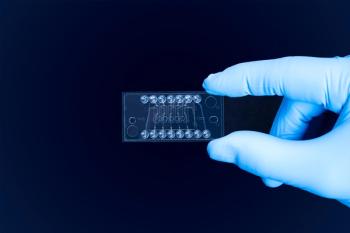
Jason Dwyer of the University of Rhode Island has been named the recipient of the American Electrophoresis Society’s Mid-Career Award, which honors exceptional contributions to the field of electrophoresis, microfluidics, and related areas by an individual who is currently in the middle of their career.
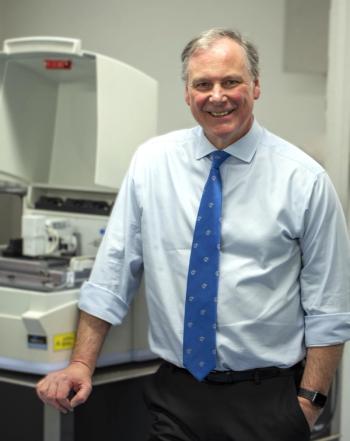
Noureddine Melikechi Image Credit: ©Courtesy of Melikechi

Using logistics regression on laser-induced breakdown spectroscopy (LIBS) spectra of plasma samples collected pre- and post- Covid-19 pandemic from donors known to have developed various levels of antibodies to the SARS-Cov-2 virus, University of Massachusetts physics professor Nourddine Melikechi’s research team has shown that relying on the levels of sodium (Na), potassium (K), and magnesium (Mg) together is more efficient at differentiating the two types of plasma samples than any single blood metal alone. We spoke to Melikechi about this research.

The Coblentz Society created the Clara Craver Award to recognize young individuals who have made significant contributions in applied analytical vibrational spectroscopy. The work may include any aspect of infrared (IR), terahertz (THz), or Raman spectroscopy in applied analytical vibrational spectroscopy. This year’s recipient, Ishan Barman, is an Associate Professor in the Department of Mechanical Engineering at the Johns Hopkins University with joint appointments in Oncology and Radiology and Radiological Science.

The AES Lifetime Achievement Award is given for exceptional career contributions to the fields of electrophoresis, electrokinetics, and related areas. This year’s recipient, James Landers of the University of Virginia, recently published (along with his colleagues) a paper illustrating a technique for fabricating electrophoretic microdevices for fluorescence detection.

Earlier this year, Spectroscopy spoke to Maria Montes-Bayón of the Faculty of Chemistry at the University of Oviedo (Asturias, Spain) regarding her work with single cell inductively coupled plasma mass spectrometry (ICP-MS) to study the uptake and apoptotic status of nanoplatinum (IV) treated cells, specifically selenized yeast.