John Chasse

John Chasse is the Managing Editor of Spectroscopy and LCGC. Direct correspondence to: jchasse@mjhlifesciences.com

Articles by John Chasse

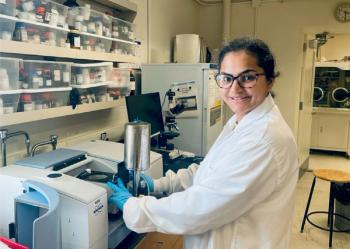
Spectroscopy spoke to Benjamin Manard, Senior R&D Staff Scientist and the Group Leader of the Chemical & Isotopic Mass Spectrometry Group at Oak Ridge National Laboratory (ORNL) as well as to Sarah Szakas and Jordan Stanberry, postdoctoral researchers at ORNL, regarding their work using examined single-particle inductively coupled plasma time-of-flight mass spectrometry (SP-ICP-TOF-MS) as a novel technique for uranium particle isotope ratio measurements.

Metabolite identification is critical in drug development, with mass spectrometry (MS) as the primary tool, but limited in full structural elucidation. Infrared ion spectroscopy (IRIS) overcomes some of these limitations by combining MS sensitivity with IR-based structural fingerprints, enabling characterization without reference standards. Spectroscopy spoke to Giel Berden regarding applications in metabolite identification by determining the site of glucuronidation and phase I oxidation in selected drug molecules.

Researchers from the U.S. Horticultural Research Laboratory’s Agricultural Research Service present a preliminary characterization of the citrus peel materials responsible for elevated high performance liquid chromatography-ultraviolet (HPLC-UV) chromatogram baselines from citrus peel extracts through the use of Fourier-transform infrared (FTIR) and proton-nuclear magnetic resonance (1H-NMR) spectroscopy.

A joint study conducted by Applied Spectra (West Sacramento, California) and the Lawrence Berkeley National Laboratory (Berkeley, California) used laser-induced breakdown spectroscopy (LIBS) to measure uranium with a detection limit as low as 1.3 picograms, achieving unprecedented sensitivity by optimizing the uranium emission line, system hardware, and light collection efficiency. Richard Russo is the corresponding author for the paper that resulted from this research, and will receive, on behalf of the rest of his team, the 2024 Spectrochimica Acta Part B Best Paper Award.

In the final part of our interview with 2025 Charles Mann Award recipient Marc Porter, Distinguished Professor in Chemical Engineering at the University of Utah, imagines a world where diagnosing deadly diseases is as easy as pulling out a handheld device. With portable Raman spectrometers entering decentralized healthcare, even the most remote settings can benefit from instant analysis—slashing turnaround times and costs while boosting patient care.

In the second part of our interview with 2025 Charles Mann Award recipient Marc Porter, Distinguished Professor in Chemical Engineering at the University of Utah, discusses how surface-enhanced resonance Raman scattering (SERRS) enables faster, more reliable detection in point-of-need settings, and explore its potential for real-world clinical deployment.

Spectroscopy speaks with Marc Porter, Distinguished Professor in Chemical Engineering at the University of Utah, for the first of a three-part conversation regarding his work involving the development and evaluation of a highly sensitive biomarker detection strategy using surface-enhanced resonance Raman scattering (SERRS), which offers stronger signal amplification than traditional surface-enhanced Raman scattering (SERS). Porter will receive the 2025 Charles Mann Award, presented to an individual who has demonstrated advancement(s) in the field of applied Raman spectroscopy.

Lisa Flanagan and fellow researchers at the University of California, Irvine (Irvine, California) conducted a study exploring a method to isolate astrocyte-biased human neural stem and progenitor cells (hNSPCs), which are valuable for treating neurological diseases. Flanagan will receive the 2025 Mid-Career Award from the AES Electrophoresis Society, awarded for exceptional contributions to the field of electrophoresis, microfluidics, and related areas by an individual who is currently in the middle of their career.

Spectroscopy spoke to Steven Bell, corresponding author of a paper revealing that aromatic molecules adsorb strongly onto Ag and Au nanoparticles via π-metal interactions under ambient conditions, using surface-enhanced Raman spectroscopy (SERS). This overturns the prior belief that such interactions are weak for IB metals like Ag and Au. Bell will receive the 2025 Charles Mann Award, awarded for outstanding contributions to the chemical sciences in the area of analytical chemistry.

In a paper published in Nature Communications (1), Prashant Jain and a team of researchers from the University of Illinois Urbana-Champaign (Urbana, Illinois) demonstrate how in situ nanoscale surface-enhanced Raman scattering (SERS) can reveal detailed surface chemistry during CO₂ reduction on silver (Ag) nanoparticles under photocatalytic conditions.Jain will receive the 2025 Clara Craver Award from the Coblentz Society, presented annually to an outstanding young molecular spectroscopist whose efforts are in applied analytical vibrational spectroscopy.

The intersection of atomic and molecular physics with astrophysics has become a cornerstone in unraveling the mysteries of the universe. A paper by Diriba Gonfa Tolasa of the Department of Physics at Assosa University (Assosa, Ethiopia) explores the pivotal role of spectroscopic techniques in probing celestial phenomena, enabling researchers to decode the composition, temperature, density, and motion of astronomical objects through the analysis of spectral lines.For this year’s National Space Day, Tosala spoke to Spectroscopy about his paper.

Established to develop a community-sourced glossary covering key functional near-infrared spectroscopy (fNIRS) terms, including those related to the continuous-wave (CW), frequency-domain (FD), and time-domain (TD) NIRS techniques, the fNIRS Glossary Project features over 300 terms categorized into six key domains: analysis, experimental design, hardware, neuroscience, mathematics, and physics. It also includes abbreviations, symbols, synonyms, references, alternative definitions, and figures where relevant.

A recent study conducted at the LaserLaB Amsterdam and Vrije Universiteit Amsterdam (the Netherlands) explored spectroscopic imaging techniques, including Raman and fluorescence microscopy, for characterizing microplastics (MPs), focusing on optimizing sample preparation, particularly density separation, and Nile Red staining.Spectroscopy spoke to Merel Konings, corresponding author of the paper resulting from the study, about her work

Tip-enhanced Raman spectroscopy (TERS) employs localized surface plasmon resonance at the apex of a sharp scanning probe microscopy tip to overcome the diffraction limit inherent in conventional Raman spectroscopy, allowing researchers the ability to access spatial resolutions down to the nanometer scale. This technique has established itself as a powerful tool in nanoscale chemical analysis, delivering previously unachieved spatial resolution with superior molecular sensitivity and chemical specificity.

An effective technique used in the examination of iron atom electronic environments in both biomolecular molecules and whole animal studies, Mössbauer spectroscopy, because of its sensitivity to nuclear hyperfine interactions, yields incredibly accurate data regarding the electronic and magnetic states of nuclei, chemical bonds, and the local electronic environment structure around iron atoms.

By using a handheld NIR spectrometer, researchers aimed to optimize the classification process that makes it possible to differentiate between polyolefin and non-polyolefin films with a single measurement, even for thin films. Their findings could contribute to better recycling processes, helping to address the growing plastic waste problem. Spectroscopy spoke to Hana Stipanovic, corresponding author of a paper resulting from these efforts, about this research.

A joint study between the Institute for Environment and Energy, Technology and Analytics (IUTA e. V., Duisburg, Germany) and Heinrich Heine University Düsseldorf (Germany) explored the combination of size exclusion chromatography (SEC) with diode array detector (DAD) and capillary-enhanced Raman spectroscopy (CERS) to directly analyze hemolyzed serum samples. We spoke to Jana Thissen, first author of the paper resulting from this study, about her team’s work.

A recent study proposed a compact, cost-effective, handheld fiber-optic device using simplified DRS technology to track the accuracy of pedicle screw placement in spinal fusion procedures. Spectroscopy spoke to Merle Losch, corresponding author for the paper resulting from this study, about the device and the team’s efforts to produce it.

In a new study, a team of scientists used gel permeation chromatography, three-dimensional excitation-emission matrix fluorescence spectroscopy, and UV-visible spectroscopy to assess road runoff from drinking water treatment plants to evaluate the method' capacity for removing dissolved organic matter (DOM).

To better determine fish freshness within the context of rapid spectroscopic analyses, salmon fillet was analyzed via hand-held fluorescence and absorption spectroscopy devices across the visible and near-infrared (vis-NIR) range and benchmarked against industry-standard potentiometry and the gold-standard laboratory procedure, nucleotide extraction assays, over a 11-day period.

Cuong Cao from the Institute for Global Food Security at the School of Biological Sciences of Queen’s University in Belfast and his team of researchers conducted a preliminary exploratory study and detected the presence of MPs by automated Raman spectroscopy and subsequently NPs by using nanoparticle-on-film SERS (NPoF SERS) substrate released from chewing gum base plastic, a technique that has potential in screening a varied array of environmental pollutants, as well as a point-of-site tool when coupled with a handheld Raman instrument. Cao spoke to Spectroscopy about this work, and the resulting paper.