Discover how the Avio 3000 ICP-OES delivers robust, high-throughput ASTM D5185 in-service oil analysis with enhanced stability and reduced maintenance needs.
Discover how the Avio 3000 ICP-OES delivers robust, high-throughput ASTM D5185 in-service oil analysis with enhanced stability and reduced maintenance needs.
In today's pharmaceutical laboratories, accuracy, reproducibility, and regulatory compliance are nonnegotiable across every stage of analysis. The LAMBDA® 365+ ultraviolet visible (UV/Vis) spectrophotometer is designed to support pharmaceutical laboratories in meeting these requirements. Its dual-beam configuration, accessory options, and temperature control capabilities enable a range of applications, including quality control testing and biomolecule analysis. This paper explores how this system can be paired with Spectrum UV software, which offers both standalone and client–server configurations to support data management and 21 CFR Part 11 compliance. Together, these features contribute to consistent spectroscopic analysis across the instrument lifecycle.

Webcasts
Webinar Date/Time: Thu, Jul 9, 2026 1:00 PM ED

Webcasts
Webinar Date/Time: Mon, Jun 29, 2026 11:00 AM EDT

UV Boost on Avio 3000 ICP-OES enhances low-UV sensitivity, enabling accurate ppb analysis, reduced interferences, and reliable use of weak emission lines overall gains
Avio 3000 optical system maximizes UV high‑resolution throughput and stability, enabling low‑ppb confidence via UV‑coated optics, enhanced gratings, thermal control
ICP-MS enables GB 5009.268-2025 compliant analysis of 30 food elements using NexION 1100 with AMS dilution, HTS injection and He collision mode for high TDS matrices
Discover how NexION 2200 ICP-MS enables accurate, high‑throughput monitoring of nutritional and toxic elements in plant‑based foods, supporting safety, labeling, and compliance.
Analyze complex materials and get precise calculations of mass losses, enhancing materials research efficiency
Simple yet powerful analysis of recycled polyethylene to efficiently determine key thermal properties vital for superior material quality outcomes.
Analyze recycled polyethylene to improve your PE quality using a swapple-furnace DSC operating the broadest temp range at its price point and high-throughput autosampling.
How consumer safety is achieved through regulated, robust and accurate packaging analysis using GC, LC and FTIR developed over years of industry experience.
Step-by-step infographic guide taking you through a useful selection criteria for analytical testing solutions best matched to your lab and research needs.
Webcasts
Webinar Date/Time: Thu, Nov 13, 2025 11:00 AM ES
Webcasts
Webinar Date/Time: Tue, Nov 4, 2025 9:00 AM EST
Sponsored Content
Routine Measurements of Adhesives Using ATR-FTIR Spectroscopy
Sponsored Content
Optimizing the Analysis of Diesel Exhaust Fluid (DEF) by FT-IR Spectroscopy
Webcasts
Wednesday, June 25, 2025 at 11 am PST | 2 pm EST
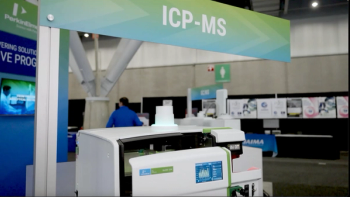
Sponsored Content
Learn about PerkinElmer’s key innovations for trace elemental analysis.
Sponsored Content
When it comes to water analysis, it can be challenging for labs to keep up with ever-changing testing regulations while also executing time-efficient, accurate, and risk-mitigating workflows. To ensure the safety of our water, there are a host of national and international regulators such as the US Environmental Protection Agency (EPA), World Health Organization (WHO), and the European Union (EU) that demand stringent testing methods for drinking water and wastewater. Those methods often call for fast implementation and lengthy processes, as well as high sensitivity and reliable instrumentation. This paper explains how your ICP-MS, ICP-OES, and LC-MS-MS workflows can be optimized for compliance with the latest requirements for water testing set by regulations like US EPA methods 200.8, 6010, 6020, and 537.1, along with ISO 17294-2. It will discuss the challenges faced by regulatory labs to meet requirements and present field-proven tips and tricks for simplified implementation and maximized uptime.
Webcasts
Webinar Date/Time: Tue, Oct 8, 2024 10:00 AM EDT (4:00 PM CET)
Webcast
Webinar Date/Time: Wed, Jun 26, 2024 10:00 AM EDT
Webcast
Webinar Date/Time: Tuesday, March 12, 2024 Morning Session: 10am EDT | 7am PDT | 2pm GMT | 3pm CET Afternoon Session: 12:30pm EDT | 9:30am PDT | 4:30pm GMT | 5:30pm CET Wednesday, March 13, 2024 Morning Session: 10am EDT | 7am PDT | 2pm GMT | 3pm CET Afternoon Session: 1pm EDT | 10am PDT | 5pm GMT | 6pm CET
Webcasts
Webinar Date/Time: Thu, Dec 7, 2023 10:00 AM EST
Webcasts
Webinar Date/Time: Wed, Dec 7, 2022 10:00 AM EST
Sponsored Content
Mon, Sep 26, 2022 11:00 AM EDT Learn more about the enlightened UV-Vis system offering the perfect balance of versatility, simplicity, and value.
Sponsored Content
This application note describes how FT-IR spectroscopy provides a fast and easy method for the identification of PVDF through the PerkinElmer Spectrum Two FT-IR.
September 9th 2021
September 9th 2021
February 13th 2024