SPEC PerkinElmer 11.10
|Webcasts|March 23, 2022

Supporting the UN’s “Ocean Decade” via Direct Trace Elemental Analysis of Seawater

Author(s)Perkin Elmer

Tuesday March 22nd 2022 at 11 am EDT | 8 am PDT | 3 pm GMT Join this webinar to learn about recent methods for the direct analysis of trace elements in seawater, leveraging the benefits of proven ICP-MS technologies for challenging matrices, including multi-quadrupole technology, which provides the added benefit of interference-free analysis, ideal for open-ocean seawater matrices, where trace elements are even lower than in coastal areas.

Register Free: https://www.spectroscopyonline.com/spec_w/OceanDecade

Event Overview:

With rising global populations and increasing industrialization of both land and sea, the contamination of seawater by metals and metalloids is of growing concern and needs to be monitored. However, due to high total dissolved solids (TDS) in this matrix, seawater is one of the most difficult sample types to analyze for the presence of heavy metals and other trace elements. In this webinar, you will learn about recent methods for the direct analysis of trace elements in seawater, leveraging the benefits of proven ICP-MS technologies, including multi-quadrupole technology which provides the added benefit of interference-free analysis, ideal for open-ocean seawater where trace elements are even lower than in coastal areas. These innovative technologies will help regulators track and measure their ability to meet the sustainable development goals of the United Nations (UN), as outlined in its “Ocean Decade” initiative.

Key Learning Objectives:

  • For the analysis of high TDS samples, such as seawater, learn about unique approaches that minimize matrix effects and increase versatility while reducing sample turnaround time and delivering accurate and precise results.
  • For the added challenge of even lower-concentration trace elements, such as those of open-ocean seawater, discover the benefits of multi-quadrupole ICP-MS technology for outstanding interference removal and how this translates to exceptional detection limits.
  • Understand how these innovative technologies will help regulators track and measure their ability to meet the United Nations’ sustainable development goals as part of the UN “Ocean Decade” initiative.

Who Should Attend:

  • Directors, managers and technicians of testing laboratories analyzing seawater and high TDS samples
  • Researchers and regulators focused on ocean science and trace elements in the hydrosphere

Speakers:

Eve Kroukamp, PhD
Global Product Manager, ICP-MS
PerkinElmer, Inc.

Liyan Xing, PhD
Senior Application Scientist
PerkinElmer, Inc.

Sponsors:

PerkinElmer

Register Free: https://www.spectroscopyonline.com/spec_w/OceanDecade


Related to this article

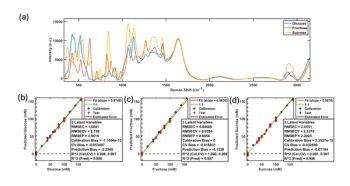
Monitoring Sugar Consumption and Ethanol Production During Yeast Fermentation Using a Raman Plate Reader and Multivariate Analysis
This column shows that a Raman plate reader paired with partial least squares regression can simultaneously quantify glucose, fructose, sucrose, and ethanol in yeast fermentation samples, using turbidity-matched calibration standards to correct for yeast-induced turbidity, and offers a rapid, label-free, high-throughput method for tracking sugar consumption and ethanol production in strain screening, media optimization, and process development.
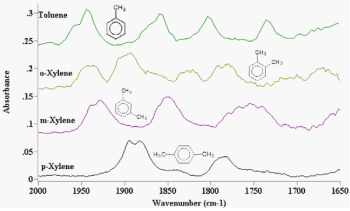
Highly Substituted Benzene Rings—The Rest of the Story II: Spectra
This column, the second installment on highly substituted benzene rings, shows that tri- and tetra-substituted substitution patterns can be distinguished by whether the ring bending peak is present and by the position of the in-phase aryl C-H wagging peak, which shifts according to how many adjacent hydrogens the ring carries.
Healthcare administrator reviewing an insurance policy schedule with a stethoscope on a clipboard, health insurance coverage, medical underwriting, prior authorization, and patient claims processing. | Image Credit: Joi_studio - stock.adobe.com
In a SciX interview, Marc Porter covered a lot of ground, from a student-driven pivot into immunoassays to a baseball analogy for Stokes and anti-Stokes scattering, and shares the open questions he is still chasing.