
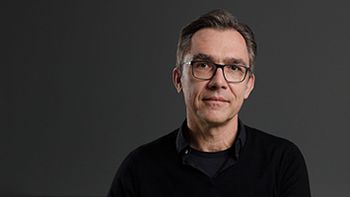
Popp and his team are focused on translating Raman spectroscopy for clinical applications.
Popp and his team are focused on translating Raman spectroscopy for clinical applications.

At SciX 2023 in Sparks, Nevada, Alexander Gundlach-Graham from Iowa State University delivered a groundbreaking talk on the origins of noise in single-particle ICP-TOF-MS data and its impact on particle analysis accuracy. His presentation unveiled a promising Monte Carlo simulation approach to better understand and mitigate signal variability in this cutting-edge analytical technique.
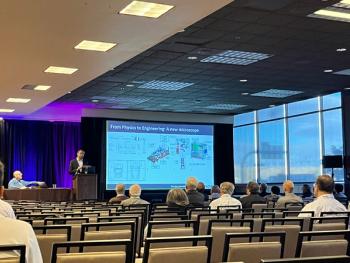
During a talk at SciX, Rohit Bhargava outlined the evolution of Fourier transformation infrared spectroscopy and how it could be used as a method for treating rare diseases like cancer.

On Tuesday October 10th from 1:30–3:10 pm, an oral session focusing on chemometrics in food and agriculture will take place. We preview this session here.
On Tuesday October 10th from 8:30–10:10 am, an Ellis R. Lippincott Award Symposium Honoring Peter Griffiths will take place. We preview this session here.

On Tuesday October 10th from 8:30–10:10 am, an oral session on inductively coupled plasma–time-of-flight–mass spectrometry (ICP-TOF-MS) will take place. We preview this session here.
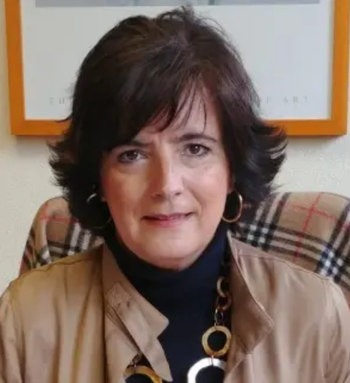
Spectroscopy sat down with 2023 Lester W. Strock Awardee Maria Montes-Bayon to talk about her research and what winning the Strock award means to her.
Fresh off his plenary talk at SciX, Wei Xiong sat down with Spectroscopy magazine to talk about his career accomplishments and what he enjoys most about his job.

The opening keynote reviews how FACSS has evolved over a 50-year period, and where it is going in the future.

At SciX 2023, Ismail Boyaci from The Ohio State University unveiled the transformative potential of laser-induced breakdown spectroscopy (LIBS) in food analysis, offering rapid and precise solutions to enhance food safety and quality. LIBS emerges as a game-changing tool, poised to reshape how we scrutinize and safeguard our food supply.

Wei Xiong of the University of California, San Diego, is the 2023 winner of the Coblentz Award at SciX. Xiong was recognized in a plenary session at SciX on October 9th at 11:00 am for his contributions on the ultrafast dynamics of molecular polaritons.

Explore the hidden world of Chacoan paint production and its profound societal implications in Kelsey Hanson's groundbreaking talk at SciX 2023. Uncover the secrets of ancient power networks through meticulous analysis of paint recipes and their circulation within the Chaco communities.

Archaeologists at SciX 2023 uncovered the hidden impact of ancient fires on volcanic glass, reshaping our understanding of its use in dating and correlation at archaeological sites. Jayde N. Hirniak's groundbreaking research sheds light on taphonomic processes, offering crucial insights for the field of archaeology.

On Monday October 9th from 3:50–5:30 pm, an oral session on machine and deep learning for biomedical diagnostics will take place. We preview this session here.

On Monday October 9th from 3:50–5:30 pm, an oral session on forensic analysis in the laboratory and at crime scenes will take place. We preview this session here.
On Monday October 9th from 8:30–10:10 am, an oral session on food forensics will take place. We preview this session here.

On Monday October 9th from 8:30–10:10 am, an oral session on student research in archaeological chemistry will take place. We preview this session here.
Peter Griffiths was honored for his unique achievements and significant contributions to the field of vibrational spectroscopy.
As a preview to SciX 2023, Spectroscopy magazine sat down with Ishan Barman of Johns Hopkins University to ask him about his thoughts on how artificial intelligence may impact spectroscopic research going forward.
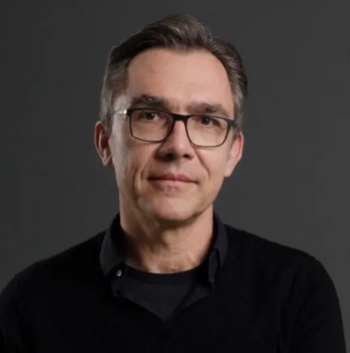
As a preview to SciX 2023, Spectroscopy magazine sat down with Juergen Popp of the Leibniz Institute of Photonic Technology to ask him about his research exploring the use of Raman spectroscopy in applications such as infectious diseases and cancer diagnostics.
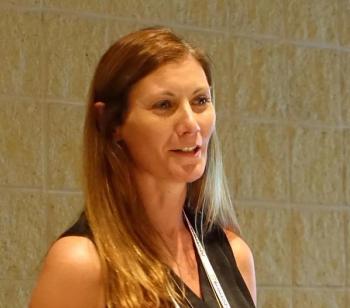
Karen Faulds of the University of Strathclyde co-authored a paper where SESORS signals could be detected from nanotags at depths down to 48 mm for the first time using a handheld spatially offset Raman (SORS) instrument. She recently spoke to Spectroscopy about this and some of her other papers and the advances in the science that made them possible. Faulds is the 2022 recipient of the RSC Analytical Division Mid-Career Award. This interview is part of an ongoing series of interviews with the winners of awards that are presented at the annual SciX conference, which will be held this year from October 2 through October 7, in Covington, Kentucky.
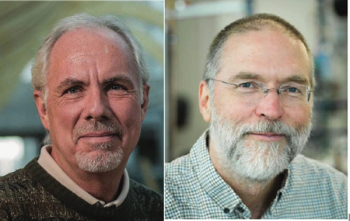
Robin F.B. Turner and James M. Piret are the winners of the 2022 William F. Meggers Award, to be presented this fall at the SciX conference.

Lu Wei, an assistant professor of chemistry at the California Institute of Technology, will be presented with the Emerging Leader in Molecular Spectroscopy Award at the SciX 2022 conference.
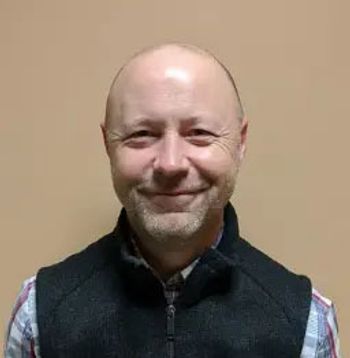
Martin Zanni, who is the Meloche-Bascom professor of chemistry at the University of Wisconsin-Madison, is the winner of the 2022 Ellis R. Lippincott Award.
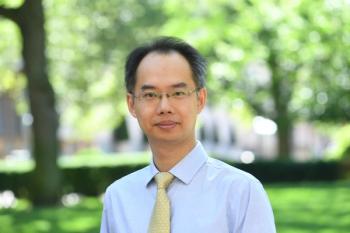
The 2022 Craver Award will be presented to Wei Min at SciX, taking place October 2–7 at the Northern Kentucky Convention Center in Greater Cincinnati.