

Jürgen Popp, winner of this year’s Ellis R. Lippincott Award, discusses the regulatory, cost, and workflow hurdles of moving Raman spectroscopy into hospitals.
Jürgen Popp, winner of this year’s Ellis R. Lippincott Award, discusses the regulatory, cost, and workflow hurdles of moving Raman spectroscopy into hospitals.

A recent conversation with Kevin Wilkinson, a professor of environmental chemistry at the Université de Montréal, sheds light on why no single signature can separate engineered nanoparticles from natural ones.

How do ions and water interact at the atomic level in nanochannels grafted with polymer brushes using all-atom molecular dynamics simulations? Siddhartha Das of the University of Maryland and his team are working on answering this question.

Mammograms can find breast microcalcifications but can’t tell whether they are likely benign or malignant.

In a SciX interview, Marc Porter covered a lot of ground, from a student-driven pivot into immunoassays to a baseball analogy for Stokes and anti-Stokes scattering, and shares the open questions he is still chasing.
Laser-induced breakdown spectroscopy (LIBS) is being used in numerous application areas, including environmental monitoring, cultural heritage, and space exploration.
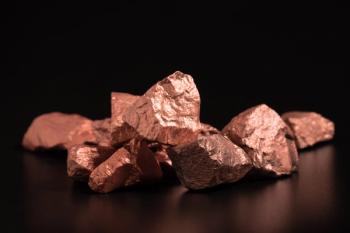
At SciX, Kevin Wilkinson of the Universite de Montreal explains how faster data acquisition and new software have cut analysis time and how a particle’s chemical composition can link arsenic-bearing emissions back to a copper refinery’s processes.
Marc Porter describes how his group’s surface science work led to SERS-based immunoassays, why reproducibility and pre-analytics decide whether a test reaches the clinic, and the questions he still wants to answer.
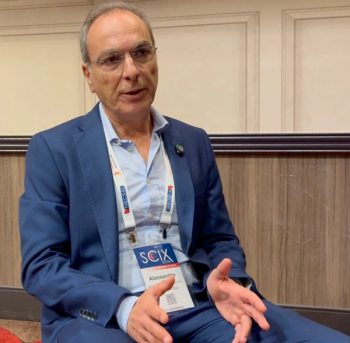
In an interview at SciX, Alessandro De Giacomo discusses nanoparticles as signal enhancers and medical tags, a self-calibrating drone LIBS system, open questions in laser–matter interaction, and why students need a strong foundation in fundamentals.
In this Q&A article, we highlight several prominent researchers being recognized at the 2026 SciX Conference for their significant contributions to spectroscopy and photonics and discuss what these researchers talked about at the conference.
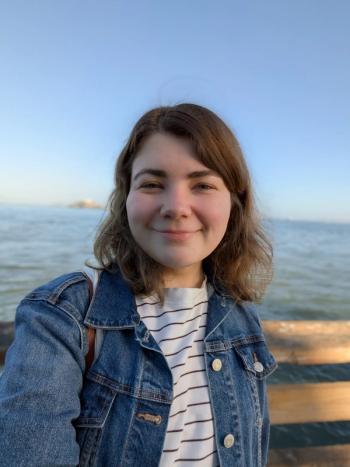
Amy Colleran, a Postdoctoral Researcher in the Centre of Metabolomics Research at the University of Liverpool, is exploring how to detect volatile organic compounds by bubbling them directly into colloidal silver and gold nanoparticles.

In this segment of our SciX interview with Kevin Wilkinson, a professor of environmental chemistry at the Université de Montréal, discusses extending lead isotope work to greater distances and explains why graduate students need adaptability, critical judgment, and coding skills more than expertise in any single instrument.
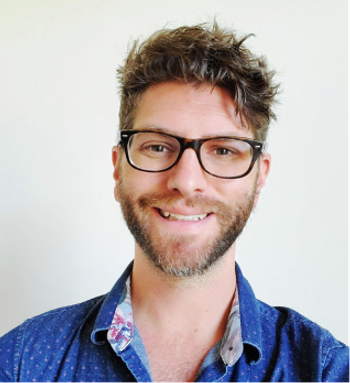
At SciX, Jay Kitt discusses a project applying Raman spectroscopy to PFAS analysis, the mentoring role he found after leaving traditional academia, and why machine learning could unlock the biochemical information in vibrational spectra.

In this interview segment from SciX, Juergen Popp explains why molecular “twins” built from optical measurements could reach patients within a decade, provided the field builds the regulatory, computing, and standards ecosystem around the technology.

Siddhartha Das explains how machine learning helps his group sift through roughly a trillion simulation data points. It reveals water and electroosmotic flow behavior and could speed the design of sensor-like channels.

In his SciX interview, Marc Porter discusses what happens to hydrogen when thiols bind to gold, how close analytical chemists can get to detecting a single molecule in a liter, and his new PFAS-focused startup.
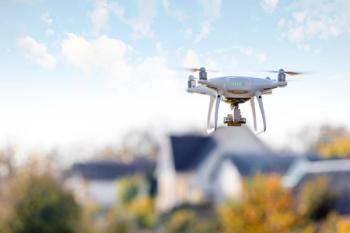
At SciX, Alessandro De Giacomo explained how airborne LIBS can produce quantitative results. Instead of relying on reference measurements, the method draws calibration directly from the measured signal, which sidesteps the drone’s positioning and motion problems.
At SciX, Jürgen Popp explains how miniaturized optical spectroscopy could add molecular data to wearable health tracking, which could enable earlier disease detection and a shift toward prevention.
At SciX, Jay Kitt describes the experiment he ran on his own that launched his cytochrome c research, and explains why putting a number on peptide–lipid interactions matters.

Jürgen Popp explains how head and neck surgeons in Jena use a Raman probe to locate tumor borders, why the technique could replace frozen section biopsies, and why optical tools must adapt to clinical workflows rather than the other way around.

At SciX, Marc Porter explains how a Thanksgiving batting lesson led him to compare a bat meeting a ball to light scattering off a molecule, and how his group is using simulations to test whether the analogy holds.

Alessandro De Giacomo argues that grounding students in scientific fundamentals, rather than rushing them toward applications, is what makes breakthrough ideas possible.

Top content published this week includes coverage from the 2026 SciX Conference, which took place in Sparks, Nevada, from October 4–9.

In this SciX interview segment, Siddhartha Das explains how his group’s simulations revealed a nanochannel scenario that produces energy and boosts flow at the same time. This overturns the classical electroviscous trade-off without breaking the laws of thermodynamics.
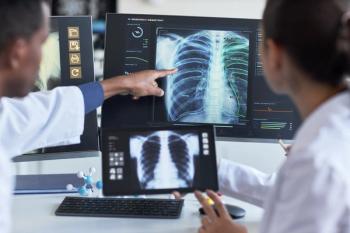
At SciX, Juergen Popp explains why a new infection test must fit hospital workflows, outperform the gold standard, and cost about a euro or less per test. He also describes a host-response test that could change how emergency departments treat suspected sepsis.
Jay Kitt of the University of Utah explains that his group’s platform for quantitative Raman measurements inside chromatographic particles didn’t come from a search for signal enhancement. It grew out of a decade of chromatography and biochemistry research.
In this segment of his SciX interview, Marc Porter explains why every step matters when measuring at picomolar and femtomolar levels, and how switching to proteinase K helped make his group’s tuberculosis work more clinic-ready.

In this clip from our SciX interview with Siddhartha Das, he describes his team’s “eureka moment”: the discovery that the ion distribution inside a polymer layer shapes how water moves under an electric field. He also explains why experimental confirmation is still years away.

At SciX, Alessandro De Giacomo explains how a 35-member international jury chose three papers: one on correct ICCD use and two applications using LIBS and LA-ICP-MS. He also explains what the selections say about the field.
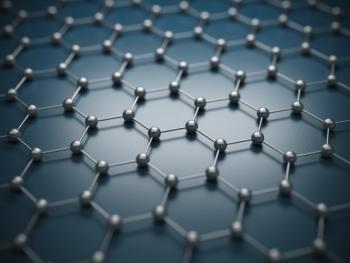
At SciX 2026, Siddhartha Das explains how graphene can be used to show how atom-level interactions between ions and water decide what passes through a membrane and what stays behind.