
Click here to access the Spectroscopy January/February 2026 North America PDF in an interactive format.
Click here to access the Spectroscopy January/February 2026 North America PDF in an interactive format.
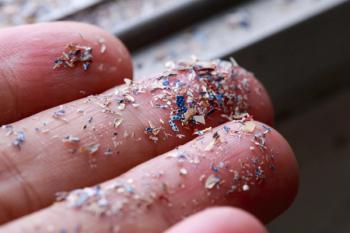
A study in the Journal of Environmental Management shows that wastewater treatment plants in coastal Catalonia remove most microplastics but still release tens of billions of particles annually, with emissions peaking during warmer, tourism-heavy months due to environmental and population-driven pressures.

This dynamic video from the Winter Conference on Plasma Spectrochemistry reveal 2026 trends in plasma MS, imaging, and clinical analysis.
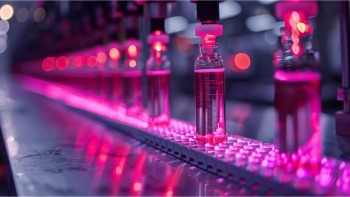
During 2025, near-infrared (NIR) spectroscopy has accelerated its transition from a mature analytical technique into a digitally enabled cornerstone of biopharmaceutical manufacturing and quality control. Advances in miniaturized instrumentation, process analytical technology (PAT), chemometrics, artificial intelligence (AI), and real-time process control technologies have driven NIR spectroscopy into new roles spanning upstream fermentation, downstream processing, raw material characterization, and continuous manufacturing. This article reviews and contextualizes ten influential peer-reviewed publications from 2025 that collectively define the current state and near-term trajectory of NIR spectroscopy in biopharmaceutical analysis.
In an interview recapping the Photonics West Conference, which took place in San Francisco, California in January, Alexis Hobl of CEA-Leti sat down with Spectroscopy to discuss his work integrating quantum cascade lasers (QCLs) with silicon photonic platforms and how it is evolving mid-infrared (MIR) photonics.

Part 2 of our conversation with John Margeson focuses on how Thermo Scientific’s Niton handheld XRF analyzers are engineered to meet the demanding needs of high-volume scrap recycling.
Fourier transform infrared (FT-IR) spectroscopy has undergone a notable evolution in biopharmaceutical analysis over the past three years. Advances in crystal engineering, process analytical technology (PAT), chemometrics, machine learning (ML), and hyphenated analytical platforms have significantly expanded FT-IR’s analytical scope. This article reviews ten of the most influential publications from 2023–2026 that exemplify FT-IR’s growing role across the biopharmaceutical lifecycle, from drug substance design and formulation to manufacturing, quality control, and clinical bioanalysis.
In this video, we preview an upcoming two-part episode of Pathways in Spectroscopy.

If you have downtime at Pittcon 2026, here is how you should spend that time.
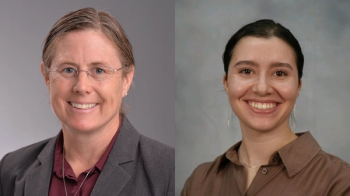
In this interview segment, Kelly Elkins and Jaden Force of Towson University focus to the challenges forensic scientists face, including how to position themselves for a career in this field.
Between 2023 and 2026, Raman spectroscopy transitioned from a supportive analytical technique to a central enabling technology in biopharmaceutical analysis and manufacturing. Advances in artificial intelligence (AI), machine learning (ML), automation, and surface-enhanced Raman spectroscopy (SERS) have expanded Raman’s role from nutrient monitoring to real-time prediction of critical quality attributes (CQAs), inline control of complex bioprocesses, and non-destructive analysis of finished drug products. This article reviews ten of the most influential publications from this period, highlighting how they collectively reshaped expectations for Raman spectroscopy as a process analytical technology (PAT) and a quality-by-design (QbD) tool in modern biopharmaceutical development.
Click here to access the Spectroscopy 2026 January/February Europe PDF in an interactive format.

This year’s Emerging Leader in Atomic Spectroscopy Award recipient is Sarah Theiner, whose research is focused on the application of atomic spectroscopy techniques—laser ablation inductively coupled plasma–mass spectrometry (LA-ICP-MS) and single-cell ICP-MS—to expand these analytical techniques as tools for biological and clinical imaging and drug-distribution studies.

A recent study investigated the use of laser-induced breakdown spectroscopy (LIBS) as a viable technique for detecting and quantifying trace technetium-99 (^99Tc) for future molten salt reactor applications, where long-lived fission products must be carefully monitored. Spectroscopy spoke to Hunter Andrews of Oak Ridge National Laboratory (Oak Ridge, Tennessee), corresponding author of the paper resulting from their research, about their findings.
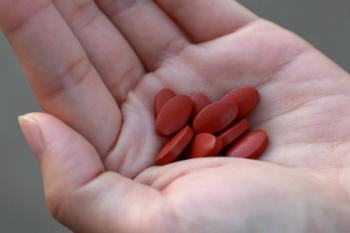
A study from the İzmir Institute of Technology published in Food Chemistry shows that combining FT-IR spectroscopy with chemometric modeling enables rapid, non-invasive screening of iron supplements and protein–iron complexes for their ability to restore cellular iron status in iron deficiency anemia models.
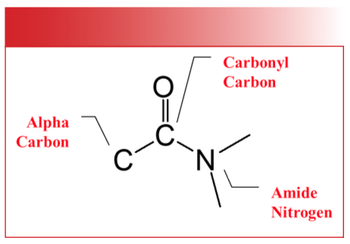
In our ongoing review of infrared spectra, we will study organic nitrogen containing compounds including amides and amines. Amides contain both nitrogen and a C=O group and are found in proteins and polymers. Amines contain carbon, nitrogen, and hydrogen, and are ubiquitous in medicines. As always, concepts will be illustrated with reference spectra.
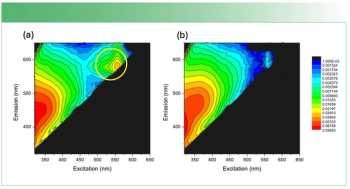
This column will show Raman results and ATEEM fluorescence whose correlations indicate that important information is available non-destructively.

Pittcon, one of the foremost laboratory science conferences, makes its Texas debut at San Antonio’s Henry B. González Event Center from March 7 to 11. The conference’s technical program of over 1100 sessions provides analytical scientists with direct access to the latest research and developments from an international assembly of top scientists and research pioneers.
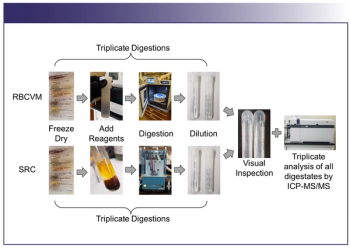
The primary goal of this study was to evaluate two microwave digestion systems for the acid decomposition of biological tissues: (1) a single reaction chamber (SRC) system and (2) a rotor-based, closed vessel microwave (RBCVM) system.
In a recent interview, we sat down with Kelly Elkins, a Professor of Chemistry at Towson University and Jaden Force, a Graduate Research Assistant at Towson University, to talk about the state of forensics and how they apply spectroscopic techniques in their research.
Top articles published this week include several interviews from our ongoing coverage of the Winter Conference on Plasma Spectrochemistry and the American Academy of Forensic Sciences (AAFS) Conference.
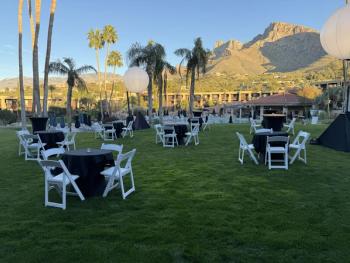
Tucson was a great host city for the 2026 Winter Conference on Plasma Spectrochemistry, but there are other cities that make sense to host future iterations of this conference. Here are our top five suggestions.

Researchers at the University of Massachusetts Amherst demonstrated that X-ray fluorescence spectroscopy combined with chemometric modeling can provide a rapid, minimally destructive, and accurate alternative to traditional methods for routine arsenic quantification in rice and rice-based foods.

A new review article explores how integrating artificial intelligence (AI) with established analytical techniques such as spectroscopy, chromatography, mass spectrometry (MS), and sensors is significantly improving the efficiency, accuracy, and scope of food chemistry research and food quality assessment.

In this article, we look at the five major reasons why San Antonio is set to be a perfect host city for Pittcon this year.

Over the past two years, near infrared spectroscopy (NIRS) and related NIR techniques have seen rapid adoption in biomedical research. These developments span non invasive diagnostics, functional monitoring, machine learning integration, point of care probes, and applications in complex clinical settings such as liver fibrosis, viral detection, neonatal care, brain injury, and neurodegenerative disorders. This article synthesizes 10 key publications, highlighting trends, methodologies, and clinical potential.

A recent study shows that handheld near-infrared (NIR) spectroscopy combined with artificial neural networks can rapidly and non-destructively distinguish human from animal bones with high accuracy, offering a practical new tool for on-site forensic investigations.
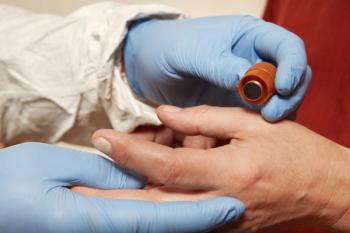
A recent study demonstrated that combining laser-induced breakdown spectroscopy (LIBS) with machine learning (ML) can accurately identify gunshot residue from nontoxic ammunition and reliably distinguish shooters from non-shooters despite the absence of traditional elemental markers.
Over the past three to four years, Fourier Transform Infrared (FT-IR) spectroscopy has emerged as one of the most rapidly expanding vibrational techniques in biomedical research. Driven by advances in attenuated total reflectance (ATR), live-cell measurements, chemometrics, and machine learning (ML), FT-IR has moved beyond descriptive biochemical profiling toward predictive diagnostics and translational clinical science. This article highlights and critically summarizes the top 10 most influential peer-reviewed articles published recently on FT-IR applications in tissues, cells, hair, blood, saliva, urine, and exercise physiology, emphasizing analytical innovation, clinical relevance, and future impact.

The 12th Nordic Conference on Plasma Spectrochemistry and Ionization Principles in Mass Spectrometry will take place from June 14–18, 2026, in Loen, Norway. We preview the conference here.