

Researchers at Beijing University of Chemical Technology have developed a rapid online Raman spectroscopy method that accelerates real-time detection and strain screening of the bio-aviation fuel precursor β-farnesene.
Researchers at Beijing University of Chemical Technology have developed a rapid online Raman spectroscopy method that accelerates real-time detection and strain screening of the bio-aviation fuel precursor β-farnesene.

The study reveals that leaf spectroscopy far outperforms traditional leaf traits in predicting forest leaf dark respiration across diverse ecosystems, offering a more accurate and scalable approach for improving carbon cycle models.

Vibrational spectroscopy is undergoing a major transformation driven by advances in new AI and machine learning, portable instrumentation, nanofabrication, hyperspectral imaging, and robust chemometrics. These developments are enabling more sensitive measurements, field-deployable analysis, multimodal data fusion, and automated spectral interpretation suitable for real-world industrial and clinical use. As these technologies converge, the field is positioned for a renaissance that may redefine how spectroscopy is practiced by 2030.

We take a walk through history here, providing the historical background on a recent multidisciplinary study that investigated the Angels Musicians murals in Valencia Cathedral.

Paolo Oliveri of the University of Genoa (Italy) sat down with Spectroscopy to discuss the case for artificial intelligence’s (AI) increasing influence in chemistry, and maintained that the chemometrics field has long employed tools now labeled as AI and machine learning (ML).

Top articles published this week include an interview with Jorge Caceres of Complutense University, an inside look at pharmaceutical fermentation monitoring, and a news article on timely drug intelligence.

This review article highlights how a new review by Da-Wen Sun demonstrates that integrating spectroscopy with chemometric techniques can significantly improve cold chain food quality monitoring, authentication, and overall system efficiency.

Researchers at the University of Lausanne investigated the potential of rapid and portable spectroscopic techniques such as Raman and NIR for illicit drug profiling, with the aim of enhancing the timeliness and operational utility of the generated intelligence for ongoing investigations as opposed to utilizing gas chromatography-mass spectroscopy.

A recent study investigated how structural phase changes inside sensing materials dynamically influence performance during gas exposure.

The study reveals that infrared and Raman spectroscopy can accurately identify dye sources and detect light-induced chemical degradation in culturally significant Māori harakeke fibers.

A new review by researchers from the University of Waterloo, Sanofi, and McGill University highlights how vibrational and fluorescence spectroscopy are reshaping real-time monitoring of pharmaceutical bioprocesses. The authors detail recent advances in UV-Vis, NIR-MIR, Raman, and fluorescence sensing, supported by modern chemometrics and AI tools.

In this article, we focus on why LIBS is particularly ideal for forensic applications, especially for studying human or animal remains.

A recent study demonstrates that near-infrared (NIR) spectroscopy is a fast, cost-effective, and reliable tool for assessing soil and tree ecological traits, offering major potential for large-scale forest conservation and monitoring.

In this brief article, we discuss a rare celestial event that happened in late November involving the planet Saturn.

A new perspective article by Anna de Juan and Rodrigo Rocha de Oliveira highlights how hyperspectral imaging (HSI), paired with advanced chemometrics, is redefining process analytical technology (PAT) by coupling chemical specificity with full-field spatial resolution. Their work outlines how HSI surpasses classical spectroscopic PAT tools and enables quantitative, qualitative, and mechanistic insight into chemical processes in real time.

Jorge Caceres, a professor at Complutense University in Madrid, Spain, sat down with Spectroscopy to discuss how LIBS works as a fast, simple, cost-effective, and analytically conclusive technique for confidently re-associating human bone remains.
Damodaran Krishnan Achary explains how experimental NMR and computational chemistry work together to reveal the structure, dynamics, and reaction mechanisms of complex systems like ionic liquids.

Top articles published this week include an interview with Damodaran Kirshnan Achary, who is the director of the NMR Facility at the University of Pittsburgh, and a tutorial article on biosensors.

In this study, surface-enhanced Raman spectroscopy (SERS) and solvent extraction were used to detect aconitine (AC) in various complex matrices using gold nanorod substrates. The experimental results demonstrated that ether efficiently extracted AC from soy sauce as an example complex matrix.
Damodaran Krishnan Achary of University of Pittsburgh highlights how modern NMR education is shifting toward real-world samples and interdisciplinary applications, reflecting the needs of industry and materials science researchers.

The University of Pittsburgh professor discusses how diffusion, relaxation, multinuclear, and ultra-high-resolution NMR experiments can be strategically applied to probe structure, dynamics, and interactions in complex chemical systems.

This paper aims to identify gemstones using various spectroscopic methods, including Raman spectroscopy and spectrophotometry, as well as spectral imaging techniques like hyperspectral and multi-band imaging.

A recent study demonstrated that deep learning combined with ICP spectroscopy can accurately and affordably predict multiple soil properties.

The article highlights how rapidly advancing, non-destructive spectroscopic and imaging technologies, supported by AI, multi-modal data integration, and increasing instrument portability.

Damodaran Krishnan Achary discusses how advanced NMR techniques reveal the unique structure, cation–anion interactions, and dynamic behavior of ionic liquids, providing insights that other analytical methods cannot capture.
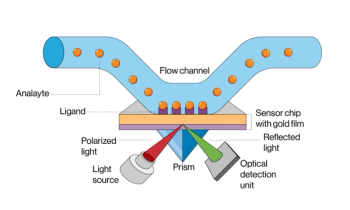
A research team has developed the first short synthetic peptide-based biosensor for real-time tracking of the disease-related protease matrix metalloproteinase-9 (MMP-9), using multi-parametric surface plasmon resonance spectroscopy (MP-SPR).

A new study led by Meirong Liu at the Beijing National Laboratory for Molecular Sciences provides a comprehensive framework to eliminate instrumental and experimental artifacts in photoluminescence spectroscopy.
Damodaran Krishnan Achary discusses how modern NMR spectroscopy enables interdisciplinary research, from biomolecular studies to solid-state materials, and emphasizes the importance of staying current with advanced techniques and experimental strategies.

This brief article highlights the key takeaways from studying the 3I/ATLAS comet and what it means for space exploration moving forward.

This tutorial introduces spectroscopy professionals to the operational principles, practical workflows, and laboratory applications of biosensors. It covers core definitions, biosensor types, transduction methods, nanomaterials-enabled strategies, and optical/electrochemical approaches relevant to spectroscopic analysis. Readers will learn how biosensors integrate biological recognition with physicochemical detection, how to implement them in real-world measurement tasks, and how to avoid common technical pitfalls when translating biosensor theory into laboratory practice.