All News


Tip-enhanced Raman spectroscopy (TERS) employs localized surface plasmon resonance at the apex of a sharp scanning probe microscopy tip to overcome the diffraction limit inherent in conventional Raman spectroscopy, allowing researchers the ability to access spatial resolutions down to the nanometer scale. This technique has established itself as a powerful tool in nanoscale chemical analysis, delivering previously unachieved spatial resolution with superior molecular sensitivity and chemical specificity.

An effective technique used in the examination of iron atom electronic environments in both biomolecular molecules and whole animal studies, Mössbauer spectroscopy, because of its sensitivity to nuclear hyperfine interactions, yields incredibly accurate data regarding the electronic and magnetic states of nuclei, chemical bonds, and the local electronic environment structure around iron atoms.

Astronomy concept backdrop. Picture of an atom. | Image Credit: © Sergey Nivens - stock.adobe.com

“Atomic Perspectives,” provides tutorials and updates on new analytical atomic spectroscopy techniques in a broad range of applications, including environmental analysis, food and beverage analysis, and space exploration, to name a few. Here, we present a compilation of some of the most popular columns.

Panoramic view at the Berlin city center at sunset | Image Credit: © frank peters - stock.adobe.com

The 20th European Winter Conference on Plasma Spectrochemistry (EWCPS 2025) is scheduled to take place from March 2 to 7, 2025, in Berlin, Germany. Here, we provide a conference insider regarding what spectroscopists should consider checking out, as well as the topics that will be discussed at the conference.

Molecular structures illuminated with a radiant glow in a vivid scientific representation of atomic interactions. Generated with AI. | Image Credit: © BYAI - stock.adobe.com

At Pittcon this year, there will be numerous sessions dedicated to spotlighting the latest research that uses atomic spectroscopy or elemental analysis techniques. We highlight some of these talks below that might pique the interest of spectroscopists and researchers attending the conference this year.

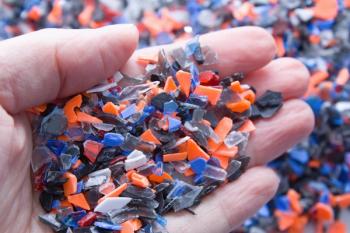
By using a handheld NIR spectrometer, researchers aimed to optimize the classification process that makes it possible to differentiate between polyolefin and non-polyolefin films with a single measurement, even for thin films. Their findings could contribute to better recycling processes, helping to address the growing plastic waste problem. Spectroscopy spoke to Hana Stipanovic, corresponding author of a paper resulting from these efforts, about this research.

A joint study between the Institute for Environment and Energy, Technology and Analytics (IUTA e. V., Duisburg, Germany) and Heinrich Heine University Düsseldorf (Germany) explored the combination of size exclusion chromatography (SEC) with diode array detector (DAD) and capillary-enhanced Raman spectroscopy (CERS) to directly analyze hemolyzed serum samples. We spoke to Jana Thissen, first author of the paper resulting from this study, about her team’s work.