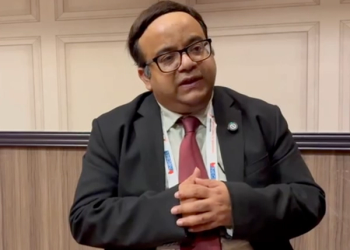
In this "Pathways in Spectroscopy" clip, Kevin Wilkinson explains why adaptability, critical evaluation of instruments, and data analysis skills matter more for graduate students than mastering any single technique.
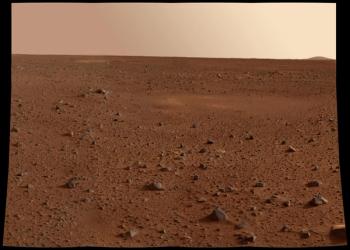
The Canadian Space Agency contract funds refinement and prototype testing of a laser-based cavity spectrometer intended to monitor trace methane continuously at the Martian surface.
The January 30–February 4 event is expected to feature more than 4,500 presentations across six technical areas and more than 1,400 exhibitors at the Moscone Center.
At SciX 2026, AES Mid-Career Award winner Siddhartha Das of the University of Maryland explained how all-atom simulations revealed flow reversal and “electroslippage” in brush-grafted nanochannels, and why the same ion–water physics matters for graphene desalination.
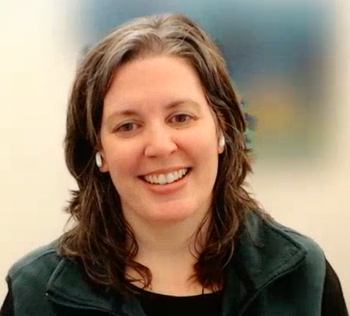
In this interview clip, Kristin L. Wustholz of William & Mary explains how her group judges the fidelity of its blinking-based classifications, why real artworks will call for classification libraries, and where the method fits alongside SERS.
Croatian researchers outline how optical emission spectroscopy (OES) can track reactive species and plasma parameters in real time, giving processors a path to move cold plasma treatments from the laboratory to production lines.