




Pharmaceutical Analysis
Latest News
Advertisement
Latest Videos


Advertisement
More News

Spectroscopy sat down with Sergei Kazarian and Bernadette Byrne to talk about their latest research collaboration, which offers insights into why FT-IR spectroscopic imaging is advantageous in biomedical and pharmaceutical analysis.

A multi-billion-dollar drug manufacturing hub focused on chronic diseases will be established in Virginia, supported by new facilities across California, Indiana, Maryland, Massachusetts, and Texas.

A recent study presented a simple correction method that significantly improved the accuracy of Transmission Raman Spectroscopy by mitigating spectral distortions caused by tablet thickness, porosity, and compaction force.

Growing U.S.-based drug manufacturing is creating new demands—and opportunities—for analytical chemists.

A recent study showcases a cost-effective, ecofriendly UV spectrophotometric method enhanced with dimension reduction algorithms to accurately quantify veterinary drugs dexamethasone and prednisolone, offering a sustainable alternative to traditional analysis techniques.

A recent review in the Journal of Pharmaceutical Analysis highlights how AI, particularly deep learning, is revolutionizing Raman spectroscopy by enhancing its accuracy, efficiency, and applications in drug development, quality control, and clinical diagnostics.

Researchers at Guangdong University of Technology have developed a fast, non-destructive Raman spectroscopy method to accurately detect active ingredients in complex drug formulations.

In a new study published in Measurement, researchers explored the power of low-frequency Raman spectroscopy for non-invasive drug analysis.

Researchers in China have developed a rapid, non-destructive Raman spectroscopy method that accurately detects active components in complex drug formulations by combining advanced algorithms to eliminate noise and fluorescence interference.

Webcasts
Webinar Date/Time: Wed, Apr 9, 2025 11:00 AM EDT

With Pittcon 2025 officially beginning, here are some notable upcoming workshops based around the advancement of spectroscopy.

A recent study demonstrates the successful development of in-line monitoring techniques using Raman spectroscopy and advanced modeling for titanium dioxide-free tablet coatings.

Webcasts
Webinar Date/Time: Wednesday, December 11th, 11:00 AM EST

Top articles published this week include a peer-reviewed article that discuss two multivariate calibration algorithms for the spectrophotometric analysis of a drug containing antazoline hydrochloride (AN) and naphazoline hydrochloride (NP), an article about chemometric calibrations, and a feature about the 2024 Emerging Leader in Molecular Spectroscopy awardee.
This study applied principal component regression (PCR) and partial least squares (PLS) algorithms for the spectrophotometric analysis of a drug containing antazoline hydrochloride (AN) and naphazoline hydrochloride (NP) without chemical separation. Both methods showed high accuracy and precision, with results closely matching those from a reference HPLC method, and were successfully validated for analyzing commercial pharmaceutical products.

A recent study examines how Raman spectroscopy and UV-vis spectroscopy can be used in the quality control of over-the-counter medications (OTCMs), ensuring their authenticity.

Joseph P. Smith, Director of Process R&D Enabling Technologies at Merck has been awarded the 2024 Emerging Leader in Molecular Spectroscopy Award, recognizing his significant contributions to the advancement of molecular spectroscopy in the pharmaceutical industry.


This review highlights very recent advancements in several key spectroscopic methods, including atomic, vibrational, molecular, electronic, and diffraction techniques.
Webcast
Webinar Date/Time: Tue, Aug 20, 2024 11:00 AM EDT

A recent study from the Journal of Medicinal Chemistry examined how nuclear magnetic resonance (NMR) spectroscopy is being used in drug discovery.

A recent review article explored the recent advancements in mass spectrometry (MS) and how it is being applied in pharmaceutical analysis.

Howard University scientists recently analyzed tryptophan (Trp) networks and conditions under ultraviolet superradiance.
Here are the top five articles that the editors of Spectroscopy published this week.
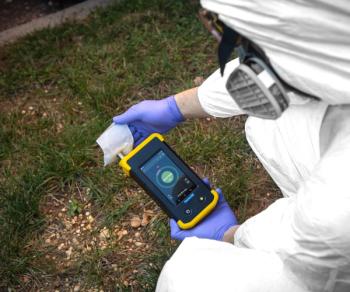
Metrohm has launched a website that details the use of portable Raman spectroscopy instrumentation to detect fentanyl, and other manufacturers are joining the battle too.
Advertisement
Advertisement
Trending on Spectroscopy Online
1
Classical Least Squares and Clutter Suppression
2
Thomas G. Mayerhöfer on The Forgotten Half of Beer's Law: How Refractive-Index and Complex-Valued Chemometrics Are Rewriting Quantitative Spectroscopy
3
Sweet Light: Can Spectroscopy Finally Kill the Finger-Prick for Blood Glucose?
4
Ep. 47: The Other Half of Beer’s Law
5