




UV-vis Spectroscopy
Latest News
Advertisement
Latest Videos




Advertisement
More News

A rule proposed by the White House Office of Management and Budget (OMB) would give political appointees final authority over discretionary grant decisions ahead of peer reviewers, allow agencies to terminate active grants without a formal right of appeal, and restrict international collaboration and publication funding across federal science agencies. For the optical, molecular, vibrational, and atomic spectroscopy community, the proposal could affect the grants, journal support, and student and postdoctoral positions that sustain the field.
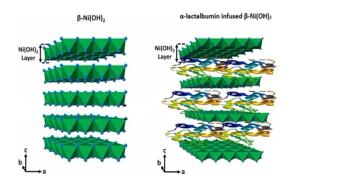
This study synthesized and characterized α-lactalbumin-infused nickel hydroxide nanoparticles, demonstrating successful incorporation of the protein into the nanoparticle structure and highlighting their potential for future biomedical and other advanced applications.

Over the past two years, Spectroscopy magazine has extensively documented and analyzed the growing role of artificial intelligence in spectroscopy through articles, interviews, podcasts, and technical features, highlighting both its hype and its potential as a transformative advancement in data processing and analytical science.

Spectroscopy is telling us the extraterrestrial history of space objects, helping us learn about planetary origins.
This new feature in Spectroscopy introduces a structured, application-focused series that curates and examines the most influential research papers in molecular and atomic spectroscopy. Each installment presents a focused “Top 10” collection of seminal publications within a specific analytical domain, spanning techniques such as ultraviolet–visible, infrared, Raman, near-infrared, and atomic spectroscopy. Across biomedical, biopharmaceutical, environmental, and forensic applications, the selected papers illustrate how spectroscopic methods are applied to real-world analytical challenges. Emphasis is placed on the integration of spectral data with chemometric approaches to enable robust calibration, accurate prediction, and meaningful interpretation. Together, these curated collections provide practitioners with a concise, application-oriented perspective on impactful developments in spectroscopy. This article brings together the first nine “Top 10” collections in the series, offering a cross-disciplinary view of influential work shaping the field.

Interested in learning more about ultraviolet–visible (UV-vis) spectroscopy at Pittcon? The Spectroscopy editorial staff has you covered!
At Pittcon, generative artificial intelligence will be presented at the James L Waters Symposium on Monday, March 9, 2:30 PM to 4:40 PM in Room 221A. Generative artificial intelligence has transitioned from a conceptual novelty to a practical approach for innovation in spectroscopic data analysis. During 2025, a small set of highly influential publications crystallized this transformation by demonstrating how generative models can synthesize realistic spectra, solve inverse spectral problems, accelerate materials discovery, and automate molecular structural elucidation. This article reviews six pivotal contributions published in 2025 that collectively define the state of generative artificial intelligence in spectroscopy. These works establish theoretical foundations, survey emerging methods, introduce physics-informed generative architectures, and demonstrate transformative applications across vibrational, electronic, and magnetic resonance spectroscopies.

For Pittcon 2026, the James L. Waters Symposium, scheduled for Monday, March 9, from 2:30 to 4:40 p.m. in Room 221A, turns its focus on Generative artificial intelligence (AI) systems in analytical chemistry, which are increasingly being used for analytical data interpretation, algorithm development, experimental planning, and scientific communication. This article introduces the general concepts of generative AI and its use in spectroscopy.

Artificial intelligence is transforming vibrational spectroscopy by automating calibration, feature extraction, and interpretation across Raman, infrared, near-infrared (NIR), and hyperspectral imaging (HSI) systems. This review of articles highlighted in Spectroscopy during 2025 captures several major developments, spanning data fusion, spectral imaging, and industrial and biomedical applications.

Vibrational spectroscopy is undergoing a major transformation driven by advances in new AI and machine learning, portable instrumentation, nanofabrication, hyperspectral imaging, and robust chemometrics. These developments are enabling more sensitive measurements, field-deployable analysis, multimodal data fusion, and automated spectral interpretation suitable for real-world industrial and clinical use. As these technologies converge, the field is positioned for a renaissance that may redefine how spectroscopy is practiced by 2030.

A new review by researchers from the University of Waterloo, Sanofi, and McGill University highlights how vibrational and fluorescence spectroscopy are reshaping real-time monitoring of pharmaceutical bioprocesses. The authors detail recent advances in UV-Vis, NIR-MIR, Raman, and fluorescence sensing, supported by modern chemometrics and AI tools.

In this brief article, we discuss a rare celestial event that happened in late November involving the planet Saturn.

A new perspective article by Anna de Juan and Rodrigo Rocha de Oliveira highlights how hyperspectral imaging (HSI), paired with advanced chemometrics, is redefining process analytical technology (PAT) by coupling chemical specificity with full-field spatial resolution. Their work outlines how HSI surpasses classical spectroscopic PAT tools and enables quantitative, qualitative, and mechanistic insight into chemical processes in real time.
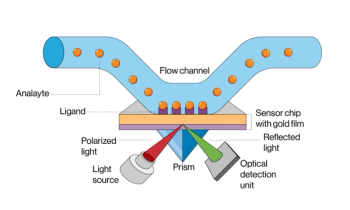
A research team has developed the first short synthetic peptide-based biosensor for real-time tracking of the disease-related protease matrix metalloproteinase-9 (MMP-9), using multi-parametric surface plasmon resonance spectroscopy (MP-SPR).

This tutorial introduces spectroscopy professionals to the operational principles, practical workflows, and laboratory applications of biosensors. It covers core definitions, biosensor types, transduction methods, nanomaterials-enabled strategies, and optical/electrochemical approaches relevant to spectroscopic analysis. Readers will learn how biosensors integrate biological recognition with physicochemical detection, how to implement them in real-world measurement tasks, and how to avoid common technical pitfalls when translating biosensor theory into laboratory practice.

The miniaturization of spectroscopic instruments has reached a remarkable milestone: wearable vibrational spectroscopy. Techniques such as Raman, surface-enhanced Raman scattering (SERS), infrared (IR), and functional near-infrared (fNIRS) spectroscopy are no longer confined to the laboratory bench—they now fit on our bodies, into household devices, and onto industrial equipment. These wearable devices promise continuous, real-time monitoring, offering molecular-level insights for personal health, household management, clinical care, and industrial applications.

Using optical and near-infrared spectroscopy, researchers have identified crystalline water ice as the likely driver of explosive outbursts on comet 12P/Pons-Brooks. Their findings link this dramatic cometary activity to a process once observed in comets 17P/Holmes and 332P/Ikeya–Murakami.

A new international review highlights how hyperspectral imaging (HSI) is revolutionizing diverse fields—from counterfeit detection and agriculture to cancer diagnostics—by capturing unprecedented spectral detail invisible to traditional cameras. The study identifies major advances, challenges, and the growing role of artificial intelligence in real-time HSI applications.

Researchers have developed a new method combining unmanned aerial vehicle (UAV) hyperspectral imaging with satellite data to monitor chlorophyll-a (Chla) and total nitrogen (TN) concentrations in coastal wetland waters. Their approach enhances the precision and scalability of water quality assessments, providing a model for managing eutrophication in fragile ecosystems.

This article provides a clear refresher on key spectroscopy techniques—IR/NIR, Raman, UV–Vis, XPS/XAS, NMR, ICP-MS, and LIBS—and their applications in the energy industry, from batteries and solar panels to fuel production and emissions monitoring.
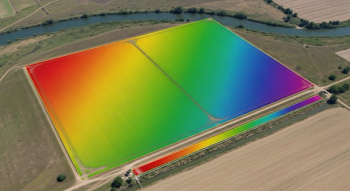
Researchers at the European Space Research and Technology Centre (ESTEC) have developed a new framework for onboard hyperspectral image processing that uses deep learning to analyze massive volumes of spectral data in real time. Their review highlights lightweight neural networks, generative models, and hardware accelerators as key technologies shaping the next generation of spaceborne Earth observation.
Here are ten main unsolved problems in vibrational and atomic spectroscopy, each accompanied by a tutorial-style synopsis suitable for advanced practitioners or graduate-level students. Each of these tutorials, spanning advanced spectroscopy modeling, chemometrics, machine learning (ML) interpretability, and standardization, consists of a descriptive article. Each piece is well-referenced (with detailed matrix equations, radiative transfer models, chemometric derivations, and so forth), and includes the following. • Special focus on each topic—including mathematical derivations in matrix notation. • Conservative, verifiable content anchored to established reference sources. • Appropriate tutorial article structure: Title, Summary, Abstract, Introduction, Theory with equations, Examples, Discussion & Future Research, and References.

A new study reveals that resveratrol binds to peanut protein arachin through hydrophobic and hydrogen-bond interactions, enhancing protein stability and offering valuable insights for developing functional peanut-based food products.
This tutorial explains how baseline drift and multiplicative scatter distort spectroscopic data, reviews correction techniques such as MSC, SNV, EMSC, wavelet-based detrending, and AsLS baseline estimation with matrix-based derivations, and explores emerging data-driven scatter modeling strategies and future research directions.

Astronomers have captured the first detailed optical spectrum of 3I/ATLAS, the third known interstellar object to visit our Solar System. Using the VLT’s MUSE instrument, the team finds a red, dust-dominated coma with no detectable gas emissions, offering a rare glimpse into the composition of alien comets.
Advertisement
Advertisement
Trending on Spectroscopy Online
1
Elemental Analytical Methods in the Field of Non-metal Analysis: The Fluorine Challenge
2
The Overtone Frontier: Chip-Scale Sensors, Chemometrics, and the Long Chase for Noninvasive NIR Diagnostics
3
Turning Innovation into Insight: Introducing Avio 3000, the Third Generation of ICP-OES Technology
4
Why Spectroscopy Education Should Aim for Revolution, Not Evolution
5