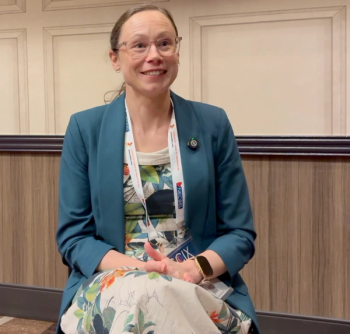
At SciX, Jay Kitt describes the experiment he ran on his own that launched his cytochrome c research, and explains why putting a number on peptide–lipid interactions matters.
Top content published this week include a historical examination of the James L. Waters Symposium, an obituary of Peter Griffiths, and an article examining Raman spectroscopy instrumentation.
The James L. Waters Symposium is one of the more popular symposiums that takes place at Pittcon. How did this symposium come to be? We’ll discuss the answer why and explore Waters’s entrepreneurial history here. Also, we pay tribute to Peter R. Griffiths, who was an influential figure in Fourier transform infrared (FT-IR) spectroscopy, and who recently passed away at the age of 84.
This is the Best of the Week.
First, we explored the historical evolution of the James L. Waters Symposium. It's one of the most anticipated sessions at Pittcon every year, but how did it start? The story begins in 1987, when instrument entrepreneur Jim Waters pitched the idea to Dick Howe of the Society for Analytical Chemists of Pittsburgh. From that pitch came 36 years of programming, covering everything from gas chromatography (GC) to, this year, generative artificial intelligence (AI).1
Waters himself was no stranger to innovation. He founded Waters Associates, pioneered GPC, and helped bring early high-performance liquid chromatography (HPLC) instruments to market.1 The symposium he inspired carries that same spirit, pairing inventors with the people who commercialize their ideas.1 This article
Next, we paid tribute to Peter R. Griffiths, who was an important figure in FT-IR spectroscopy, who passed away on August 29 at age 84. After doctoral work at Oxford and postdoctoral research under Ellis Lippincott, Griffiths went on to advance commercial FT-IR technology at Digilab, then spent decades at Ohio University, UC Riverside, and the University of Idaho.2 His textbook with James de Haseth and his five-volume Handbook of Vibrational Spectroscopy remain field standards, and his editorship of Applied Spectroscopy and awards including the Coblentz and Lippincott honors cap a legacy of research, instrumentation, and mentorship.2
We also explored how Raman spectroscopy instrumentation is quietly being reinvented from chip-scale spectrometers to AI built directly into the measurement chain and conducted an interview with Kantha Shelke, Principal of Corvus Blue LLC and Senior Lecturer at Johns Hopkins University, on navigating high-stakes scientific projects with curiosity instead of certainty.3,4
And that’ll do it for Best of the Week. Thanks for watching, thanks for reading, and we’ll see you next week.