Jürgen Popp on Bringing Raman Diagnostics From the Laboratory to the Clinic
The 2026 Ellis R. Lippincott Award recipient discusses the barriers to clinical adoption of photonic diagnostics and his vision for personalized optical digital twins.
Jürgen Popp, Scientific Director of the Leibniz Institute of Photonic Technology (IPHT) in Jena, Germany, and a professor at Friedrich Schiller University Jena, is the 2026 recipient of the Ellis R. Lippincott Award.1 Established in 1975 and jointly presented by Optica, the Coblentz Society, and the Society for Applied Spectroscopy (SAS), the award recognizes work that has significantly influenced other scientists' research in vibrational spectroscopy.1
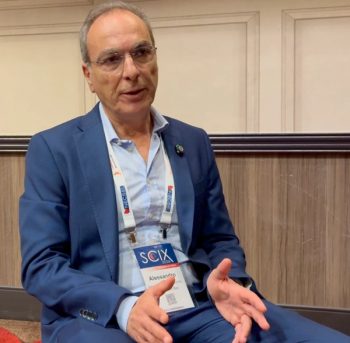
As part of our coverage of the 2026 SciX Conference in Sparks, Nevada, Spectroscopy sat down with Popp to talk about his research. In this clip, Popp reacts to winning the Ellis R. Lippincott Award this year and discusses the hardest translational barriers to getting clinicians to trust and adopt a photonic diagnostic tool.
Popp's research applies laser-based spectroscopy and imaging, especially Raman spectroscopy, to infection research, oncology, and precision medicine. His career has focused on moving label-free, real-time photonic diagnostics from the bench to the clinic. Since 2006, he has built IPHT into an internationally recognized biophotonics center and established collaborative networks, including the transatlantic Center for Biophotonic Technology and Artificial Intelligence and the Jena-Davis Alliance of Excellence in Biophotonics.
Our conversation with Popp covered two clinical applications from Popp's group. The first was artificial intelligence (AI)-assisted Raman analysis of blood samples for infection diagnostics, performed without labeling or extensive sample preparation. Popp explains in a future video what it took to make that approach work in a clinical setting rather than only under controlled research conditions. The second is fiber-based Raman probes for real-time tissue characterization during surgery, and Popp described how surgeons use that molecular readout mid-procedure and what training or workflow changes it requires of the surgical team.
Popp also walked through the "
We are looking forward to sharing with you the rest of our conversation with Popp soon. You can stay up to date on all our coverage of
References
- Workman, J., Jr. SciX 2026 Award Winners: The Conversations Coming Next. Spectroscopy Online, 2026.
https://www.spectroscopyonline.com/view/scix-2026-award-winners-the-conversations-coming-next (accessed October 7, 2026). - Popp, J.; Mayherhofer, T. G.; Borowsky, A.; Schmitt, M.; Meier-Ewert, L.; Hamm, G. From Molecular Snapshots to Longitudinal Prevention: The Personalized Optical Digital Twin. Spectroscopy Online, 2026.
https://www.spectroscopyonline.com/view/from-molecular-snapshots-to-longitudinal-prevention-the-personalized-optical-digital-twin (accessed October 7, 2026).
Related to this article