Register Now: Advances in Spectroscopy for Pharma and Biopharmaceutical Analysis Symposium
|Articles|February 1, 2017

Application Notebook

  • Application Notebook-02-01-2017
  • Issue 2

On-Demand High-Purity Acid Production Using a Fully-Automated Acid Purification System

Savillex's DST Acid Purification Systems are used by laboratories worldwide for the on-demand production of high purity acid for use with ICP-MS and other metals analysis techniques. Savillex recently expanded the product line with the new DST-4000, which is a high-throughput, fully-automated system capable of producing 4 L of high-purity acid at a time, completely unattended.

The ultra-low detection limits of ICP-MS necessitate the use of high-purity grade acids for standards, sample dilutions, and, increasingly, even for sample digestion. Although commercially available bottled high-purity (10 ppt grade) acid is readily available, it costs up to ten times more than trace metal (1 ppb) grade acid. Once opened, and during use, a bottle of high-purity acid can easily become contaminated due to airborne contamination or analyst error. For these reasons, many laboratories are producing their own high-purity acid using the Savillex DST-1000 Acid Purification System. The DST-1000 produces HNO3, HCl, and HF that is as good as or better than commercially available acid (Table I), is easy to use, has a small footprint, and can pay for itself in months, or even weeks, depending on the laboratory's acid needs.


Although in-laboratory production of high purity acid can easily be justified financially, some laboratories prefer to continue to purchase bottled high-purity acid. This is because there was no system that could either produce enough acid to meet their needs, or be operated completely unattended thus requiring additional labor. Recently, Savillex released the DST-4000. The quality of acid produced by the new DST-4000 is the same as the DST-1000, however the DST-4000 can produce 1 L of acid in 12 h – double the throughput of the DST-1000. In addition, its acid level sensor and auto-shutoff feature allows it to be run completely unattended. Acid (up to 4 L at a time) is simply added to the DST-4000 via the conveniently located front fill tube, the unit is switched on using the external controller, and the user walks away. High-purity acid is collected in a pair of 2 L Purillex™ PFA bottles, and the DST-4000 switches off automatically when the run is completed. The acid in the collection bottles is protected from the environment by specially designed closures, and ready for use when needed. The in-laboratory production of high-purity acid has never been easier or more convenient.

Savillex Corporation
10321 West 70th St., Eden Prairie, MN 55344-3446
tel. (952) 935-4100
Website: www.savillex.com


Related to this article

Spectroscopy Top 10 DOI Articles of the Month (October 2026)
The following articles are the most accessed digital object identifier (DOI) manuscripts for Spectroscopy and LCGC International during the month of October 2026. Nine articles are individually ranked here by DOI page views; the seventh-highest entry (99 views) was recorded against the bare LCGC North America journal-level DOI rather than an individual article and is therefore not attributable to a single manuscript.
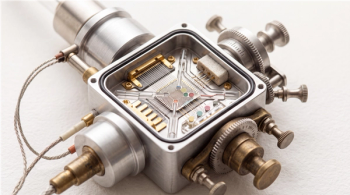
Optical and Electronic Instrument Components,  ©  ridwan -chronicles-stock.adobe.com
The updated and expanded 2026 edition of Spectroscopy's Instrument Components Terminology Guide defines the sources, detectors, optical and dispersive elements, sampling hardware, physical constants, and unit conversions used across UV-vis, NIR, IR, Raman, X-ray, and atomic spectroscopic instrumentation, with new terms reflecting component developments reported between 2022 and 2026.
Curated 2026 Evergreen Content from Spectroscopy. ©  Chanakarn -chronicles-stock.adobe.com
Spectroscopy's editors gather 143 evergreen articles from 2026, including tutorials, terminology guides, technique reviews, application surveys, peer-reviewed research and the magazine's long-running columns, and organize them by subject so readers can build lasting knowledge one topic at a time.