SPEC PerkinElmer 10.13
News|Articles|February 17, 2026

HÜBNER Photonics Introduces the C-WAVE BTS

HÜBNER Photonics has announced the launch of the C-WAVE BTS, which is a continuous-wave (CW), single-frequency titanium:sapphire laser.

HÜBNER Photonics has announced the launch of the C-WAVE BTS, which is a continuous-wave (CW), single-frequency titanium:sapphire laser designed to deliver tunable output from 700 nm to 1000 nm with power levels up to 4 W.1 According to the company, this new system is designed to expand the company’s C-WAVE laser portfolio and targets spectroscopy and quantum research applications that require stable, high-power, narrow-linewidth light across the near-infrared (NIR) region.1

According to the manufacturer, the C-WAVE BTS (Broadband Titanium Sapphire) combines watt-level output with automated wavelength tuning and alignment, enabling researchers to adjust excitation wavelengths across its tuning range.1 The platform builds on the hardware architecture used in existing C-WAVE systems deployed in academic and industrial laboratories, emphasizing long-term stability and minimal user intervention.

The launch complements the established C-WAVE VIS and C-WAVE GTR models, which use optical parametric oscillator (OPO) technology to span shorter and longer wavelengths.1 Together with the new Ti:sapphire-based BTS model, the C-WAVE family now covers wavelengths from approximately 450 nm to 3.4 µm, providing single-frequency CW tunable output across the visible and into the infrared (IR) region.1 According to the company, this range represents one of the broadest wavelength coverages available from a single-frequency CW tunable laser platform.1

HÜBNER Photonics positions the C-WAVE BTS for advanced spectroscopy, particularly resonant Raman spectroscopy, where precise wavelength selection and high optical power can enhance signal strength and selectivity.1 The source is also intended for studies of quantum materials and other photonics experiments requiring narrow linewidth and stable frequency output in the near-infrared (NIR).

The original C-WAVE platform received a PRISM Award from the photonics industry for innovation in tunable CW laser technology, and the BTS model extends that design philosophy into the Ti:sapphire domain.1 By integrating automated tuning and system control, the company aims to reduce setup complexity and allow users to focus on experimental workflows rather than laser optimization.

What is HÜBNER Photonics?

HÜBNER Photonics is an instrument manufacturer that focuses on lasers and optical subsystems for applications including fluorescence microscopy, flow cytometry, Raman spectroscopy, metrology, holography, nanophotonics, and quantum research.2 The company operates production sites in Hannover and Kassel, Germany, and Stockholm, Sweden, with sales and service offices in the United States and the United Kingdom.

References

  1. HÜBNER Photonics, C-WAVE Series. HÜBNER Photonics. Available at: https://hubner-photonics.com/products/lasers/tunable-lasers/c-wave/ (accessed 2026-02-16).
  2. HÜBNER Photonics, Company Profile. HÜBNER Photonics. Available at: https://hubner-photonics.com/about-us/company-profile/ (accessed 2026-02-16).


Related to this article

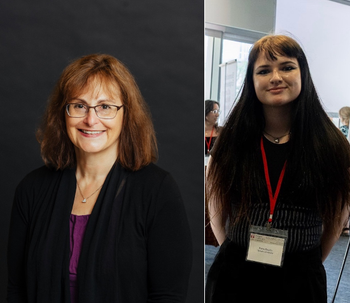
Nancy Pleshko (left) is a Laura H. Carnell Professor Emerita in Temple University's Department of Bioengineering. Petra A. Baylin (right) is a research assistant in the Tissue Imaging and Spectroscopy Lab at Temple University. Photo Credits: © Nancy Pleshko and Petra Baylin
As part of our coverage of the SciX 2026 Conference, Nancy Pleshko and Petra Baylin of Temple University sat down with Spectroscopy to talk about their recent study, explaining how Fourier transform infrared (FT-IR) imaging of ultra-high weight molecular polyethylene (UHMWPE) implants permits oxidation evaluation throughout the sample yielding insight into failure.
NIR Spectroscopy of the Brain and Other Complex Analyses, ©   Navaporn  -chronicles-stock.adobe.com
Near-infrared spectroscopy has quietly stopped being a niche calibration exercise and started acting like an autonomous diagnostic partner, reading consciousness in an injured brain, steering a fermenter without a human hand, and hunting invisible plastic in a glass of water. The tool chemists once used to check moisture in grain is now fusing with artificial intelligence to make decisions no spectrometer could make alone.
FACSS 2026 Award Interviews ©  Erin -chronicles-stock.adobe.com
Eight FACSS award winners at SciX 2026, One LIBS trailblazer. Forty-eight questions. And not one of them is a softball. Award season in spectroscopy usually means polite applause, a plaque, and a photo. We're not completely interested only in the award sessions. The eight scientists honored at SciX 2026 in Sparks, Nevada, along with LIBS researcher Alessandro De Giacomo, are pushing Raman into operating rooms, flying LIBS on drones, reading chemistry off Mars, and tracing toxic metals downwind of industrial sites. Their work makes big claims. In the coming days, Spectroscopy will sit down with eight of these researchers and ask whether those claims hold up. The interviews that follow won't just celebrate. They'll press on the gaps between simulation and experiment, between the lab bench and the clinic, and between a clever paper and an instrument someone will actually buy and use.
Sparks near Reno Nevada – Site of 2026 SciX Conference ©   DTM Media  -chronicles-stock.adobe.com
Wednesday's program at SciX 2026 kept returning to one question: can spectroscopy perform outside the controlled laboratory? Speakers took surface-enhanced Raman scattering (SERS), laser-induced breakdown spectroscopy (LIBS), mid-infrared photonics, chemometrics, and fluorescence excitation–emission matrix (EEM) spectroscopy into clinics, food plants, reactor coolant loops, brine fields, and drinking water supplies.
Spectral Frontiers: Past the Diffraction Limit (FT-IR Spectroscopy)
Fourier-transform infrared (FT-IR) spectroscopy, long the workhorse of molecular fingerprinting, is being reinvented by photothermal detection schemes and quantum cascade laser (QCL) sources that push spatial resolution and analysis speed far beyond classical dispersive and interferometric limits. New instrumentation such as optical photothermal infrared (O-PTIR) microscopy and laser direct infrared (LDIR) chemical imaging is enabling sub-micron, label-free chemical mapping of biological, environmental, and pharmaceutical samples. This article reviews the latest FT-IR-adjacent technologies, recent patents, and research driving the field, featuring perspectives from the scientists and instrument developers advancing the technique.