Jürgen Popp of Leibniz-IPHT discusses what it takes to move biospectroscopy into hospitals, from regulation and cost targets to Raman-guided surgery and a future “personalized optical twin.”
Inductively coupled plasma mass spectrometry (ICP-MS) and inductively coupled plasma optical emission spectrometry (ICP-OES) continue to push elemental analysis toward ever-finer resolution, from single-cell and single-nanoparticle measurements to fluorine-specific detection of per- and polyfluoroalkyl substance (PFAS) degradation products.
The Canadian Space Agency contract funds refinement and prototype testing of a laser-based cavity spectrometer intended to monitor trace methane continuously at the Martian surface.
The January 30–February 4 event is expected to feature more than 4,500 presentations across six technical areas and more than 1,400 exhibitors at the Moscone Center.
At SciX 2026, AES Mid-Career Award winner Siddhartha Das of the University of Maryland explained how all-atom simulations revealed flow reversal and “electroslippage” in brush-grafted nanochannels, and why the same ion–water physics matters for graphene desalination.
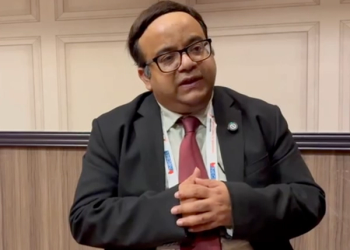
In this interview clip, Kristin L. Wustholz of William & Mary explains how her group judges the fidelity of its blinking-based classifications, why real artworks will call for classification libraries, and where the method fits alongside SERS.