SPEC PerkinElmer 10.13
News|Articles|February 24, 2025 (Updated: February 24, 2025)

Smart Farming and How IoT and Sensors are Changing Agriculture

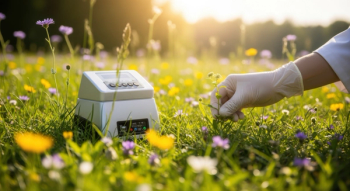
Researchers highlight the growing role of Internet of Things (IoT) and sensor technologies in enhancing food security and agricultural sustainability. The study, published in Ain Shams Engineering Journal, explores the applications, benefits, and challenges of smart agriculture, emphasizing the potential of optical sensors in monitoring and optimizing farming practices.

As the global population grows and ecological conditions change, agricultural productivity must increase; the need for sustainable farming solutions has never been more urgent. A recent study by Abdennabi Morchid, Rachid El Alami, Aeshah A. Raezah, and Yassine Sabbar from Sidi Mohamed Ben Abdellah University in Morocco; King Khalid University in Saudi Arabia, and Moulay Ismail University of Meknes in Morocco, examines the potential of the Internet of Things (IoT) and sensor technologies applied to modern agriculture. This review article explores how these IoT connected sensor technologies can improve food security, optimize resource use, and ensure sustainable farming practices (1).

Optical Sensors

Optical spectroscopy is fundamental to modern sensor technology, enabling precise, non-contact detection and analysis across diverse applications. In biomedical diagnostics, biosensors employ fluorescence and Raman spectroscopy for real-time disease detection. Chemical and gas sensors utilize infrared (IR) absorption and ultraviolet-visible (UV-Vis) spectroscopy to identify hazardous substances with high specificity. Environmental monitoring benefits from water quality sensors using UV-Vis and fluorescence to detect pollutants, while thermal infrared sensors measure temperature variations for climate research and medical imaging. In industrial automation, fiber-optic sensors monitor structural integrity, and optical encoders provide precise motion tracking in robotics and navigation systems. These spectroscopic techniques enhance sensitivity, specificity, and real-time monitoring across scientific and industrial domains (1,2).

Smart Agriculture and the Role of IoT

Agriculture is undergoing a paradigm shift with the integration of complex sensor networks with digital technologies such as IoT, blockchain, embedded electronics, robotics, and automation. These advancements are recreating farming by providing real-time data for decision-making, thereby providing the potential for improving efficiency and reducing waste. The review outlines the four layers of IoT architecture crucial for smart agriculture (1):

1. Perception layer–involving sensors and actuators for data collection.

2. Network layer–to facilitate communication between devices.

3. Cloud layer–to store and process data.

4. Application layer–to provide insights and analytics for farmer decision making.

By leveraging IoT-enabled solutions, farmers can implement automated irrigation systems, monitor crop health, and predict environmental changes, ultimately leading to higher productivity and sustainability.

The Growing Market for Smart Agriculture

The study also projects significant growth in the global smart agriculture market between 2021 and 2030, driven by increasing food demand, the necessity for sustainable farming methods, and the adoption of cutting-edge technologies. With estimates suggesting that food production must increase by more than 70% by 2050 to sustain the growing population, smart farming solutions are becoming indispensable (1).

Sensor Technology: The Heart of Smart Farming

A key focus of the study is the role of sensor technology in modern agriculture. Various types of sensors are being deployed to monitor critical agricultural parameters, including (1,2):

  • Soil Sensors–Detect NPK levels, moisture, pH, and electrical conductivity, enabling precise fertilizer application and irrigation control.
  • Climate Sensors–Measure temperature, humidity, CO2, and light intensity to optimize growing conditions.
  • Water Level Sensors–Ensure efficient water use by monitoring irrigation systems and reservoirs.
  • Livestock Sensors–Track animal health and behavior to enhance productivity and prevent disease outbreaks.
  • Plant Disease Sensors–Identify infections early to prevent crop losses and reduce pesticide use.
  • Fire Detection Sensors–Smoke and flame sensors help prevent wildfires, protecting valuable agricultural assets.
  • Flexible Wearable Sensors–Used for yield monitoring and assessing food quality in real-time.

Of particular interest is the use of optical sensors in agricultural monitoring. These sensors provide real-time spectral analysis, helping farmers assess soil health, detect plant diseases, and optimize nutrient application. Optical spectroscopy, when integrated with IoT systems, offers rapid and non-invasive analysis, making it a game-changer for precision farming. As these technologies develop, many new sensor types are destined to be utilized (1).

Challenges and Future Directions

Despite its potential, IoT-based smart agriculture faces several challenges, including data security, high implementation costs, and the need for robust internet connectivity in rural areas. The study emphasizes the importance of addressing these hurdles to ensure widespread adoption. Future research directions include enhancing sensor accuracy, integrating AI-driven predictive analytics, and developing cost-effective solutions for small-scale farmers (1).

The research by Morchid and colleagues emphasizes the potential of IoT and sensor technologies in the future of agriculture. By providing real-time data on soil conditions, climate, and crop health, these innovations may be the answer for more efficient, sustainable, and resilient farming practices. As global food demand continues to rise, smart agriculture offers a promising pathway to ensuring food security while protecting natural resources (1). With continued advancements in sensor technology, particularly in spectroscopy-based analysis, the agricultural sector stands on the brink of a technological revival that could enhance the way food is produced worldwide.

References

(1) Morchid, A.; El Alami, R.; Raezah, A. A.; Sabbar, Y. Applications of Internet of Things (IoT) and Sensors Technology To Increase Food Security and Agricultural Sustainability: Benefits and Challenges. Ain Shams Eng. J. 2024, 15 (3), 102509. DOI: 10.1016/j.asej.2023.102509

(2) Wasu, M. M.; Dhole, K. M. A Review on Internet of Things (IoT) Sensors. Recent Adv. Sci. Technol. 2024, 180. Available at: https://vbmv.org/pdf/4.pdf#page=267 (accessed 2025-02-18).



Related to this article

Infrared Reimagined: How FT-IR Spectroscopy Learned to Read Molecules, ©  Luis Eduardo  -chronicles-stock.adobe.com
FT-IR spectroscopy, long treated as a mature bench technique for confirming a carbonyl stretch or fingerprinting a polymer, has quietly become one of chemistry’s most versatile discovery engines: it now infers molecular structure straight from a spectrum without a reference library, resolves chemistry tens of nanometers wide, and screens a fingerstick of blood for disease in minutes. The last five years of published research show FT-IR moving from a confirmatory tool into a predictive, autonomous, and field-ready analytical platform.
Scientist With Portable Spectrometer in Natural Field Setting ©  By Tika -chronicles-stock.adobe.com
The bulky bench-top NIR spectrometer is quietly being dismantled and rebuilt as a wafer-scale photonic chip, a self-calibrating algorithm, and a sensor small enough to ride in a shirt pocket. What once demanded a grating, a moving mirror, and a climate-controlled lab now fits inside a handheld module, a bioreactor probe, or a drone payload, and it increasingly figures out what it is looking at on its own.
Human body wireframe on glowing platform undergoing futuristic body scan. © sergray(noAIelemens) -chronicles-stock.adobe.com
Jurgen Popp, Thomas Mayerhofer, and colleagues at Leibniz IPHT and Friedrich Schiller University Jena introduce the Personalized Optical Digital Twin (PODT), a Photonics21 contribution to Europe's Virtual Human Twin ecosystem that connects molecular photonics—Raman blood analysis, coherent Raman tissue imaging, and multimodal endomicroscopy—with longitudinal physiology and clinical data. Drawing on the published multicenter INTELLIGENCE trials, the authors argue that technical feasibility and clinical utility must be evaluated separately as the field moves toward Europe's FP10 research agenda.
The Ongoing Decline of Spectroscopy Expertise
In this panel discussion, five SpecAcademy instructors examined why spectroscopy expertise has declined and how SpecAcademy aims to rebuild it through curated, fundamentals-based education suited to increasingly complex analytical work.