News|Videos|September 22, 2026

Tutorial Tuesday: How Raman Microspectroscopy Can Characterize Polycyclic Aromatic Hydrocarbons

Raman microspectroscopy can be used to characterize polycyclic aromatic hydrocarbons. Pavi Sundararajan, a postdoctoral fellow at NASA Ames Research Center, explains how.

The American Chemical Society (ACS) Fall 2026 Meeting took place last month from August 23–27 at the McCormick Place Convention Center, in Chicago, Illinois. The conference featured talks and presentations that spanned numerous areas of chemistry, including analytical science, biology, and pharmaceutical analysis, to name a few.

One of the talks that took place focused on characterizing polycyclic aromatic hydrocarbons. Pavithraa “Pavi” Sundararajan, a postdoctoral fellow at NASA Ames Research Center, delivered a talk at the ACS Fall 2026 Meeting titled, “Infrared Spectroscopy of Carbon Grains Formed from Nitrogen substituted Polycyclic Aromatic Hydrocarbons Precursors Under Astrophysical Conditions: Implications for Space Return Samples.”1

Leading up to the conference, Sundararajan spoke to us about her talk, highlighting how several spectroscopic techniques can be used to characterize polycyclic aromatic hydrocarbons. In the second “Tutorial Tuesday” clip of several, Sundararajan highlights how Raman microspectroscopy can be used for this purpose.

What is Raman microspectroscopy?

Raman microspectroscopy is a rapid and nondestructive technique that allows users to It works by pairing an optical microscopy with a Raman spectrometer.2,3 This combination allows the analyst to conduct chemical analysis at a spatial resolution of roughly 0.5–1 µm.2 It lets users view a sample at high magnification while collecting Raman spectra from a tightly focused laser spot.2

Pavi Sundararajan: The second characterization techniques used is Raman microspectroscopy. The Raman spectra of such astronomical samples are still in the infant stage, but the Raman spectroscopy has a high potential not only in the identification of minerals from the laboratory samples and meteorites, but also in studying complex microstructures and mineral distribution in the extraterrestrial materials. In addition to the chemical identity of the minerals, Raman spectra are sensitive to crystal orientations, stoichiometric changes, traces of foreign ions, stress, strain, and so on. So this enables a comprehensive physicochemical characterization of mineral grains and phases in the extraterrestrial samples. And one more important thing is that the Raman spectroscopy and the infrared spectroscopy are complementary non-destructive techniques, and they become powerful tools when combined together to study extraterrestrial materials.

Watch the full interview clip with Sundararajan here: https://www.spectroscopyonline.com/view/understanding-nitrogen-containing-polycyclic-aromatic-hydrocarbons-pahs-

References
  1. Sundararajan, P. Infrared Spectroscopy of Carbon Grains Formed from Nitrogen substituted Polycyclic Aromatic Hydrocarbons Precursors Under Astrophysical Conditions: Implications for Space Return Samples. Presented at the American Chemical Society, Chicago, Illinois, August 26, 2026. Available at: https://acs.digitellinc.com/live/37/session/596644
  2. Horiba, What is Raman Spectroscopy? Horiba, 2026. https://www.horiba.com/int/scientific/technologies/raman-imaging-and-spectroscopy/raman-spectroscopy/ (accessed September 17, 2026).
  3. Lee, K. S.; Landry, Z.; Pereira, F. C.; Wagner, M.; Berry, D.; Huang, W. E.; et al. Raman Microspectroscopy for Microbiology. Nat. Rev. Methods Primers 2021, 1, 80. DOI: 10.1038/s43586-021-00075-6

Related to this article

The 2026 Emerging Leader in Molecular Spectroscopy Award
Jay P. Kitt, a University of Utah research assistant professor who has spent a decade extending confocal Raman microscopy from phospholipid membranes to nucleic acids and peptide-membrane interactions, is the recipient of Spectroscopy's 2026 Emerging Leader in Molecular Spectroscopy Award.
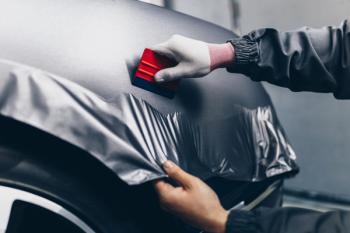
Car wrapping specialist putting vinyl foil or film on car. Selective focus. | Image Credit: © hedgehog94 - stock.adobe.com
Researchers have developed a new validated attenuated total reflectance Fourier transform infrared (ATR-FTIR) and Raman spectroscopy framework for forensically distinguishing automotive vinyl wraps by manufacturer, color, and finish.
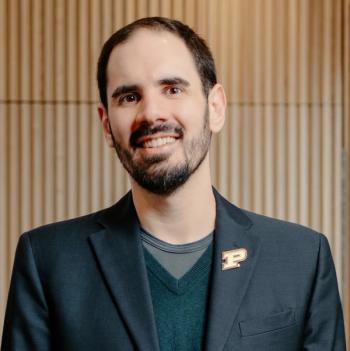
Brandon E. Boor is the Dr. Margery E. Hoffman Associate Professor in the Lyles School of Civil and Construction Engineering at Purdue University. | Photo Credit: © Brandon Boor.
In the second part of our interview with Brandon Boor of Purdue University, he discusses how his team controls experimental variables during cleaning experiments in order to obtain interpretable data.
Sizing Up the Nanoscale: Measuring Nanocluster Aerosol in Indoor Air
In the first part of a multi-part Q&A, Brandon Boor, the Dr. Margery E. Hoffman Associate Professor in the Lyles School of Civil and Construction Engineering at Purdue University, describes the instrumentation and methodology behind measuring nanoparticle size distributions at the nanocluster scale (1–3 nm) and outlines the technical challenges of acquiring reliable, real-time data at these dimensions.