News|Videos|October 15, 2026

Why Reproducibility Starts with Sample Preparation

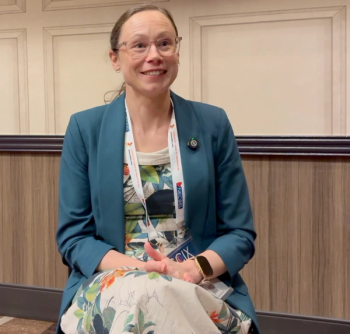
In this segment of his SciX interview, Marc Porter explains why every step matters when measuring at picomolar and femtomolar levels, and how switching to proteinase K helped make his group’s tuberculosis work more clinic-ready.

In this segment of his SciX interview with Spectroscopy, Marc Porter, a Distinguished Professor Emeritus in Chemistry and Chemical Engineering at the University of Utah, identified reproducibility as the central challenge facing his group’s work in ultrasensitive measurement. It is the first question everyone asks, he noted. When analyses push into the picomolar and femtomolar ranges, and sometimes below, every variable in the workflow can affect the result.

Much of that challenge, he explained, comes down to sample preparation. Porter recalls a symposium he and colleagues organized at an HPLC conference a few years ago. Its blunt title argued that results are only as good as the samples going in. His group has drawn the same lesson from that experience and from its own work: tools capable of these measurements perform well only when researchers attend to every step of the process. Borrowing a term from clinical laboratory practice, he emphasized that pre-analytics are critical.

Porter also stressed that analytical chemists need to consider what clinicians will realistically adopt in a clinical laboratory. In early tuberculosis work, his team denatured proteins with acid, an approach he describes as a non-starter for clinical settings. The group then systematically evaluated a series of enzymatic alternatives and settled on proteinase K. According to Porter, after the team’s pretreatment, measurements in human serum now produced a dose-response plot that is statistically indistinguishable from one obtained in buffer. That result has drawn interest from researchers in England about potential next steps.

He closed the segment by reinforcing that reproducibility encompasses more than the measurement itself. His group is working at concentration levels that are new territory, Porter says, so every detail matters, from sample handling through pretreatment to the final readout. For analysts pursuing trace-level detection, his message was that reliability starts long before the instrument. Methods must be designed with both analytical rigor and the practical realities of the clinical laboratory in mind.

Further Reading

(1) Porter, M.; Workman, J., Jr.; Wetzel, W. Taming Serum Interference: Marc Porter on Moving SERS Immunoassays Toward the Clinic. Spectroscopy Online, 2026. https://www.spectroscopyonline.com/view/taming-serum-interference-marc-porter-on-moving-sers-immunoassays-toward-the-clinic (accessed October 13, 2026).



Related to this article

Electromagnetic electric field background | Image Credit: © pixel - stock.adobe.com.
In this clip from our SciX interview with Siddhartha Das, he describes his team’s “eureka moment”: the discovery that the ion distribution inside a polymer layer shapes how water moves under an electric field. He also explains why experimental confirmation is still years away.
Disco laser light seen from the side | Image Credit: © Soonios Pro - stock.adobe.com
At SciX, Alessandro De Giacomo explains how a 35-member international jury chose three papers: one on correct ICCD use and two applications using LIBS and LA-ICP-MS. He also explains what the selections say about the field.