This curated selection of articles highlights recent advancements in microplastics and nanoplastics and soil analysis.
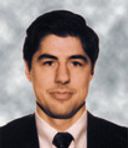
Jerome Workman Jr. serves on the Editorial Advisory Board of Spectroscopy and is currently with Unity Scientific LLC. He is also an adjunct professor at Liberty University and U.S. National University. He can be reached at [email protected].
This curated selection of articles highlights recent advancements in microplastics and nanoplastics and soil analysis.
The following articles are the 10 most accessed digital object identifier (DOI) manuscripts for Spectroscopy and LCGC International during the month of June 2026.

This tutorial introduces spectroscopy professionals to the operational principles, practical workflows, and laboratory applications of biosensors. It covers core definitions, biosensor types, transduction methods, nanomaterials-enabled strategies, and optical/electrochemical approaches relevant to spectroscopic analysis. Readers will learn how biosensors integrate biological recognition with physicochemical detection, how to implement them in real-world measurement tasks, and how to avoid common technical pitfalls when translating biosensor theory into laboratory practice.
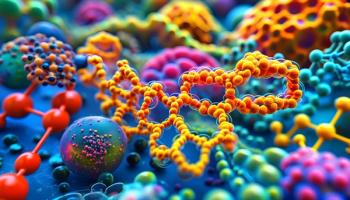
Researchers at Nagoya University and RIKEN have developed a novel computational method to enhance the resolution of high-speed atomic force microscopy (HS-AFM) images for studying protein conformational transitions. The algorithm, normal mode flexible fitting-atomic force microscopy (NMFF-AFM), leverages normal-mode analysis to derive precise molecular models, potentially transforming the understanding of biomolecular dynamics.

To conclude this four-part series of spectroscopic instrumentation and components, we examine spectroscopy electronics, including printed circuit board (PCB) design and manufacturing, spectroscopy instrument design services, instrument testing services, and the firmware and software aspects of instrumentation.

From the Editors
A note from the editors of Spectroscopy regarding the "H-Classic Papers in Atomic Spectroscopy" article published in the November 2021 issue.

When performing literature searches, there are a number of essential points to remember to ensure that you gather the most relevant or essential papers.


Denise M. Mitrano is an Assistant Professor of Environmental Chemistry of Anthropogenic Materials at ETH Zurich in the Department of Environmental Systems Science. Her research is directed to understanding the impact and interaction of nanoparticles in the environment using atomic spectroscopy techniques, such as inductively coupled plasma–mass spectrometry (ICP-MS) and single-particle ICP-MS (sp-ICP-MS). She is the winner of the 2022 Emerging Leader in Atomic Spectroscopy Award. Chosen by an independent committee, the Emerging Leader in Atomic Spectroscopy Award recognizes the achievements and aspirations of a talented young atomic spectroscopist who has made strides early in his or her career toward the advancement of atomic spectroscopy techniques and applications. We recently interviewed Mitrano about her work.

Denise M. Mitrano of ETH Zurich, the 2022 winner of the Emerging Leader in Atomic Spectroscopy Award, is applying ICP-MS and single-particle ICP-MS to elucidate the transport and impact of nanomaterials and nano- and microplastics.
As forensic analysis continues to advance, such as in the understanding of source identification and analysis of trace quantities of bodily fluids, spectroscopic techniques and machine learning are playing a significant role. Igor K. Lednev, a chemistry professor at the University at Albany, SUNY, in Albany, New York, has been working in this field with his team. The analytical methods currently under investigation include Raman spectroscopy, attenuated total reflection Fourier transform infrared (ATR FT-IR) spectroscopy, and advanced chemometric classification and analysis methods. We recently interviewed him about his work.
This issue is a compilation of five peer-reviewed articles on the combined application of UV-vis-NIR spectral data with advanced chemometrics.

The second in a two-part series highlighting key explanatory or tutorial references for each of 29 chemometric methods.
Katsumasa Fujita, a professor of applied physics at Osaka University, has been working to improve techniques for imaging biological samples using spontaneous Raman scattering.
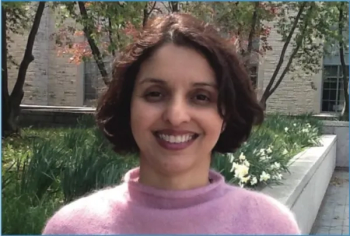
Bhavya Sharma is the winner of the 2021 Emerging Leader in Molecular Spectroscopy Award. We recently interviewed her about her work conducting research to detect active and important biomolecules related to hormone regulation, neurological health, and disease diagnosis.
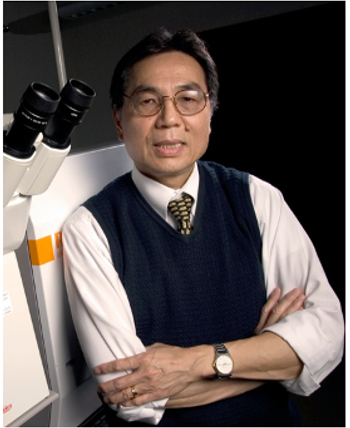
Working at the frontiers of biotechnology, fiberoptics, lasers technique, and molecular spectroscopy, Tuan Vo-Dinh of Duke University has developed multiple sensor technologies for medical research and diagnostics. Throughout this work, Vo-Dinh and his research colleagues have brought spectroscopy to biomedical applications. In this second recent interview, Vo-Dinh talks about his research work and philosophy.
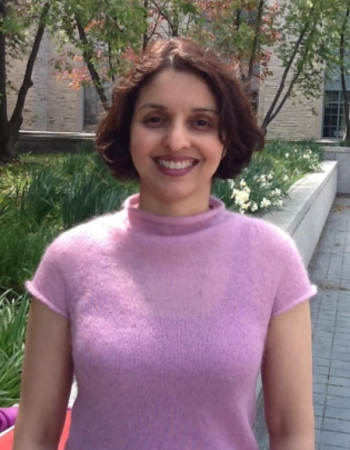
This year’s molecular spectroscopy award recipient is Bhavya Sharma, who is demonstrating research leadership focused on neurochemical detection using SERS and SORS Raman spectroscopy.
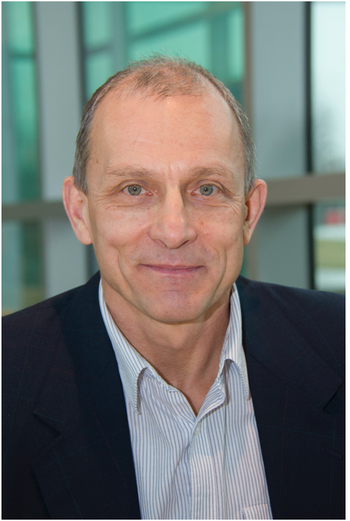
Igor K. Lednev at the University at Albany SUNY in New York explains advances in forensic analysis using a variety of chemometrics techniques to classify ATR FT-IR and Raman spectra of bodily fluids.
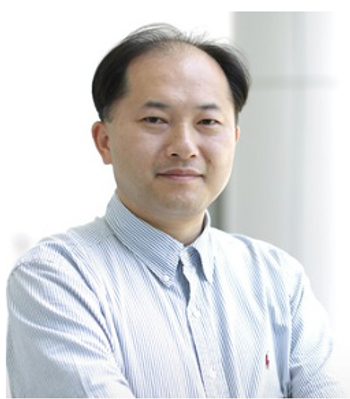
Infrared nanoscopy is a valuable new spectroscopy tool for exploring the nanoscale of materials science. Mun Seok Jeong of Sungkyunkwan University in Korea explains.
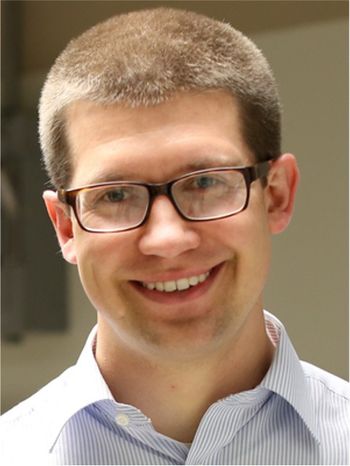
L. Robert Baker is an associate professor at The Ohio State University in the Department of Chemistry & Biochemistry. His research focuses on X-ray spectroscopy, nonlinear and time-resolved spectroscopy, the chemistry of surfaces and interface science, and energy conversion and catalysis—work that may lead to better solar energy conversion materials. He is the winner of the 2021 Emerging Leader in Atomic Spectroscopy Award, which is presented by Spectroscopy magazine. This annual award, begun in 2017, recognizes the achievements and aspirations of a talented young atomic spectroscopist, selected by an independent scientific committee.
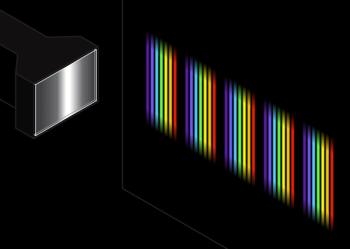
The carefully selected literature references in this curated set describe the application of 29 major chemometric methods used for analyzing molecular spectroscopy data.
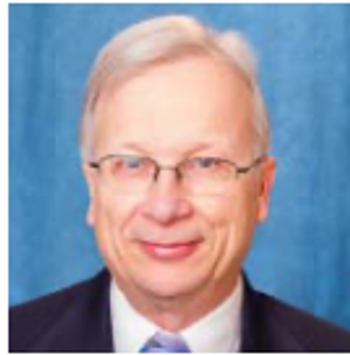
John W. Olesik of The Ohio State University discusses his collaborative ICP–OES and ICP–MS research and shares insights gleaned over a career of teaching and research.
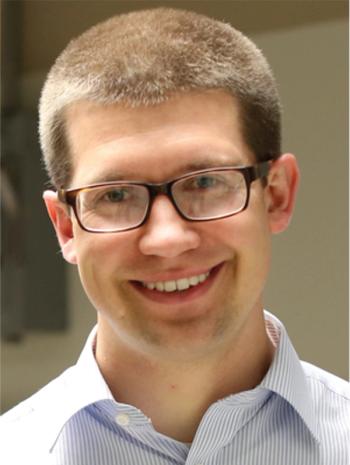
L. Robert Baker, the 2021 Emerging Leader in Atomic Spectroscopy, applies ultra- fast, time-resolved X-ray spectroscopy to explore charge transfer at surfaces, to understand electron transfer, energy conversion, electrochemistry, and catalysis.
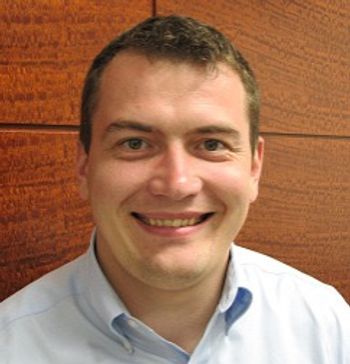
Dmitry Kurouski of the Department of Biochemistry and Biophysics at Texas A&M University in College Station, Texas, is applying Raman spectroscopy to important applications in agriculture for identification and classification of various plant species, for quantification of essential plant constituents, for disease diagnosis in plants, and for Raman-based digital and precision farming. He and his colleagues are at the forefront of using the advantages of Raman based measurements for non-invasive and non-destructive analyses for important field and remote measurement applications.

Although ICP-OES and ICP-MS are often considered mature techniques, probing the mechanisms involved can lead to more accurate results, and in some cases, cast doubt on accepted explanations. John Olesik shares some surprises he has encountered, in this first part of a two-part interview series.
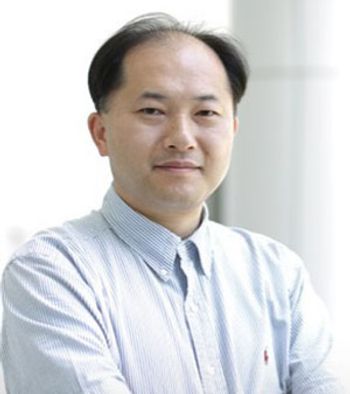
Mun Seok Jeong of the Department of Energy Science at Sungkyunkwan University in Korea is exploring the nanoscale of material science using a suite of new spectroscopy tools. We recently spoke to him about his work.

We report on overall salary trends and how they compare to past years. We also look beyond the numbers to focus on broader trends of workplace satisfaction and career attitudes for spectroscopists.
Sponsored Content

This guide includes many terms related to infrared instrumentation, sampling, measurement techniques, basic nomenclature and concepts, data processing, and applications of infrared instrumentation. In addition, this guide includes some data processing terms, a few statistical data analysis terms, and the essential chemometric terms for typical data preprocessing and calibration.
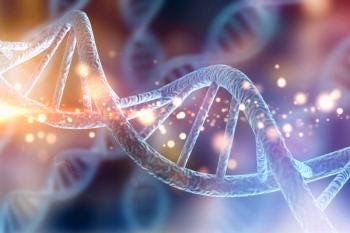
Jason R. Dwyer of the University of Rhode Island discusses the application of nanopore sensors to the analysis of natural and synthetic oligosaccharides and polysaccharides.
February 12th 2021
September 2nd 2021
February 14th 2022