
Webcasts
Webinar Date/Time: Tue, Nov 10, 2026 10:00 AM EST
Webcasts
Webinar Date/Time: Tue, Nov 10, 2026 10:00 AM EST

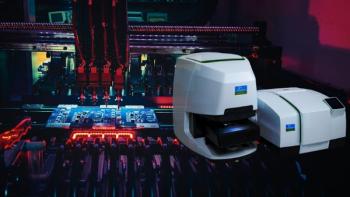
Laboratories performing trace elemental analysis are facing growing sample volumes without corresponding increases in staff. Rising electricity and argon costs, complex sample matrices, and stringent detection-limit requirements add to operational pressures. The Avio® 3000 inductively coupled plasma optical emission spectrometer (ICP-OES) addresses these challenges through a ground-up redesign of its plasma generator, optical spectrometer, and detector. Its air-cooled plasma generator eliminates the need for a liquid chiller while reducing argon consumption by up to 50% compared with older helical-coil instruments. A back-side illuminated complementary metal-oxide-semiconductor detector assigns each pixel its own exposure time, increasing throughput by approximately 40% compared with the Avio 550 Max system. The Avio 3000 also demonstrated high-throughput performance under challenging analytical conditions. In wastewater testing using U.S. Environmental Protection Agency Method 200.7 across 33 elements, the system processed 178 samples in 8 hours. Signal drift remained below 10% in a 15% sodium chloride matrix without internal standard correction, while most elements showed relative standard deviations below 1%. Beyond analytical performance, the instrument's design can reduce ongoing operating costs. A cost-of-ownership model estimates that savings from reduced chiller electricity, air conditioning, argon consumption, and maintenance could amount to approximately $7,000 per year, or about $49,000 over a 7-year instrument life.
Webcasts
Tue, Oct 27, 2026 9:00 AM EDT | 1:00 PM CET | 10:00 PM JST (1:00 PM UTC)

Webcasts
Webinar Date/Time: Tue, Oct 6, 2026 at 9:30 AM EDT (2:30 PM GMT | 3:30 PM CET | 7:00 PM IST)

Webcasts
Webinar Date/Time: Tue, Oct 13, 2026 10:00 AM EDT
Webcasts
Webinar Date/Time: Thu, Oct 1, 2026 11:00 AM EDT

Webcasts
Webinar Date/Time: Thu, Sep 3, 2026 11:00 AM EDT

Webcasts
Webinar Date/Time: Thu, Jul 9, 2026 1:00 PM ED

Webcasts
Webinar Date/Time: Mon, Jun 29, 2026 11:00 AM EDT

Webcasts
Webinar Date/Time: Tue, May 26, 2026 11:00 AM EDT
Webcasts
Webinar Date/Time: Thu, May 21, 2026 11:00 AM EDT
Sponsored Content
Maintain iron levels within WHO guidelines (0.3 mg/L) using LAMBDA 365+ UV/Vis - critical for preventing bacterial growth and ensuring water safety
Sponsored Content
Analytical instruments such as LAMBDA 365+ UV/Vis are used to assess that a certain product meets required pharmacopoeia specifications.
Sponsored Content
Engineered for optimal diffuse light detection and an extended spectral range into the NIR, choose LAMBDA 1050+ to evaluate transparent and translucent materials.
Sponsored Content
Analysis of Nitrate-Nitrogen in Water Using LAMBDA 365+ Spectrometer and Manual Sipper Accessory
Sponsored Content
UV/VIs/NIR optical characterization of plasmonic titanium nitride (TiN) nanohole arrays (NHAs) using angle-dependent reflectance spectroscopy.
Sponsored Content
This accessory enables precise measurement of reflectance at a fixed 6° angle, making it indispensable for industries like solar energy, semiconductors, and optics.
Sponsored Content
This method accurately measures UVA and UVB transmittance in textiles, providing precise Ultraviolet Protection Factor assessments.
Experts in FTIR spectroscopy and microscopy discuss critical analysis in packaging, from raw material identification and QC of multi-layer laminates to major challenges in recycling and microplastics.
As laboratories face increasing demands to analyze complex samples quickly, accurately, and in compliance with rigorous standards, FTIR microscopy is evolving to meet the challenge. This paper offers a practical look at how innovations in imaging, automation, and spectral analysis are streamlining workflows and improving reproducibility in real-world lab environments. Techniques that simplify tasks such as contaminant detection, polymer layer analysis, microplastics characterization, and pharmaceutical QA/QC are also explored. Whether focused on high-throughput quality control or advanced materials research, this paper will provide actionable strategies to enhance your FTIR microscopy practice and stay ahead of evolving analytical needs.
Discover the unique benefits of PerkinElmer's NexION® 5000 multi-quadrupole ICP-MS for the direct analysis of trace elements in open-ocean seawater.
For the direct analysis of trace elements in coastal seawater, uncover how PerkinElmer’s NexION® 2200 ICP-MS is the ideal solution for this application.
Iodine is crucial for health, but imbalances can cause thyroid issues. See how the NexION® 1100 ICP-MS meets GB/T-5750.5-2023 standards for iodine in drinking water.
This study shows the NexION® 1100 ICP-MS meets or exceeds China GB/T-5750.6-2023 standards for multi-element drinking water analysis.
See how PerkinElmer’s NexION® 1100 ICP-MS meets/exceeds detection limit requirements in drinking water standards with its use of a single, universal collision-reaction gas.
Inductively coupled plasma-mass spectrometry (ICP-MS) is an indispensable technique, especially as modern lab workflows grow increasingly demanding. To meet these demands, the PerkinElmer NexION® 1100 ICP-MS instrument boasts design innovations and protocols that help extend instrument uptime and throughput.
Discover how the PerkinElmer NexION® 1100 ICP-MS excels in multi-element detection, addressing interferences and meeting/exceeding ISO standards for drinking water.
High-salinity matrices are traditionally difficult to analyze at ultra-trace levels due to matrix interferences, instrument drift, and sample preparation requirements. This article provides insight into innovative features that enable accurate, stable, and contamination-free measurement of trace metals without labor-intensive pre-concentration steps.
Advanced Fourier transform infrared (FTIR) spectroscopy and microscopy enable efficient material identification, quality control, and troubleshooting throughout the packaging value chain. This article highlights modern tools like PerkinElmer’s Spectrum Two Polymer ID Analyzer and Spotlight™ Aurora FTIR Microscope, which streamline raw material analysis, resolve multilayer laminate issues, and support circular economy goals through improved recycling and microplastics characterization.
Sponsored Content
The NexION® 5000 multi-quad ICP-MS offers direct, high-sensitivity analysis of trace impurities in high-purity molybdenum, ensuring accurate and reliable results.
September 25th 2025
July 20th 2023
July 20th 2023
March 9th 2023