
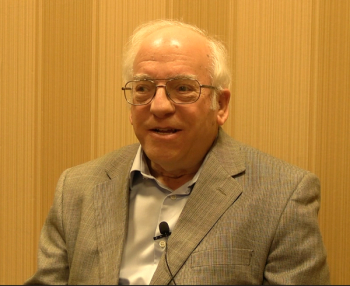
In the second part of our interview, Alex Scheeline discuss the current trends in SIBS and LIBS, and some of his observations from reading the recent literature on the subject.
Will Wetzel is a Senior Editor for Spectroscopy magazine. He specializes in creating engaging, high-value content for diverse audiences. His role involves driving digital growth through KPI assessments, social media strategies, and innovative content development.
Wetzel is also a sports writer and commentator, serving as a freelance writer for several sports websites, including FanSided. He currently serves as the host, producer, and creator of “The Inside Fastball,” a LinkedIn newsletter that discusses topical issues in Major League Baseball (MLB). Outside of work, Wetzel volunteers with the Nashville Humane Association and Habitat for Humanity. His stated goal is to help build one house with Habitat for Humanity in every U.S. state.
In the second part of our interview, Alex Scheeline discuss the current trends in SIBS and LIBS, and some of his observations from reading the recent literature on the subject.
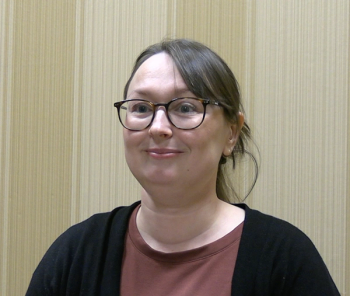
In this interview clip, Anika Retzmann of the University of Calgary dives more deeply into the utility of multi-collector microwave inductively coupled atmospheric-pressure plasma mass spectrometry (MC-MICAP-MS) for isotopic analysis.
Spectroscopy is excited to announce the launch of “Pathways in Spectroscopy,” a new video series dedicated to showcasing the experiences, insights, and career journeys of emerging leaders and young scientists across the spectroscopy community.
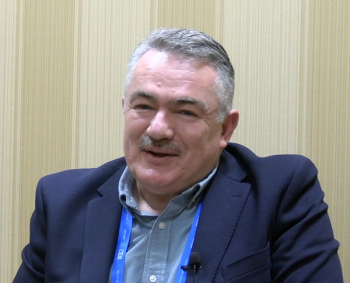
In the final part of our conversation with Spiros Pergantis, an analytical chemist and Professor of Analytical Chemistry at the University of Crete, he discusses some of the top trends that spectroscopists should be paying attention to in 2026.
In this video segment, Anika Retzmann explains how developing fully automated analyte purification procedures helps improve data quality and reproducibility compared to traditional approaches.

In this article, we illustrate how automated calibration systems and sophisticated algorithms are transforming chemical data into actionable knowledge.
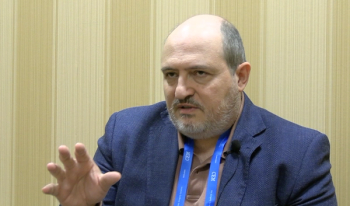
In this edition of “Inside the Laboratory,” Martin Resano, a Coordinator of the Rapid Analysis Methods with Spectroscopic Techniques (MARTE) group and as part of the Aragon Institute for Engineering Research (I3A) at the University of Zaragoza, discusses how compressed sensing spectroscopic techniques are used in his laboratory.
At the Winter Conference on Plasma Spectrochemistry, Spiros Pergantis, an analytical chemist and Professor of Analytical Chemistry at the University of Crete, sat down with Spectroscopy to discuss his group’s current research endeavors.
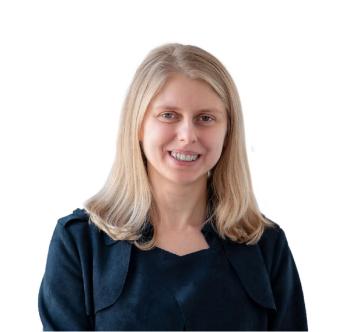
In this video segment, Sarah Theiner of Nu Instruments reflects on winning the Emerging Leader in Atomic Spectroscopy Award, explaining what winning the award means to her.
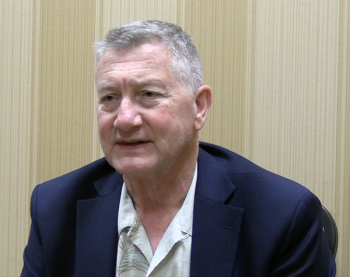
In the first part of our interview with Ken Marcus of Clemson University, he discusses what he enjoys about the Winter Conference on Plasma Spectrochemistry. Marcus also dives into his research and how the instrumentation his group uses allows for better separation of isobars without the need for chemical intervention, enhancing the accuracy of mass spectrometry (MS) readings.
In this video segment, Spiros Pergantis of the University of Crete discusses the supportive and tightly-knit nature of the spectroscopy community, which was evident at the Winter Conference on Plasma Spectrochemistry.
Top articles published this week include our exclusive interviews with key opinion leaders at the Winter Conference on Plasma Spectrochemistry.
Hunter Andrews, an R&D Staff Scientist at Oak Ridge National Laboratory, discusses how other analytical approaches, such as mass spectrometry (MS), chemometrics, and electrochemistry, can help contribute to building better monitoring systems.
Patrick Parsons of the New York State Department of Health reflects on the ongoing challenges and future opportunities where X-ray fluorescence (XRF) instruments can be used to test food matrices.
In this video segment, Anika Retzmann of the University of Calgary discusses how analyzing elemental and stable metal isotopic compositions of biological systems help answer fundamentally different research questions across fields such as biomedicine and environmental science.
In this video clip, discover insights from Alexander Scheeline's talk on transient discharges at the Winter Conference on Plasma Spectrochemistry.
Patrick Parsons of the New York State Department of Health discusses how X-ray fluorescence (XRF) instruments can be used in food safety monitoring applications.
Gerardo Gamez, a Professor and Graduate Advisor at Texas Tech University, explains how ambient ionization techniques can improve polymer characterization.

Researchers at the University of Minnesota have developed a dual AI framework that uses synthetic vegetation index data and an advanced Transformer-based segmentation model to significantly improve early detection of winter damage on golf course turf.
Hunter Andrews, an R&D Staff Scientist at Oak Ridge National Laboratory, discusses the key role that laser-induced breakdown spectroscopy (LIBS) plays in his research.
Gerardo Gamez, a Professor and Graduate Advisor at Texas Tech University, discusses the work that his laboratory at Texas Tech University performs using compressed sensing spectroscopy techniques.
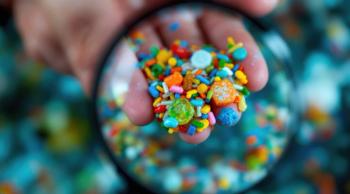
Researchers at Jiangnan University have developed a rapid, one-pot magnetic enrichment and electrochemical sensing platform that enables highly sensitive, streamlined detection of polystyrene microplastics.
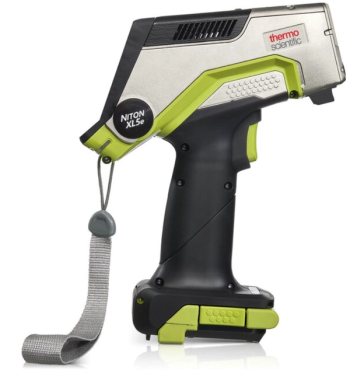
Responding to a growing need for real-time elemental analysis, Thermo Fisher Scientific announced the launch of its Niton XL5e Handheld XRF Analyzer.
Patrick Parsons of the New York State Department of Health discusses the results of his recent study comparing different X-ray fluorescence (XRF) analyzers.
Gerardo Gamez, a Professor and Graduate Advisor at Texas Tech University, provides an overview about what glow discharge optical emission spectroscopy (GDOES) is and why it’s a useful technique for elemental mapping.
Hunter Andrews, an R&D Staff Scientist at Oak Ridge National Laboratory, discusses the work that he does in his laboratory.
Top articles published this week include two interviews previewing the Winter Conference on Plasma Spectrochemistry and an inside look at shale oil extraction.

A recent study demonstrated that hyperspectral imaging offers a highly accurate, dramatically faster alternative to traditional FT-IR methods for identifying microplastics in the Po River.
Patrick Parsons of the New York State Department of Health previews his upcoming talk at the Winter Conference on Plasma Spectrochemistry.
Hunter Andrews, an R&D Staff Scientist at Oak Ridge National Laboratory, discusses what he is looking forward to at the Winter Conference on Plasma Spectrochemistry.