Here, we provide a preview of our upcoming multi-day video series that will focus on recapping the American Academy of Forensic Sciences Conference, as well as documenting the current state of the forensic science industry.

Here, we provide a preview of our upcoming multi-day video series that will focus on recapping the American Academy of Forensic Sciences Conference, as well as documenting the current state of the forensic science industry.

A research team from China has developed a portable LIBS device integrated with machine learning to achieve improved accuracy in rapid, in situ rock classification for geological exploration and petroleum logging.

Top articles published this week include a video interview on the role of near-infrared (NIR) spectroscopy in food and bioanalysis, a recap of the Wallace H. Coulter keynote lecture at Pittcon, and an article about Internet of Things (IoT) sensors.

At Pittcon, Spectroscopy sat down with Christian Huck of the University of Innsbruck to talk about how NIR and imaging spectroscopy are being used in food and bioanalysis, and where this industry is heading in the future.

Yesterday, at 5:00 pm in Ballroom East, the Wallace H. Coulter Lecture took place, and it was delivered by Cato T. Laurencin, MD, PhD, who is well-known as a scientist and entrepreneur with an extensive career in regenerative engineering. His lecture highlighted the work he and his team has done in this space.

“Atomic Perspectives,” provides tutorials and updates on new analytical atomic spectroscopy techniques in a broad range of applications, including environmental analysis, food and beverage analysis, and space exploration, to name a few. Here, we present a compilation of some of the most popular columns.

Researchers from Jiangsu University and Jimei University have developed an AI-powered detection system using near-infrared spectroscopy and a convolutional neural network long short-term memory (CNN-LSTM) model to accurately identify petroleum contamination in edible oils for improving food safety and quality control.

Top articles published this week include an interview that used handheld near-infrared (NIR) spectrometry to classify polyolefin films, previews of the upcoming Pittcon conference next week, and an article about some of the most influential spectroscopists.

Spectroscopy recently sat down with Dr. Geraldine Monjardez and two of her coauthors, Dr. Christopher Zall and Dr. Jared Estevanes, to discuss their most recent study, which examined the crystal structure of ammonium nitrate (AN) following exposure to explosive events.

The 20th European Winter Conference on Plasma Spectrochemistry (EWCPS 2025) is scheduled to take place from March 2 to 7, 2025, in Berlin, Germany. Here, we provide a conference insider regarding what spectroscopists should consider checking out, as well as the topics that will be discussed at the conference.

Researchers from the Harbin Institute of Technology and Harbin Medical University Cancer Hospital have demonstrated how optimizing silver nanoparticle concentrations can mitigate the coffee-ring effect in nanoparticle-enhanced laser-induced breakdown spectroscopy (NELIBS), improving the accuracy of elemental analysis in bioliquid samples.

Our IR Spectral Interpretation column contains some of the most popular articles, according to our readers.

At Pittcon this year, there will be numerous sessions dedicated to spotlighting the latest research that uses atomic spectroscopy or elemental analysis techniques. We highlight some of these talks below that might pique the interest of spectroscopists and researchers attending the conference this year.

At Pittcon, a symposium about advancements in forensic analysis will take place. We preview this symposium here.

On Wednesday, March 5th, the Williams Wright Award will be presented to David W. Schiering of 908 Devices. We preview the award session here.

At Pittcon this year, an oral symposium on Tuesday afternoon will discuss the increasing role of artificial intelligence in vibrational spectroscopy.

Top articles published this week include an interview that provides insight into how marine monitoring can improve mitigation of plastic pollution, coverage of the American Academy of Forensic Sciences (AAFS) conference, and an article about next-generation infrared (IR) sensors.

A recent study published in the Journal of Food Composition and Analysis explores the potential of fluorescence anisotropy as a tool for quantifying structural anisotropy in food, offering new insights for improving plant-based alternatives and dairy product textures.

A new study published in Chemical Engineering Journal by researchers from Northeast Agricultural University in China reveals that biochar aging, influenced by environmental factors like UV exposure and wet-dry cycles, alters dissolved organic matter composition and affects its effectiveness in remediating cadmium-contaminated soil.

In this short video, Coblentz Society president Luisa Profeta of Rigaku Analytical Devices and Igor Lednev of the University at Albany preview their talks and sessions taking place at Pittcon, as well as give their opinions about what topics they hope to explore more at the conference.

A recent study examined how to differentiate between genuine and false gemstones using Raman spectroscopy and multivariate analysis.

At the American Academy of Forensic Sciences Conference (AAFS) 2025, several sessions will focus on the use of spectroscopy in forensic analysis.

On Wednesday, February 19th, a plenary session will explore the pros and cons of artificial intelligence. We preview this session here.

On Wednesday, February 19th, 2025, from 8:30–9:30 am EST, a keynote address will take place at the American Academy of Forensic Sciences (AAFS) Conference. We preview the keynote here.

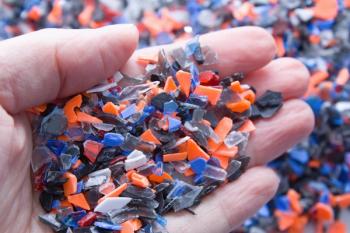
Spectroscopy sat down with Samiksha Singh to discuss her team’s latest research in microplastics research, which provided insight into how marine monitoring can improve mitigation of plastic pollution.

Researchers from Shandong University and the Chinese Academy of Sciences have developed the Shandong University Remote Raman Spectrometer (SDU-RRS), a remote Raman system designed to enhance mineral detection in planetary exploration.

Top articles published this week include an article celebrating women in spectroscopy, a video interview discussing how Raman microspectroscopy can help detect microplastics in potable water, and a news article about using attenuated total reflectance Fourier transform infrared (ATR-FT-IR) spectroscopy to detect fentanyl in fingernails.

This year, the American Academy of Forensic Sciences Conference is taking place from February 17–22, 2025. We highlight the importance of spectroscopy in this field and why we’re covering the conference this year.

Researchers at Zhengzhou Police University have developed an AI-powered Raman spectroscopy method that achieves 100% accuracy in identifying plastic beverage bottles.

Researchers from Jiangsu University review advancements in computer vision and spectroscopy for non-destructive citrus quality assessment, highlighting the role of AI, automation, and portable spectrometers in improving efficiency, accuracy, and accessibility in the citrus industry.