

A recent study from researchers in Brazil examined a-pinene’s chemical composition using mid-infrared (MIR) Fourier transform infrared (FT-IR) spectroscopy.

Will Wetzel is a Senior Editor for Spectroscopy magazine. He specializes in creating engaging, high-value content for diverse audiences. His role involves driving digital growth through KPI assessments, social media strategies, and innovative content development.
Wetzel is also a sports writer and commentator, serving as a freelance writer for several sports websites, including FanSided. He currently serves as the host, producer, and creator of “The Inside Fastball,” a LinkedIn newsletter that discusses topical issues in Major League Baseball (MLB). Outside of work, Wetzel volunteers with the Nashville Humane Association and Habitat for Humanity. His stated goal is to help build one house with Habitat for Humanity in every U.S. state.
A recent study from researchers in Brazil examined a-pinene’s chemical composition using mid-infrared (MIR) Fourier transform infrared (FT-IR) spectroscopy.

A recent study published in Meat Science highlighted how visible and near-infrared (vis-NIR) spectroscopy, when combined with chemometrics, can differentiate lamb meat based on pasture-finishing durations.

Spectroscopy sat down with Daniel Cozzolino of the University of Queensland to discuss his latest research using near-infrared (NIR) spectroscopy to determine the fatty acid content in black soldier fly.

A recent study examines widespread microplastic contamination in key Oregon seafood species, emphasizing the need for coordinated local and global efforts to reduce plastic pollution and protect ecosystems, public health, and cultural traditions.

The American Chemical Society (ACS) released its new strategic plan for 2025–2029, which reinforces the organization’s mission and core values.

A recent study from Shanghai University demonstrated aa novel method for identifying and quantifying animal-origin milk powders.

A recent study examines how vibrational spectroscopic techniques are being used to evaluate the quality of seaweed.

A recent review article highlighted how two-dimensional correlation spectroscopy (2D-COS) is advancing microplastics research and uncovering their aging processes and interactions with environmental substances.

A recent study highlights the potential of dissolved organic matter (DOM) as a key indicator for water quality management in Lake Baiyangdian.

Top articles published this week include a Q&A interview that discussed using surface-enhanced Raman spectroscopy (SERS) to investigate microplastics released from chewing gum and an article about Agilent’s Solutions Innovation Research Award (SIRA) winners.

Researchers have developed a non-invasive, highly accurate method using electrochemical impedance spectroscopy (EIS) to predict the temperature of lithium-ion batteries in real time.

Spectroscopy recently sat down with Isao Noda of the University of Delaware and Young Mee Jung of Kangwon National University to talk about the principles of two-dimensional correlation spectroscopy (2D-COS) and its key applications.

Researchers from Northern Border University in Saudi Arabia have developed a rhein-loaded self-nano emulsifying drug delivery system (RS-SNEDDS), significantly enhancing the compound's solubility, bioavailability, and therapeutic potential, particularly for neurological applications.

Ludwig-Maximilians-Universität München researchers uncover crucial protein dynamics in lyophilized drugs.

A recent study examined a new method to carbon dioxide capture to reduce energy consumption.

Research led by Changcai Cui have developed a whale optimization algorithm (WOA) to improve the accuracy, efficiency, and automation of spectroscopic ellipsometry data fitting, enabling precise measurements of film thickness and refractive index.

A recent study demonstrates the successful development of in-line monitoring techniques using Raman spectroscopy and advanced modeling for titanium dioxide-free tablet coatings.

Researchers from the Universidade de São Paulo have demonstrated the effectiveness of near-infrared spectroscopy combined with chemometric models for real-time, precise monitoring of Zika virus-like particle vaccine production.

The Solutions Innovation Research awards were presented to Professor Anders Bentien of Aarhus University, Professor Walter Gössler of the University of Graz, and Professor Gregory Offer of Imperial College London.

A new study published in Food Control introduces an approach for assessing antioxidant levels in edible oils using artificial intelligence and spectroscopy, offering significant potential for improving food quality control.

Researchers from the University of Oviedo used diffuse reflectance spectroscopy (DRS) and machine learning (ML) to analyze post-wildfire soil organic carbon fractions, identifying key spectral regions and algorithms for advancing remote sensing applications.

A recent study combines hyperspectral imaging (HSI) technology with chemometrics to deliver improved quality control of black garlic.
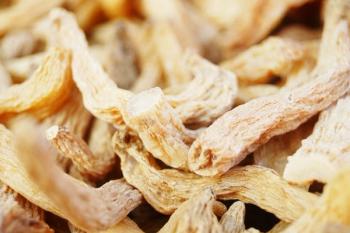
A recent study developed an accurate, non-destructive geo-traceability method using NIR spectroscopy and machine learning to authenticate the geographic origins of Gastrodia elata Bl.
Top articles published this week include two peer-reviewed articles that explore optical detection technology for seed vigor and classifying flowers, as well as a profile on Benjamin Manard, who was recognized as the winner of the 2025 Emerging Leader in Atomic Spectroscopy.

A recent study used surface-enhanced Raman spectroscopy (SERS) combined with chemometrics to assess polycyclic aromatic hydrocarbons (PAHs) in water.

A recent study examined how Raman spectroscopy, when combined with machine learning (ML), can detect and analyze fertilizer nutrients.

A comprehensive review in the Microchemical Journal highlights ATR FT-IR spectroscopy's transformative role in forensic bloodstain analysis, detailing its applications, challenges, and potential advancements for more precise and reliable crime-solving methodologies.

A recent study looked at how spectroscopy can be used to differentiate ink based on its color and brand.

Researchers have developed a novel three-step hybrid variable selection strategy, SiPLS-RF(VIM)-IMIV, to enhance the accuracy and efficiency of soil potassium measurement using near-infrared spectroscopy, offering significant advancements for precision agriculture and real-time soil monitoring.

A recent study from China explored a new, non-destructive method combining terahertz time-domain spectroscopy (THz-TDS) and machine learning to accurately classify wheat gluten strength.