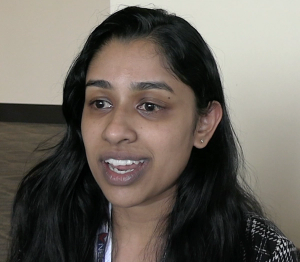
Top articles published this week include an interview with Jorge Caceres of Complutense University, an inside look at pharmaceutical fermentation monitoring, and a news article on timely drug intelligence.

Top articles published this week include an interview with Jorge Caceres of Complutense University, an inside look at pharmaceutical fermentation monitoring, and a news article on timely drug intelligence.

This review article highlights how a new review by Da-Wen Sun demonstrates that integrating spectroscopy with chemometric techniques can significantly improve cold chain food quality monitoring, authentication, and overall system efficiency.

A recent study investigated how structural phase changes inside sensing materials dynamically influence performance during gas exposure.

The study reveals that infrared and Raman spectroscopy can accurately identify dye sources and detect light-induced chemical degradation in culturally significant Māori harakeke fibers.

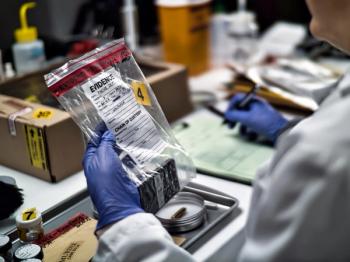
In this article, we focus on why LIBS is particularly ideal for forensic applications, especially for studying human or animal remains.

A recent study demonstrates that near-infrared (NIR) spectroscopy is a fast, cost-effective, and reliable tool for assessing soil and tree ecological traits, offering major potential for large-scale forest conservation and monitoring.

In this brief article, we discuss a rare celestial event that happened in late November involving the planet Saturn.

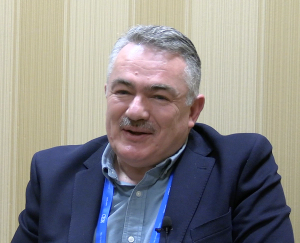
Jorge Caceres, a professor at Complutense University in Madrid, Spain, sat down with Spectroscopy to discuss how LIBS works as a fast, simple, cost-effective, and analytically conclusive technique for confidently re-associating human bone remains.

Top articles published this week include an interview with Damodaran Kirshnan Achary, who is the director of the NMR Facility at the University of Pittsburgh, and a tutorial article on biosensors.

A recent study demonstrated that deep learning combined with ICP spectroscopy can accurately and affordably predict multiple soil properties.

The article highlights how rapidly advancing, non-destructive spectroscopic and imaging technologies, supported by AI, multi-modal data integration, and increasing instrument portability.

A new study led by Meirong Liu at the Beijing National Laboratory for Molecular Sciences provides a comprehensive framework to eliminate instrumental and experimental artifacts in photoluminescence spectroscopy.

This brief article highlights the key takeaways from studying the 3I/ATLAS comet and what it means for space exploration moving forward.

A recent study used operando UV-vis spectroscopy to learn more about metal–sulfur redox reactions.

A new study published in Ecological Informatics finds that hyperspectral remote sensing combined with machine learning can accurately predict grassland forage quality across global biomes.

Top articles published this week include our coverage of the 2025 Eastern Analytical Symposium (EAS) conference and a recap of a study that detected lunar water ice using visible and near infrared (VNIR) spectroscopy.

A recent study analyzed sediment cores from estuaries in the Tampa Bay area, revealing the damage that "legacy" nutrients are having on the ecological record there.

Spectroscopy profiles the three Heritage Lecture Speakers set to deliver talks at the Winter Conference on Plasma Spectrochemistry in 2026.

A recent study establishes how particle size, particle shape, phase angle, and ice abundance influence VNIR spectral signatures, providing a refined framework for accurately detecting and quantifying lunar water ice in polar regions.

Karl Booksh, a Professor of Chemistry at the University of Delaware, has won the 2025 EAS Award for Outstanding Achievements in Chemometrics.

A recently developed sensor demonstrated that it could improve tannic acid detection in both food and environmental systems.

Researchers in Germany have demonstrated in the journal Cement and Concrete Research that laser-induced breakdown spectroscopy (LIBS) offers a fast, accurate, and non-destructive method for estimating cement content in concrete.

Top articles published this week include a two-part interview with Sergei Kazarian and Bernadette Byrne of Imperial College London, an inside look at wearables technology, and a tribute to Phil Williams, a pioneer of near-infrared (NIR) spectroscopy.

In this deep dive into one of America’s fastest-growing sports, we highlight how a range of analytical techniques, including spectroscopy, can and have been used to analyze pickleball equipment.

A new study from Heilongjiang Bayi Agricultural University pioneers rapid, non-destructive detection of illicit food additives using deep learning and near-infrared spectroscopy.

In this continuation of our discussion with Sergei Kazarian and Bernadette Byrne, they address how recent advancements in FT-IR imaging are set to propel the biomedical and pharmaceutical industries forward.

A recent study explores how Fourier transform infrared (FT-IR) spectroscopy can be used to predict key dough-making characteristics.

Spectroscopy sat down with Sergei Kazarian and Bernadette Byrne to talk about their latest research collaboration, which offers insights into why FT-IR spectroscopic imaging is advantageous in biomedical and pharmaceutical analysis.

A recent article discussed the need for interdisciplinary collaboration to better understand the unique chemistry occurring at air–water interfaces. Experimental and conceptual challenges of linking molecular-level structure to macroscopic reactivity and calls for integrating advanced spectroscopy, computation, as well as cross-disciplinary approaches to overcome current limitations, are highlighted. This summary was generated with the help of artificial intelligence.


Published: January 30th 2025 | Updated:

Published: January 7th 2025 | Updated:

Published: October 30th 2025 | Updated:

Published: October 9th 2025 | Updated:

Published: March 6th 2025 | Updated:

Published: August 25th 2025 | Updated: