
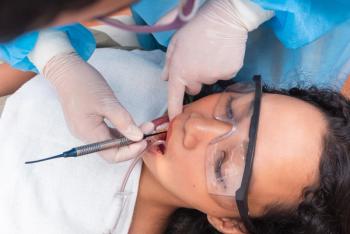
A recent study found that coffee, red wine, and Coca-Cola significantly reduce the hardness and alter the chemical structure of dental resin composites.

Will Wetzel is a Senior Editor for Spectroscopy magazine. He specializes in creating engaging, high-value content for diverse audiences. His role involves driving digital growth through KPI assessments, social media strategies, and innovative content development.
Wetzel is also a sports writer and commentator, serving as a freelance writer for several sports websites, including FanSided. He currently serves as the host, producer, and creator of “The Inside Fastball,” a LinkedIn newsletter that discusses topical issues in Major League Baseball (MLB). Outside of work, Wetzel volunteers with the Nashville Humane Association and Habitat for Humanity. His stated goal is to help build one house with Habitat for Humanity in every U.S. state.
A recent study found that coffee, red wine, and Coca-Cola significantly reduce the hardness and alter the chemical structure of dental resin composites.

Researchers at the National Research Council (CNR) in Rome have developed a compact spectroscopic sensor and machine learning system that can accurately recognize beverages in smart cups or glasses.

A recent study presented an AI-enhanced NIRS-XRF fusion spectroscopy method that significantly improves coal classification and quality prediction for coking enterprises.

A new review in Digital Discovery by Yongqiang Cheng of MIT and Oak Ridge National Laboratory highlights how AI-driven methods are changing how we study atomic vibrations.

Top articles published this week include a tutorial about calibration transfer techniques and inter-instrument variability, a couple news articles about quantifying microplastics, and a feature on the “pressure to publish.”

Chinese Academy of Sciences researchers combine spectroscopic methods with deep learning to classify microplastics at near-perfect accuracy.

Researchers from Zhejiang University highlight how combining machine learning with spectroscopic imaging can transform biomedical research by enabling more precise, interpretable, and efficient analysis of complex molecular data.

Jiangnan University researchers map the evolution, challenges, and future of spectroscopy in preserving humanity’s shared legacy.
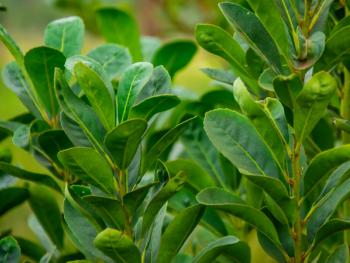
A new study by researchers from Spain and Brazil demonstrates that combining near- and mid-infrared spectroscopy with advanced statistical analysis can identify how growing site, harvest season, and clonal variation influence yerba mate’s chemical composition.

Researchers at the National Institute of Technology Rourkela have developed a highly accurate machine learning-assisted FT-IR spectroscopy method to detect and quantify sawdust adulteration in coriander powder, offering a fast and scalable solution to enhance food safety and authenticity.

A recent study reveals that microplastics, primarily blue polyolefin fibers, are widespread throughout the western Arctic Ocean’s water column.
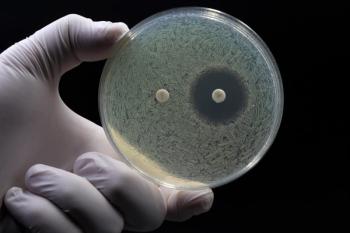
A research team from Putian University has developed a dual surface-enhanced Raman spectroscopy (SERS) and Fourier transform infrared spectroscopy (FT-IR) approach to reveal detailed molecular changes in E. coli exposed to different antibiotics.
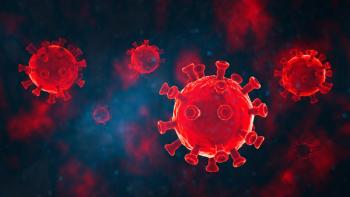
Researchers at Santiago de Compostela University (Santiago, Spain) find ultraviolet–visible (UV–vis) spectroscopy can detect and quantify post-COVID condition with high accuracy, paving the way for real-time clinical use.
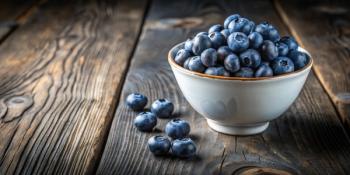
A new study reveals that anthocyanin-rich fruit extracts degrade rapidly under sunlight but remain most stable in cold, dark storage.
Top articles published this week include an article about pioneering analytical chemist Charles Kenneth Mann, a tutorial about using Raman spectroscopy and machine learning for chemical monitoring, and an article about magma storage in Hawaii volcanoes.

Algerian researchers used X-ray diffraction (XRD) with Rietveld refinement and Fourier transform infrared (FT-IR) spectroscopy to show how long-term exposure to desert conditions causes microstructural and compositional degradation in solar panels, offering critical insights for improving monocrystalline photovoltaic (PV) durability in extreme climates.

Researchers in Brazil have demonstrated that near-infrared (NIR) spectroscopy, combined with chemometric modeling, can accurately and non-invasively analyze methane, carbon dioxide, and water content in high-pressure natural gas systems.

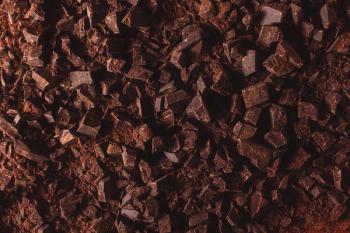
Researchers have developed a fast, chemical-free method using near-infrared spectroscopy to accurately analyze the quality of dark chocolate, offering a sustainable alternative to traditional testing techniques.
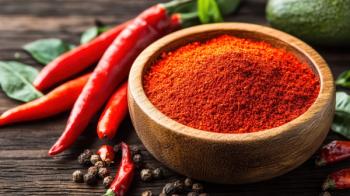
A recent study explored a new robust, multi-technique approach to detect ferric oxide red in spices.

A new study reveals that as Hawaiian volcanoes evolve, their magma storage shifts from shallow crustal reservoirs to deeper mantle zones, offering critical insights into volcanic behavior and future hazard potential.

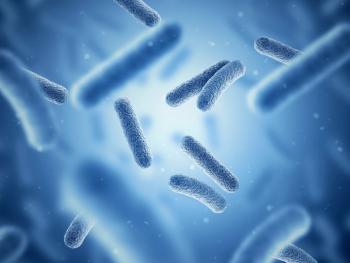
Researchers at the Czech Academy of Sciences have demonstrated that cost-effective silver and gold nanoparticles, used with surface-enhanced Raman spectroscopy (SERS), can sensitively detect stress-induced adenine release in bacteria, paving the way for rapid, point-of-care diagnostic tools.
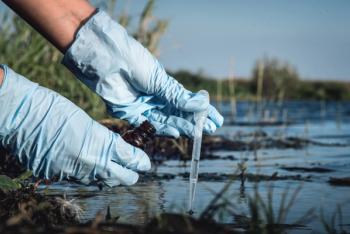
Researchers in China developed a novel "water quality fingerprint spectrum" to analyze complex water pollution data in Lake Shahu, revealing key pollution drivers like tourism and offering a scalable framework for improved environmental management.
Top articles published this week include an interview with Shreya Singh, a tutorial about using Raman spectroscopy to probe water content and structures in biological tissues, and an article about detecting honey adulteration using near-infrared (NIR) spectroscopy.

Researchers at Jiangnan University have developed a highly accurate method combining Raman spectroscopy with deep learning to monitor acid value in palm oil.

A recent study developed and tested a highly stable, nanozyme-based colorimetric sensor capable of rapidly and accurately detecting vitamin C in commercial beverages, offering a practical tool for real-time nutritional assessment.

A new study led by Gaëlle Belleau-Magnat at Université de Sherbrooke reveals that Arctic gossans, analyzed using rover-compatible techniques, may serve as valuable analogs for Martian environments and help guide the search for past life on Mars.

Researchers from Université de Montréal have demonstrated that a new handheld Raman spectroscopy device, the UltraProbe, can accurately and rapidly detect retroperitoneal soft tissue sarcomas during surgery, offering real-time tissue analysis that could improve surgical outcomes.

Horiba, Ltd. announced that David Birch, PhD, who is an Emeritus Professor at the University of Strathclyde and the co-founder of Horiba Jobin Yvon IBH Ltd., has been elected as an Honorary Fellow of the Institute of Physics (IOP), the organization's top recognition