

A new study used advanced techniques, including µ-Raman spectroscopy and machine learning, to map and predict microplastic pollution on São Paulo’s urban beaches.

Will Wetzel is a Senior Editor for Spectroscopy magazine. He specializes in creating engaging, high-value content for diverse audiences. His role involves driving digital growth through KPI assessments, social media strategies, and innovative content development.
Wetzel is also a sports writer and commentator, serving as a freelance writer for several sports websites, including FanSided. He currently serves as the host, producer, and creator of “The Inside Fastball,” a LinkedIn newsletter that discusses topical issues in Major League Baseball (MLB). Outside of work, Wetzel volunteers with the Nashville Humane Association and Habitat for Humanity. His stated goal is to help build one house with Habitat for Humanity in every U.S. state.
A new study used advanced techniques, including µ-Raman spectroscopy and machine learning, to map and predict microplastic pollution on São Paulo’s urban beaches.

A new review article highlights the growing use of random forest machine learning (ML) models in biomedical signal analysis, emphasizing their potential for detecting cell damage, assessing toxicity, and advancing diagnostic classification.

A recent study demonstrated that portable Raman spectroscopy, combined with advanced statistical modeling, offers a reliable, non-destructive method for monitoring nitrate levels in greenhouse-grown spinach.

A new study has confirmed the presence of multiple microplastic types in human amniotic fluid using a dual-method approach, raising concerns about potential long-term impacts on fetal development.

A new bibliometric study published in Infrared Physics & Technology highlights the growing global impact of near-infrared (NIR) spectroscopy in biofuel research, revealing key trends, contributors, and future directions for advancing sustainable energy solutions.

Top articles published this week include a feature article about big pharma’s investments in U.S.-based manufacturing, an article about the 2025 Emerging Leader in Molecular Spectroscopy Lingyan Shi, and some news items detailing the winners of the Coblentz Society’s student awards.
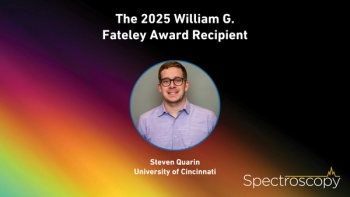
In a recent announcement, the Coblentz Society, an organization committed to promoting and nurturing young scientists to pursue vibrational spectroscopy, announced that Steven Quarin, a student at the University of Cincinnati, is this year’s recipient of the William G. Fateley Student Award.

A new review published in Trends in Food Science & Technology highlights how advanced spectroscopy, multidimensional chromatography, artificial intelligence (AI), and novel sensors are improving food safety by enhancing sensitivity, speed, and sustainability in contaminant detection.

A recent study presented a simple correction method that significantly improved the accuracy of Transmission Raman Spectroscopy by mitigating spectral distortions caused by tablet thickness, porosity, and compaction force.

The Coblentz Society, a nonprofit organization dedicated to fostering the application and understanding of vibrational spectroscopy, announced the winners of its 2025 student awards.

Researchers at INIAV in Portugal have demonstrated that near-infrared (NIR) spectroscopy combined with chemometric algorithms offers a rapid, non-destructive, and accurate method for detecting harmful fumonisins in maize, enhancing food safety monitoring.

Researchers at China Agricultural University developed a rapid and accurate spectroscopic method using NIR and FT-IR combined with PLS regression to measure protein content in rice noodles, enhancing quality control for the popular river snail rice noodle (luosifen) industry.

This study presents a new system that enables the precise detection of glucose, choline, and lactate without traditional labels or antibodies.

A recent study unveiled a new adaptive Raman spectroscopy and transformer-based model for fast, high-accuracy microbial classification.
Top articles published this week include an interview about drug detection techniques with Robert Ewing of the Pacific Northwest National Laboratory, a feature about how funding cuts are impacting analytical chemists, and a compilation of articles about how Raman spectroscopy is being used in cancer diagnostics.

A recent study presented a new, highly sensitive and eco-friendly fluorescent sensor, SU-1, which is capable of detecting ultra-low levels of cyanide in water and living cells.

Researchers at China’s National Key Laboratory have identified 170 nickel autoionization states using resonance ionization mass spectrometry, significantly advancing the spectral database critical for laser isotope separation and atomic spectroscopy.

Researchers from Nanjing University of Information Science & Technology have introduced a breakthrough AI-enhanced multimodal strategy for real-time detection of polyamide microplastics contaminated with heavy metals.

A new review article highlights the role Fourier transform infrared (FT-IR) spectroscopy plays in characterizing nanomaterials and polymers.
Researchers from China Agricultural University introduce PeaNet, promising rapid, accurate, and nondestructive protein analysis.

Researchers at the University of Belgrade have demonstrated that combining Raman and FT-IR spectroscopy with machine learning algorithms offers a highly accurate, non-destructive method for identifying seed varieties in lettuce, paprika, and tomato.

A compilation of articles that explore the role of Raman spectroscopy in cancer research is presented.

Researchers from Guangdong Polytechnic Normal University highlight how combining Raman spectroscopy with machine learning enables rapid, non-destructive, and highly accurate analysis of fruit quality, offering transformative potential for food safety and agricultural diagnostics.

In this interview segment, Robert Ewing discusses how his contactless method improves on traditional drug detection techniques and how the VaporID technology remains adaptive to emerging synthetic variants.

Published in Food Chemistry, researchers from Jiangsu University of Science and Technology and Jimei University use near-infrared (NIR) spectroscopy and machine learning to tackle food adulteration and enhance quality control.
Top articles published this week include an interview series with Robert Ewing of the Pacific Northwest National Laboratory, a news article on using infrared (IR) cameras to see invisible methane leaks, and an article about the role of vibrational spectroscopy in analyzing plant-based food products.
In Part II of our three-part interview with Robert Ewing, he reviews the results of the Nogales border test.

Researchers at Heilongjiang University have developed a rapid and accurate method for detecting sweeteners in food using Raman spectroscopy combined with a Random Forest machine learning algorithm, offering a powerful tool for improving food safety.

Researchers from institutions in Brazil harness near-infrared spectroscopy and machine learning to determine cocoa content with precision.

Researchers from Jiangsu University and Jimei University developed an advanced FT-NIR-based method for food safety monitoring, achieving over 97% accuracy in identifying multiple oil-based contaminants in peanut oil.