
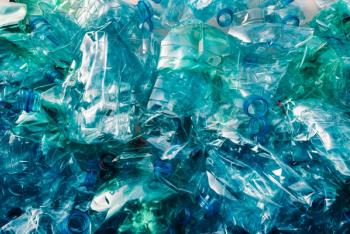
Researchers from Tohoku University, Shibaura Institute of Technology, and Shizuoka University unveil advanced sorting system using NIR, THz, and machine learning for improved recycling outcomes.

Will Wetzel is a Senior Editor for Spectroscopy magazine. He specializes in creating engaging, high-value content for diverse audiences. His role involves driving digital growth through KPI assessments, social media strategies, and innovative content development.
Wetzel is also a sports writer and commentator, serving as a freelance writer for several sports websites, including FanSided. He currently serves as the host, producer, and creator of “The Inside Fastball,” a LinkedIn newsletter that discusses topical issues in Major League Baseball (MLB). Outside of work, Wetzel volunteers with the Nashville Humane Association and Habitat for Humanity. His stated goal is to help build one house with Habitat for Humanity in every U.S. state.
Researchers from Tohoku University, Shibaura Institute of Technology, and Shizuoka University unveil advanced sorting system using NIR, THz, and machine learning for improved recycling outcomes.
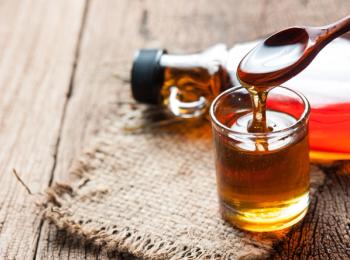
Researchers at McGill University have developed a fast, eco-friendly method using portable Raman spectroscopy and deep learning to accurately assess the antioxidant content of maple syrup on-site.

Top articles published this week include an interview with Ayanjeet Ghosh and Rohit Bhargava on imaging for biomedical applications, a preview of the 78th International Symposium on Molecular Spectroscopy, and a news article on using artificial intelligence (AI) to study minerals.

Researchers at Guangdong University of Technology have developed a fast, non-destructive Raman spectroscopy method to accurately detect active ingredients in complex drug formulations.

On Wednesday, May 21st, 2025, Waters Corporation announced in a press release that they have acquired Halo Labs, which is a venture-backed company that produces imaging-based particle analysis technologies.
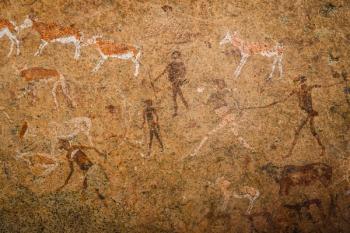
A recent study published in the Journal of Archaeological Science: Reports reveals that a multi-headed snake motif at Argentina's La Candelaria rock shelter was created through multiple painting events over time.

A new review in TrAC Trends in Analytical Chemistry by Alfred Chin Yen Tay and Liang Wang highlights how machine learning (ML) is transforming surface-enhanced Raman spectroscopy (SERS) into a powerful, clinically viable tool for rapid and accurate medical diagnostics.
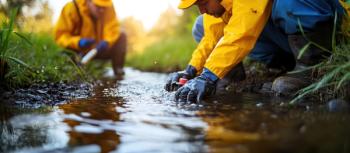
A study published in Chemosphere by researchers at the Technical University of Denmark demonstrates that fluorescence spectroscopy can serve as a rapid, on-site screening tool for detecting pharmaceutical contaminants in groundwater.

Researchers from several Chinese universities have developed a low-cost, red mud-based catalyst doped with manganese oxides that efficiently oxidizes toluene at lower temperatures, offering a sustainable solution for air pollution control and industrial waste reuse.

In the final part of this three-part interview, Ayanjeet Ghosh of the University of Alabama and Rohit Bhargava of the University of Illinois Urbana-Champaign talk about the key performance metrics they used to evaluate their model, and what the future of neurodegenerative disease research looks like.

Researchers from Tsinghua and Hainan Universities have developed a portable, non-destructive method using NIR spectroscopy, hyperspectral imaging, and machine learning to accurately assess the quality and detect adulteration in whey protein supplements.

In the second part of this three-part interview, Ayanjeet Ghosh of the University of Alabama and Rohit Bhargava of the University of Illinois Urbana-Champaign discuss how machine learning (ML) is used in data analysis and go into more detail about the model they developed in their study.

The 78th International Symposium on Molecular Spectroscopy (ISMS) is set to take place this year from June 23rd to 27th, 2025. Here is what attendees can expect.

In the first part of this three-part interview, Ayanjeet Ghosh of the University of Alabama and Rohit Bhargava of the University of Illinois Urbana-Champaign discuss their interest in using discrete frequency infrared (IR) imaging to analyze protein secondary structures.
Top articles published this week include a new Icons of Spectroscopy column, a news story about the use of Fourier transform infrared (FT-IR) spectroscopy in gemology, and a Q&A interview about elemental analysis in pharmaceutical analysis.
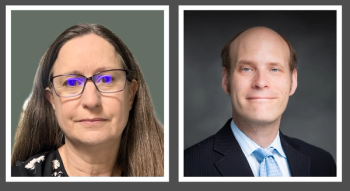
In this final part of our conversation with Harrington and Seibert, they discuss the main challenges that they encountered in their study and how we can improve elemental impurity analysis in pharmaceutical quality control.

Researchers from Jiangnan University introduced a sensitive, selective, and highly adaptable new probe for detecting hydrazine.

Researchers at the Sinopec Research Institute have developed a novel method using virtually generated mid-infrared spectra to accurately quantify plastic blends, offering a faster, scalable solution for recycling and environmental monitoring.
In Part II of our conversation with James Harrington of RTI International in Research Triangle Park, North Carolina, who was the lead author of this study, as well as coauthor Donna Seibert of Kalamazoo, Michigan, they talk about the reproducibility for Hg and V, as well as the ICP-MS and XRF results compare to one another.
Spectroscopy sat down with James Harrington of Research Triangle Institute (RTI International) in Research Triangle Park, North Carolina, who was the lead author of this study, as well as coauthor Donna Seibert of Kalamazoo, Michigan. In Part I of our conversation with Harrington and Seibert, they discuss the impact of ICH Q3D and United States Pharmacopeia (USP) <232>/<233> guidelines on elemental impurity analysis and how they designed their study.

Our “Chemometrics in Spectroscopy” column highlights the methodology that is used in order to apply chemometric methods to data. Integrating chemometrics with spectroscopy allows scientists to understand solutions to their problems when they encounter surprising results. Recently, columnists Howard Mark and Jerome Workman, Jr., wrote a series of articles about data transforms in chemometric calibrations. In this listicle, we profile all pieces in this series and invite you to learn more about applying chemometric models to continuous spectral data.

A recent astronomical study saw a research team from Argentina study an open star cluster using spectroscopy instrumentation.

A new study in the Journal of Food Composition and Analysis showcases high-performance detection using artificial intelligence and spectroscopy.

Researchers at Harbin Medical University recently developed a SERS-based diagnostic platform that uses DNA-driven “molecular hooks” and AI analysis to enable real-time detection of cardiovascular drugs in blood while eliminating interference from larger biomolecules.
Researchers in South Korea demonstrate a fast and reliable method for measuring lithium isotope abundance using dual-laser plasma technology.
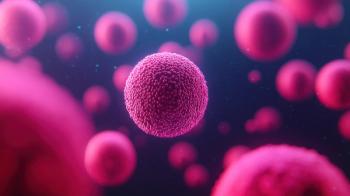
Researchers from Kannur University and Anand Niketan College have developed Dy³⁺-doped TiO₂ nanoparticles with unique luminescent properties using a novel solvothermal method.
Top articles published this week include an announcement from Waters Corporation, a news story about the hidden geology of the Big Island of Hawaii, the latest “IR Spectral Interpretation” column, which focuses on analyzing carbonyl compounds, and wearable spectroscopy sensors.

New predictive models promise to revolutionize livestock feeding strategies in one of China’s most important pastoral regions.

A new study published in Chemosphere by researchers at Bharathidasan University reveals alarming seasonal microplastic (MP) contamination in fish and shellfish from India's Pichavaram Mangroves.

Researchers from the University of Nevada, Reno, have conducted the most comprehensive subsurface analysis of Hawaiian shield basalts to date, using advanced spectroscopic and geochemical techniques to reveal short-lived hydrothermal alteration processes and establish a new foundation for future volcanic and geothermal studies.