

In this interview segment, Leo Gkouvelis of Ludwig Maximilian University discusses the opposition surge effect and how his study explored a new method for modeling the opposition surge effect in studying exoplanets.

Will Wetzel is a Senior Editor for Spectroscopy magazine. He specializes in creating engaging, high-value content for diverse audiences. His role involves driving digital growth through KPI assessments, social media strategies, and innovative content development.
Wetzel is also a sports writer and commentator, serving as a freelance writer for several sports websites, including FanSided. He currently serves as the host, producer, and creator of “The Inside Fastball,” a LinkedIn newsletter that discusses topical issues in Major League Baseball (MLB). Outside of work, Wetzel volunteers with the Nashville Humane Association and Habitat for Humanity. His stated goal is to help build one house with Habitat for Humanity in every U.S. state.
In this interview segment, Leo Gkouvelis of Ludwig Maximilian University discusses the opposition surge effect and how his study explored a new method for modeling the opposition surge effect in studying exoplanets.

As part of the SciX Conference program, a keynote presentation is set to take place on Monday October 6, 2025, from 8:30–9:30 am EST in Ballroom B. This year’s keynote speaker is Michael Gold of Redwire, and he will deliver a talk titled, “Unveiling the Unknown: The Pursuit to Understand UAP’s."
This year, the SciX Conference will take place at the Northern Kentucky Convention Center in Covington, Kentucky, from October 5–10, 2025

A recent study provided new information on how berberine mid-chain fatty acid salts interact with lysozyme.


A recent study conducted by researchers from the Taiyuan University of Technology (China) explored a new way to detect pesticide residues at very low levels.

Spectroscopy is being used in speleology more frequently now. In this brief article, we highlight how it is being used and what spectroscopic techniques are being applied.

A recent study investigated the deterioration mechanisms of rammed earth materials from the UNESCO World Heritage Pingyao Ancient City walls.

This explainer video highlights how nuclear magnetic resonance (NMR) spectroscopy is being used to improve the evaluation of vegetable oil quality.

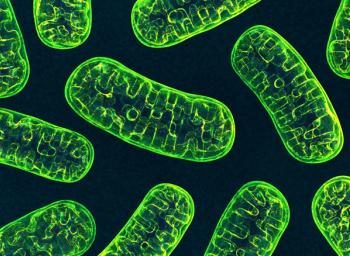
A recent study tested a new mitochondria-targeting fluorescent probe, known as Mito-CDM, to see if it can improve the monitoring of mitochondrial viscosity.

A recent study demonstrated that combining hyperspectral imaging with multivariate curve resolution can non-invasively detect and monitor intestinal necrosis in acute mesenteric ischemia, offering a promising tool for earlier diagnosis and improved patient outcomes.
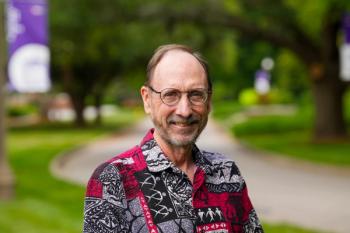
In Part 2 of this “Inside the Laboratory,” feature on George Shields, a professor of chemistry at Furman University and the founder and director of the Molecular Education and Research Consortium in Undergraduate Computational ChemistRY (MERCURY), Consortium, we discuss his research into computational approaches to improve our understanding of molecular behavior in both biochemistry and atmospheric chemistry and his work applying replica exchange molecular dynamics (REMD) for breast cancer drug design.

Top articles published this week include a video highlighting some of the icons of spectroscopy and a news article about using machine learning to quantify uncertainty in spectroscopic analyses.

This explainer video describes the role that reflection and emission spectroscopy play in characterizing rocky exoplanets.
In this edition of “Inside the Laboratory,” George Shields, a professor of chemistry at Furman University and the founder and director of the Molecular Education and Research Consortium in Undergraduate Computational ChemistRY (MERCURY), discusses the goal of MERCURY and some of its most recent projects

In a recent press release, Horiba, an analytical and measurement technology company, announced the release of its Aqualog-Next A-TEEM Spectrometer.

This explainer video highlights how energy-dispersive inelastic X-ray scattering (EDIXS) can be used to discriminate between different stamps.

A recent study conducted by researchers from Northwestern Polytechnical University explored how to improve laser-induced breakdown spectroscopy (LIBS) for analyzing complex mineral samples

A new study demonstrates that infrared spectroscopy combined with chemometric modeling offers a fast, cost-effective way to classify plant-based milk alternatives and detect compositional variability, particularly in almond beverages.

The Winter Conference on Plasma Spectrochemistry will convene in Tucson, Arizona, from January 11–17, 2026.
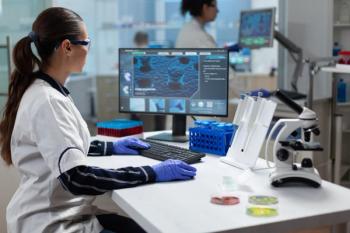
In a recent review article, a team of researchers from Shanghai Jiao Tong University explored how to improve the monitoring of drugs and metabolites in biomedical research and clinical settings.

Top articles published this week include a video about the structural complexity of polyethylene, a news story about using near-infrared (NIR) and X-ray fluorescence (XRF) to classify coal types, and a look at microplastic analysis.

This explainer video highlights how spectroscopic sensors can help improve health monitoring applications.

This explainer video highlights how spectroscopy is being integrated with artificial intelligence to improve detection accuracy of microplastics.
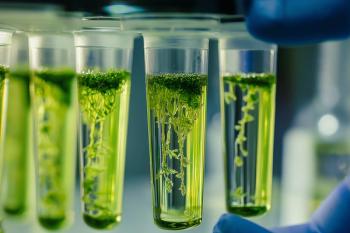
A recent study demonstrated that UV–visible (UV-vis) spectroscopy combined with machine learning (ML) can provide a fast, cost-effective, and automated method for detecting biological contamination in microalgae cultures.
Raman spectroscopy, combined with computational modeling and machine learning, shows strong potential for distinguishing PFAS compounds, offering a promising new framework for environmental monitoring and contamination analysis.

Spectroscopy is increasingly being used in cultural heritage studies. We discuss spectroscopy's evolution in this field.