

A recent study examines how the integration of artificial intelligence models with Raman spectroscopy can improve the accuracy of pathological diagnoses.

Will Wetzel is a Senior Editor for Spectroscopy magazine. He specializes in creating engaging, high-value content for diverse audiences. His role involves driving digital growth through KPI assessments, social media strategies, and innovative content development.
Wetzel is also a sports writer and commentator, serving as a freelance writer for several sports websites, including FanSided. He currently serves as the host, producer, and creator of “The Inside Fastball,” a LinkedIn newsletter that discusses topical issues in Major League Baseball (MLB). Outside of work, Wetzel volunteers with the Nashville Humane Association and Habitat for Humanity. His stated goal is to help build one house with Habitat for Humanity in every U.S. state.
A recent study examines how the integration of artificial intelligence models with Raman spectroscopy can improve the accuracy of pathological diagnoses.
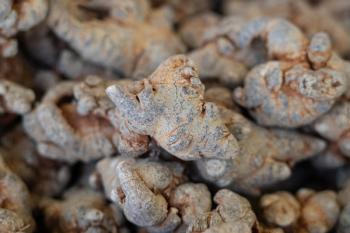
A recent study investigated the viability of employing Fourier-transform near infrared spectroscopy (FT-NIR) to assess the saponin compounds content of P. notoginseng.
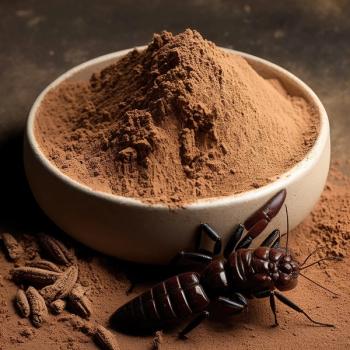
A recent study analyzes the level of adulteration of cricket powder in plant flours using vibrational spectroscopy techniques.

A recent review article covered the enormous strides terahertz (THz) spectroscopy has made in food safety applications.

A recent study looks at how surface-enhanced Raman spectroscopy (SERS) can be used as a tool for noninvasive detection.

A recent study published in Food Frontiers shows how Raman spectroscopy is being applied in biomedical sciences and what it means for the industry moving forward.

Detecting Fusarium head blight (FHB) in wheat kernels and flour is important in ensuring food safety in the agriculture industry. Here, we recap a recent study that uses non-destructive spectroscopic techniques and machine learning algorithms to detect FHB.

A recent study from Agroscope examined using visible and near-infrared spectroscopy to assess soil fertility.

Top articles this week on Spectroscopy covered topics such as soil acidification, wearable technology, and food safety analysis.

A recent study used Raman spectroscopy to analyze the crystalline state of minerals.

A recent study examined the infrared (IR) spectra of carbonaceous chondrites, which revealed more information about the early Solar System.

A recent study showcased how a new Raman spectrometer can improve planetary material analysis.

Reclaimed asphalt (RA) is often used in many road maintenance and construction projects. A recent study demonstrated how Fourier transform infrared spectroscopy (FT-IR) can be used to analyze RA to ensure its efficacy for new asphalt mixtures.

A recent study shows how near-infrared spectroscopy can be used to analyze total nitrogen and total phosphorus levels in dairy slurry.
A recent study from Hefei University examined the role that Raman spectroscopy has played in food safety analysis.

A recent study published in the International Journal of Molecular Science shows how Raman spectroscopy combined with machine learning can serve as an improved alternative detection method to preclinical Alzheimer’s diagnosis.

A recent case study in southern Australia shows how mid-infrared (MIR) spectroscopy can analyze overall soil quality by measuring its acidity.

A recent study from Korea examined how inductively coupled plasma–optical emission spectroscopy (ICP-OES) and mass spectrometry (MS) to determine the geographical origin of red pepper paste.

This week, Spectroscopy magazine published stories about how mid-infrared spectroscopy is being used to study gas giants in our solar system and malaria vectors, among others.

A recent review article discusses four advanced Raman techniques, including surface-enhanced Raman scattering (SERS), Raman tweezers (RTs), tip-enhanced Raman scattering (TERS), and Raman mapping/imaging (RM/RI), and how these techniques are being applied for the detection of micro- and nanoplastics.
Spectroscopy is at the forefront of many changes happening across many industries. Here, two lead investigators comment on how they stay updated with the latest innovations and developments.

A recent study from the Children’s National Health System and George Washington University explored how near-infrared (NIR) spectroscopy can be used to improve epilepsy detection in patients with mitochondrial disorders.

A recent study out of New Zealand examined how near-infrared (NIR) and mid-IR spectroscopy can be used for quality control analysis of tree bark.

A recent study highlighted how infrared (IR) spectroscopy is being used in oncology to help detect the early onset of gynecological cancers.
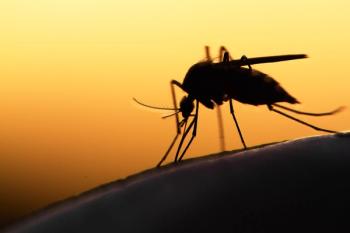
A recent study shows how the combination of mid-infrared (mid-IR) spectroscopy and machine learning can rapidly assess blood-feeding histories of mosquitos. We highlight this recent study here.

A recent study out of Alexandria University examines how near-infrared (NIR) spectroscopy has been combatting the illegal spice trade.
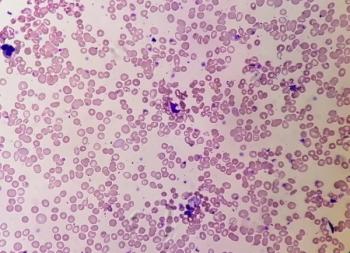
A recent study examined how surface-enhanced Raman spectroscopy (SERS) is being used to help diagnose pancytopenia-related diseases earlier.

The emergence of artificial intelligence (AI) has revolutionized spectroscopic techniques, including surface-enhanced Raman spectroscopy (SERS).
Spectroscopy published stories this work that covered topics such as fluorescence spectroscopy, Raman spectroscopy, and hyperspectral imaging.

A recent study examined how advancements in Raman spectroscopy have aided breast cancer diagnosis and treatment.