

An exploration of the battery industry is presented here, with future outlooks described.

Will Wetzel is a Senior Editor for Spectroscopy magazine. He specializes in creating engaging, high-value content for diverse audiences. His role involves driving digital growth through KPI assessments, social media strategies, and innovative content development.
Wetzel is also a sports writer and commentator, serving as a freelance writer for several sports websites, including FanSided. He currently serves as the host, producer, and creator of “The Inside Fastball,” a LinkedIn newsletter that discusses topical issues in Major League Baseball (MLB). Outside of work, Wetzel volunteers with the Nashville Humane Association and Habitat for Humanity. His stated goal is to help build one house with Habitat for Humanity in every U.S. state.
An exploration of the battery industry is presented here, with future outlooks described.

A recent study from Carbon highlights the application of Raman spectroscopy in investigating disorder levels in graphite materials.

Here, we spotlight a few recent studies that explored the integration of artificial intelligence (AI) with spectroscopic techniques.

A recent study demonstrated how near-infrared (NIR) spectroscopy can predict adulteration in apricot kernels with high accuracy.
Top articles this week on Spectroscopy covered topics such as Raman spectroscopy in cultural heritage applications, surface-enhanced Raman spectroscopy (SERS) in pesticide detection, and the impact of artificial intelligence on spectroscopy.

A new study examined chromatin configurations using a new method called interferometric scattering correlation spectroscopy (iSCORS).

A recent study examined how spectroscopic techniques are being utilized in food adulteration applications, and what the future holds in this field.

A recent study examined a new pyroelectric receiver that has advanced terahertz (THz) spectroscopy.

A recent study revealed new insights into the effects of ultraviolet (UV) radiation on Martian minerals.

A recent study examines a new Internet of Things (IoT) framework using visible and near-infrared spectroscopy technology to accurately delineate between male and female pigeon eggs.

Here, we take a look at some of the recent studies on Ancient Egyptian art and history, spotlighting how spectroscopic techniques are helping us learn more about the ancient past.

A recent study explores how the agriculture industry could benefit from using a new surface-enhanced Raman spectroscopy (SERS) technique to detect pesticide residue in crops.

A recent study tested the efficacy of Fourier transform infrared (FT-IR) spectroscopy on distinguishing between different types of bacteria.

A recent study used fiber optics reflectance spectroscopy (FORS), X-ray fluorescence (XRF) spectroscopy, and Raman spectroscopy to characterize a painted shroud wrapped around a female Egyptian mummy.

A recent study used laser-induced breakdown spectroscopy (LIBS) to analyze artifacts from King Djoser’s Step Pyramid at Saqqara.

A recent study from Cork, Ireland, used x-ray fluorescence to study three Irish chalices to learn more about Irish history and art.

A recent study looked at how the advancement of microfluidic devices has improved environmental monitoring.

Here, the editors of Spectroscopy highlight a few recent studies that used spectroscopic techniques like Raman and FT-IR in food and beverage analysis.

A recent study published in Foods explored using Fourier transform mid-infrared (FT-MIR) spectroscopy combined with multivariate analysis to predict various quality parameters in craft beer.
Top articles this week on Spectroscopy covered topics such as Raman spectroscopy in noninvasive lung cancer detection, forensic analysis, and mass spectrometry in pharmaceutical analysis.

A recent study from Japan used Raman scattering spectroscopy to predict the digestibility of rice starch.

A recent study from the Journal of Medicinal Chemistry examined how nuclear magnetic resonance (NMR) spectroscopy is being used in drug discovery.

Superlab Suisse announced the July 2024 opening of a new life sciences research facility in Basel.

The Future of Forensic Analysis will be released later in 2024.
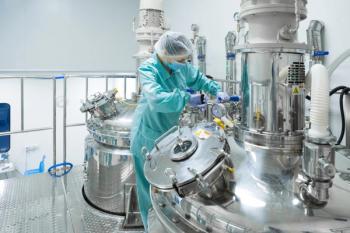
A recent study examined terahertz (THz) spectroscopy and low-wavenumber Raman spectroscopy and their recent impact on three major industries.

A recent study examined a new method for detecting polypropylene (PP) micro- and nanoparticles.

A recent review article explored the recent advancements in mass spectrometry (MS) and how it is being applied in pharmaceutical analysis.

A recent study from Central South University in China examined how to assess cobalt content in soil.
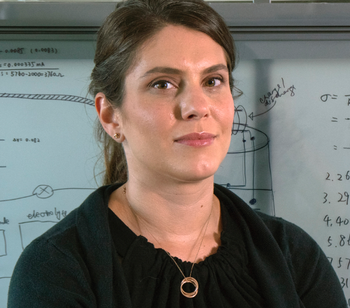
Spectroscopy sat down with Lauren Marbella of Columbia University to discuss her research in lithium metal battery technology.
Top articles this week on Spectroscopy covered topics such as wearable technologies, environmental analysis, and space exploration.