

A recent study published in Neuroscience & Biobehavioral Reviews examined functional near-infrared spectroscopy (fNIRS) hyperscanning studies to learn more about how the interpersonal neural synchronization (INS) affects close relationships.

Will Wetzel is a Senior Editor for Spectroscopy magazine. He specializes in creating engaging, high-value content for diverse audiences. His role involves driving digital growth through KPI assessments, social media strategies, and innovative content development.
Wetzel is also a sports writer and commentator, serving as a freelance writer for several sports websites, including FanSided. He currently serves as the host, producer, and creator of “The Inside Fastball,” a LinkedIn newsletter that discusses topical issues in Major League Baseball (MLB). Outside of work, Wetzel volunteers with the Nashville Humane Association and Habitat for Humanity. His stated goal is to help build one house with Habitat for Humanity in every U.S. state.
A recent study published in Neuroscience & Biobehavioral Reviews examined functional near-infrared spectroscopy (fNIRS) hyperscanning studies to learn more about how the interpersonal neural synchronization (INS) affects close relationships.

Along with the one-day online event, Spectroscopy will also release an e-book containing additional, never-before-seen coverage.
Top articles published this week include a review article on the latest research in agriculture analysis, a peer-reviewed article on near-infrared (NIR) spectroscopy, and an interview about using fluorescence spectroscopy in cheese ripening.

A recent study from Australia used mid-infrared (MIR) spectroscopy to analyze the spectra of soil core samples taken from vegetated coastal ecosystems (VCEs).
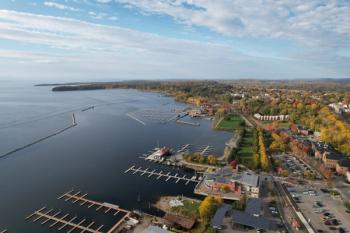
The following is a short overview of what SMASH conference attendees can expect at the Mestrelab User Meeting, which will take place on Sunday September 15th at 1:00 pm EST.

On Sunday, September 15th, the SMASH NMR 2024 conference will kick off in Burlington, Vermont. Here is what attendees can expect at Bruker’s User Meeting.

In part two of our exploration of wood forensics, a deep dive of a recent study from Panjab University explains why attenuated total reflectance Fourier transform infrared (ATR-FT-IR) spectroscopy improves on traditional methods in this space.

Wood forensics is an important field that helps authenticate wood and addresses the challenges that illegal logging brings. In this multipart article, we explore the wood forensics industry, and how spectroscopic techniques are contributing to its advancement.
Top articles published this week include an article on the upcoming SMASH 2024 Conference, a report on handheld near-infrared (NIR) spectrophotometers, and an inside look at the paprika and poultry industries.

Stanford University researchers introduce advanced predictive model for sustainable aviation fuels, significantly improving accuracy and efficiency.
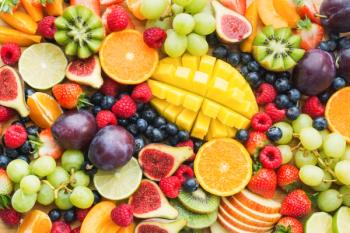
Researchers from the University of Minnesota and Nanjing Agricultural University have highlighted the potential of deep learning to significantly improve the accuracy and robustness of fruit quality assessments using visible-near-infrared spectroscopy.

Researchers using a portable Raman spectroscopy system have begun in-field analysis of Stonehenge's Altar Stone, aiming to determine its origin and composition, potentially uncovering new insights into the ancient monument's history.

In the second part of this article, we dive into the methodology conducted by researchers from Yunnan Agricultural University in China that successfully used near-infrared (NIR) to analyze the protein content in chickens.
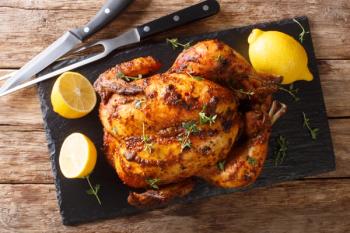
In this article, we continue our exploration of food analysis by providing an overview of how scientists are using near-infrared (NIR) spectroscopy to analyze the protein content in chickens.
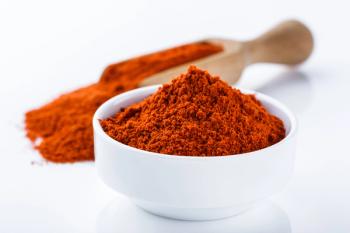
Food authentication is becoming increasingly important. In this article, the editors of Spectroscopy outline the methodology used in a recent study used to analyze paprika.
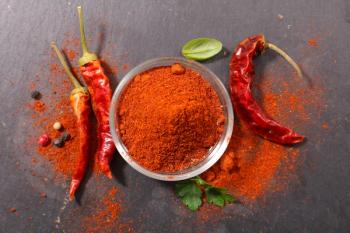
Food authentication is becoming increasingly important to ensure safety and quality. In the first part of this two part article, the editors of Spectroscopy provide an overview of the paprika industry and a study using Fourier transform near-infrared (FT-NIR) spectroscopy to validate the authenticity of paprika.

SMASH 2024, which will take place at the Hotel Champlain Vermont in Burlington, Vermont, will highlight the latest nuclear magnetic resonance (NMR) methods and spotlight the newest applications in the field.

Researchers at the University of Strasbourg have developed NMR-compatible microfluidic optical cavities for vibrational strong coupling (VSC), enabling new insights into molecular behavior under VSC and advancing the field of polaritonic chemistry.
Top articles published this week include an article on classifying space debris, a report on a new fiber-dispersive Raman spectrometer, and an examination of Fourier transform infrared (FT-IR) microscopy.

A trip to the Lyndon B. Johnson Space Center served as a reminder of the importance of space exploration and the key role spectroscopy plays in this industry.

A recent study led by Xaolin Cao at Yantai University demonstrated a rapid and highly sensitive method using magnetic molecularly imprinted polymers combined with surface-enhanced Raman spectroscopy (MMIPs-SERS) for detecting neonicotinoid pesticides in agricultural products.

A recent study highlights the critical role of Fourier transform infrared spectroscopy (FT-IR) in the qualitative and quantitative analysis of asphalt materials, focusing on its applications in quality control, material identification, and the analysis of modification and aging mechanisms.

A recent study examines using hyperspectral imaging (HSI) to analyze single-pixel images of space objects.

A recent study looked at the use of Fourier-transform infrared (FT-IR) spectroscopy in ensuring the safety and efficacy of dairy products.
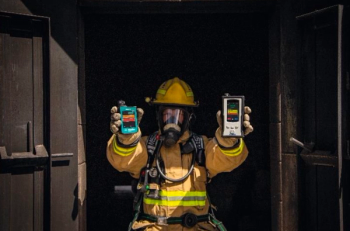
Metrohm Spectro Inc., a New Jersey-based company that develops and manufactures analytical science instruments, announced the expansion of its Raman Chemical Warfare Agents library to include 111 deadly substances.
Top articles published this week include an article on soil analysis using visible–near-infrared (vis-NIR) spectroscopy, Raman spectroscopy in leukemia screening, and 2D-correlation spectroscopy (2D-COS).

A recent study examined the challenges facing the food analysis industry, highlighting the current advanced methods being used in the field.

A recent study examined the role of high-resolution mass spectrometry imaging in assessing environmental contaminants.
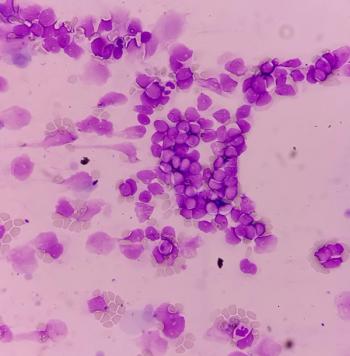
A recent study examined using Raman spectroscopy to screen leukemia in patients.

In agriculture, soil quality is integral to facilitating good farming practices and maximizing crop yield. A new study examines how visible-near-infrared (vis-NIR) spectroscopy is being used to evaluate soil quality.