

A recent study used spectroscopic techniques to study the mineral composition of sedimentary rocks in Texas.

Will Wetzel is a Senior Editor for Spectroscopy magazine. He specializes in creating engaging, high-value content for diverse audiences. His role involves driving digital growth through KPI assessments, social media strategies, and innovative content development.
Wetzel is also a sports writer and commentator, serving as a freelance writer for several sports websites, including FanSided. He currently serves as the host, producer, and creator of “The Inside Fastball,” a LinkedIn newsletter that discusses topical issues in Major League Baseball (MLB). Outside of work, Wetzel volunteers with the Nashville Humane Association and Habitat for Humanity. His stated goal is to help build one house with Habitat for Humanity in every U.S. state.
A recent study used spectroscopic techniques to study the mineral composition of sedimentary rocks in Texas.

Researchers in China proposed a new method using laser-induced breakdown spectroscopy (LIBS) in deep-sea mineral detection.

A compilation of some of the latest studies in environmental analysis is presented below.

This new study examined food contact materials (FCMs) and how mass spectrometric techniques have been used to measure harmful substances from FCMs that end up in food.

A recent study from American Mineralogist looked at improving mineral classification using dual-band Raman spectroscopy.

A recent study proposes a new model to monitor battery health for electronic devices, including electric vehicles.

A recent study looks at how to improve the aging life of lithium-ion batteries.

A recent study examined the use of surface-enhanced Raman spectroscopy (SERS) in detecting pollutants and pesticide residues in fruits and vegetables.

Top articles published this week include an article about hyperspectral imaging in human skin research, a peer-reviewed article about analyzing geological samples using atomic spectroscopy techniques, and an equipment roundup piece about the latest products in the industry.

A recent study looked at how near-infrared (NIR) spectroscopy can evaluate the chemical composition of pet food and safeguard pet health.
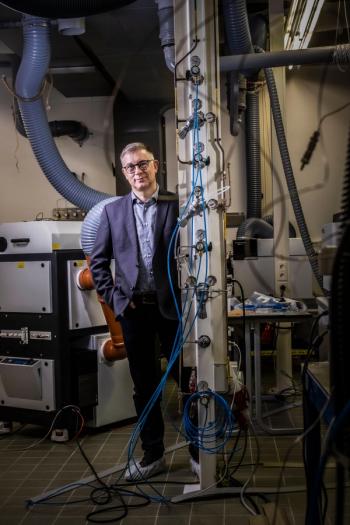
In this preview to the upcoming SciX 2024 conference next week, Spectroscopy sat down with Frank Vanhaecke to discuss about his educational background and what he is looking forward to about the upcoming conference.

A recent study from the National Institute for Laser, Plasma, and Radiation Physics in Romania examined the ozone concentration in Magurele, Romania using photoacoustic spectroscopy.
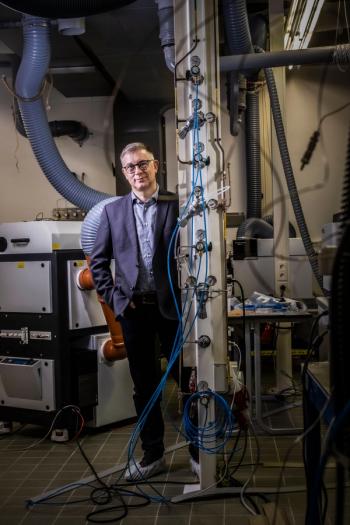
As a preview to the SciX 2024 conference, Spectroscopy sat down with Frank Vanhaecke to discuss about his current research analyzing mercury isotopes.

A recent study published in Sustainability highlighted the utility of Raman spectroscopy in the development of digital agriculture.

A recent study used Raman spectroscopy to monitor cell culture processes.

A recent review article explored the Brazilian coffee industry and how spectroscopic- and chemometrics-based approaches are helping to ensure the authenticity and quality of Brazilian coffee.
Top articles published this week include a peer-reviewed article that discuss two multivariate calibration algorithms for the spectrophotometric analysis of a drug containing antazoline hydrochloride (AN) and naphazoline hydrochloride (NP), an article about chemometric calibrations, and a feature about the 2024 Emerging Leader in Molecular Spectroscopy awardee.
As a preview to the SciX 2024 conference, Spectroscopy sat down with Ioan Notingher to discuss about what he is looking forward to at SciX 2024.

A recent study examines how Raman spectroscopy and UV-vis spectroscopy can be used in the quality control of over-the-counter medications (OTCMs), ensuring their authenticity.

A recent study in Icarus examined how Mars’ ultraviolet radiation affects mineral composition on the planet’s surface.

Handheld instrumentation allows for on-site analysis without transporting samples to a laboratory, helping to reduce the cost and time of forensic investigations.

A recent study out of Russia examined the application of Raman spectroscopy in biomedical and biological research.
As a preview to the SciX 2024 conference, Spectroscopy sat down with Ioan Notingher to talk about his research.

A recent study demonstrated how to use mid-infrared (MIR) spectral data to predict body condition score (BCS) changes in dairy cows.
As a preview to the SciX 2024 conference, Spectroscopy sat down with Ioan Notingher to talk about his research.
Top articles published this week include preview the upcoming SciX Conference keynote address, a recent study that offered new insights into water molecule organization at saltwater interfaces, and a news story about recent spectroscopic observations seen on the surfaces of dwarf planets.

On Monday during the SciX conference in Raleigh, North Carolina, an oral session will take place featuring five talks led by early career researchers from industry and academia. We preview this session here.

The Federation of Analytical Chemistry and Spectroscopy Societies (FACSS) announced that James Hendler will deliver the keynote address at the SciX Conference this year.

A recent study from Japan explored how to improve rice processing and other agricultural products using Raman scattering spectroscopy.

In the final part of our interview with Nick Stone, he discusses standardizing Raman technology across multiple clinical centers, and what it means to him to be attending the SciX Conference as the recipient of the Charles Mann award.