
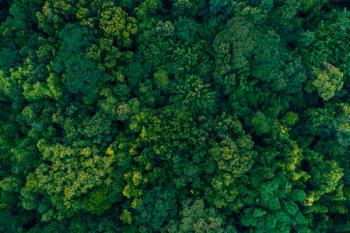
A recent study examined how to classify commercial wood species in Brazil using Fourier transform-infrared (FT-IR) spectroscopy.

Will Wetzel is a Senior Editor for Spectroscopy magazine. He specializes in creating engaging, high-value content for diverse audiences. His role involves driving digital growth through KPI assessments, social media strategies, and innovative content development.
Wetzel is also a sports writer and commentator, serving as a freelance writer for several sports websites, including FanSided. He currently serves as the host, producer, and creator of “The Inside Fastball,” a LinkedIn newsletter that discusses topical issues in Major League Baseball (MLB). Outside of work, Wetzel volunteers with the Nashville Humane Association and Habitat for Humanity. His stated goal is to help build one house with Habitat for Humanity in every U.S. state.
A recent study examined how to classify commercial wood species in Brazil using Fourier transform-infrared (FT-IR) spectroscopy.
In part 2 of our conversation with Nick Stone, we discuss topics such as machine learning (ML) and spectrometer transferability in clinical settings.

The advent of artificial intelligence (AI) and machine learning (ML) has propelled spectroscopic instrumentation to new heights.

At GCC 2024 in Galveston, Texas, there will be several oral sessions that focus on spectroscopy’s role in the petroleum industry. We preview them here.
In a preview to the upcoming SciX Conference October 20 to 25 in Raleigh, North Carolina, Spectroscopy sat down with Nick Stone of the University of Exeter to discuss his recent work in oncology and clinical analysis.
Top articles published this week include several interviews to preview the upcoming SciX Conference, a recent study using an epidermal spectroscopic scanning (ESS) device to detect skin cancer, and a news story about machine learning for meteorite classification.

Some of the most recent articles in data analytics, statistics, machine learning, and artificial intelligence are presented below.
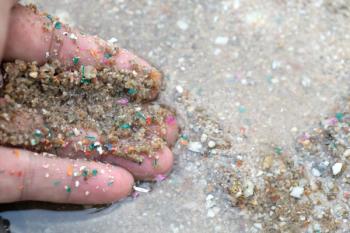
A recent study from Heliyon examined microplastic contamination in soda beverage packaging.
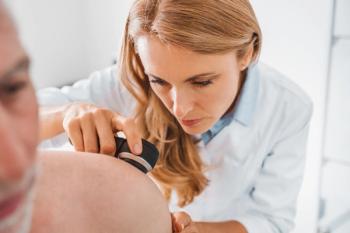
DermaSensor published the results of their elastic scattering spectroscopic device in differentiating between benign and malignant lesions.
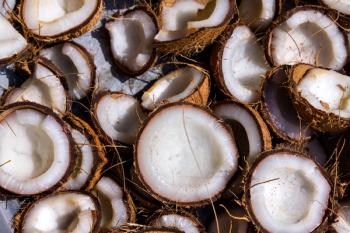
A recent study in beverage analysis showcased the capability of a new electronic tongue (e-tongue) prototype in analyzing liquid samples such as coconut water.

A recent study from Jiangsu University highlighted the challenges associated with the real-time application of microfluidic technology. We summarize their research here.
Top articles published on Spectroscopy involving inductively coupled plasma–optical emission spectroscopy (ICP-OES), according to our readers.
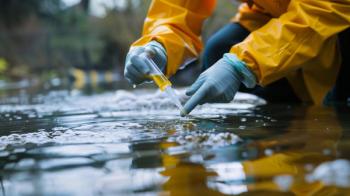
A recent review article published in the Journal of Analytical Atomic Spectrometry describes the latest advancements in environmental monitoring while expanding the capabilities of inductively coupled plasma–mass spectrometry (ICP-MS) and laser-induced breakdown spectroscopy (LIBS).

Tanta University recently published a review article that highlighted the versatility of metal complexes in analytical chemistry. We recap their research here.
Top articles published this week include a preview of our upcoming “The Future of Forensic Analysis” e-book, a few select offerings from “The Future of Forensic Analysis,” and a news story about next-generation mineral identification.

In honor of “The Future of Forensic Analysis,” which launched on September 16th, we highlight five of our most popular articles, according to readers.

A recent study examined how near-infrared (NIR) spectroscopy can estimated the water content in recycled construction materials.
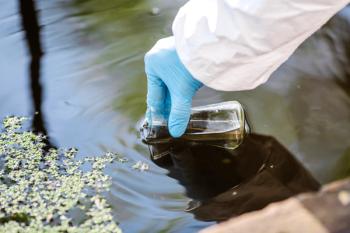
A recent review article evaluates how artificial intelligence (AI) and machine learning (ML) are being used to assess water quality.

A recent study recently examined how proton nuclear magnetic resonance (NMR) spectroscopy can characterize debranched waxy rice starches in ice cream.
Part 2 of The Future of Forensic Analysis will be released in an e-book. We preview what this e-book will feature.
This landing page highlights the various Q&A interviews conducted for “The Future of Forensic Analysis.”
This landing page highlights some of the latest studies conducted in forensic analysis that used spectroscopic instrumentation and techniques as part of the methodology.

This article offers some insight into using attenuated total reflectance Fourier transform infrared (ATR FT-IR) spectroscopy at crime scenes.

Matthieu Baudelet, an associate professor of Chemistry at the National Center for Forensic Science at the University of Central Florida, is currently exploring how laser-based spectroscopic techniques can be used in forensic anthropology. Spectroscopy recently sat down with Matthieu Baudelet, Kristen Livingston, and Katie Zejdlik to discuss their research as part of “The Future of Forensic Analysis” content series.
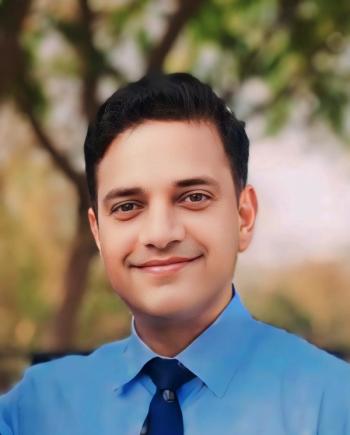
As part of “The Future of Forensic Analysis” content series presented by Spectroscopy, we sat down with Dr. Rajinder Singh of Department of Forensic Science, Punjabi University, Patiala, to talk about his recent work using attenuated total reflectance Fourier transform infrared spectroscopy (ATR-FT-IR) to distinguish different animal species based on hair samples.
Top articles published this week include a preview of our upcoming “The Future of Forensic Analysis” content series, a peer-reviewed article about the pharmaceutical industry, and a news story about a recent study that examined the neural synchrony in close relationships.

A recent review article examines the historical progression of analytical techniques in geochemical sciences, including X-ray fluorescence (XRF).

In this preview leading up to the SMASH NMR Conference in Burlington, Vermont, we preview the oral sessions set to take place on Tuesday September 17th.
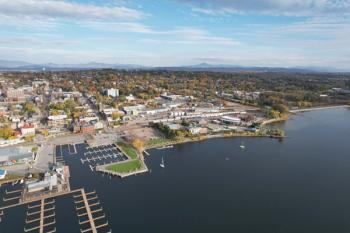
In this preview leading up to the SMASH NMR Conference in Burlington, Vermont, we preview the oral sessions set to take place on Monday September 16th.

At the upcoming SMASH NMR Conference in Burlington, Vermont, the Magnetic Resonance in Chemistry Early Career Research Symposium will take place on Sunday September 15th. Here is what attendees can expect.