

A talk at the upcoming American Chemical Society (ACS) Fall 2026 Meeting will present a new method for measuring the electronic state of individual atoms within multinuclear clusters.
A talk at the upcoming American Chemical Society (ACS) Fall 2026 Meeting will present a new method for measuring the electronic state of individual atoms within multinuclear clusters.

Measuring neonicotinoids in drinking water is not heavily regulated in the United States, but low-cost, rapid analytical tools are changing the conversation.

An upcoming talk at the American Chemical Society (ACS) Fall 2026 Meeting will discuss new insights into the origins of Mars’s early water.
An upcoming talk at the American Chemical Society (ACS) Fall 2026 Meeting will discuss how spectroscopy is advancing the assessment of novel psychoactive substances.
An upcoming poster session at the American Chemical Society (ACS) Fall 2026 Meeting will explore how spectroscopy can be used to identify the origin of lithium in oilfield wastewater.
An upcoming conference will review the advances in vibrational spectroscopy.
An upcoming oral session at the American Chemical Society (ACS) Fall 2026 meeting will explore how women in STEM can pursue entrepreneurship opportunities.

The American Chemical Society (ACS) has several keynotes planned for their upcoming Fall 2026 conference.
In this short feature article, we explore the topics covered at the recent International Symposium on Molecular Spectroscopy (ISMS).
The upcoming 2026 Vibrational Spectroscopy Seminar will focus on time-resolved spectroscopy and vibrational imaging, with structured mentorship component for doctoral and postdoctoral attendees.
Top articles published this week include the debut episode of “Spectroscopy Around the Globe,” a new episode of “Pathways in Spectroscopy,” and more.
The Atacama Large Millimeter/submillimeter Array (ALMA) and the James Webb Space Telescope (JWST) are being used by astronomers and scientists to learn more about interstellar chemistry.

The American Chemical Society (ACS) will be having its annual conference from August 23–27, in Chicago, Illinois. Here’s why spectroscopists and analytical chemists should attend.
In a recent interview, Miguel Sanz-Novo, an Alexander von Humboldt Fellow at the Max Planck Institute for Extraterrestrial Physics, explained how simple molecules in molecular clouds evolve into increasingly complex chemical species during star formation.
In this interview segment, Miguel Sanz-Novo, an Alexander von Humboldt Fellow at the Max Planck Institute for Extraterrestrial Physics, discusses why complex organic molecules are important to study.
Succeeding as an applications manager means multitasking, presenting, and learning new spectroscopies at a high level. Jennifer Ferguson explains.
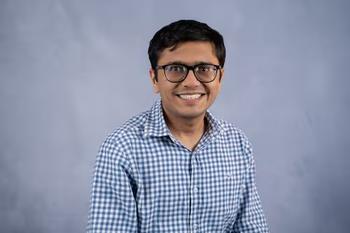
A continuation of our conversation with Janam Pandya, Product Manager at Thermo Fisher Scientific, highlights the challenges of operating field-deployable instruments in harsh, rugged landscapes.
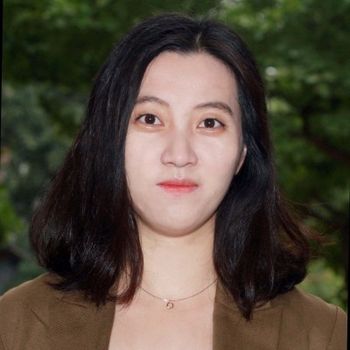
Minjung Son, an assistant professor of chemistry at Boston University, and her group is developing nanomaterials and polaritons, which is important for energy conversion technologies.
What should attendees do to make the most out of their ISMS 2026 conference experience?
The International Symposium on Molecular Spectroscopy (ISMS) always has a symposium dedicated to astrochemistry. In this interview, Miguel Sanz-Novo, an Alexander von Humboldt Fellow at the Max Planck Institute for Extraterrestrial Physics, discusses his latest research in this field.
Minjung Son, an assistant professor of chemistry at Boston University, offers a preview of her upcoming talk at the International Symposium on Molecular Spectroscopy (ISMS) conference.
In this “Pathways in Spectroscopy” episode, Jennifer Ferguson, an Applications Manager at Renishaw, discusses what she does in her role and types of projects she gets involved in.

The 2028 Winter Conference on Plasma Spectrochemistry will take place on Hilton Head Island, South Carolina.
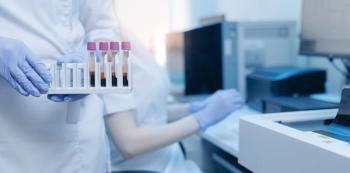
A new diagnostic platform may help detect drug-induced liver injury better. How would this work in real-world clinical settings?
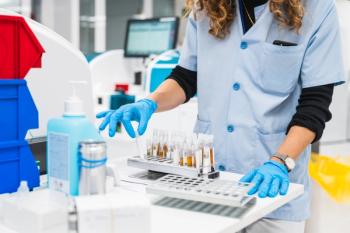
The combination of surface-enhanced Raman spectroscopy (SERS) and digital microfluidics (DMF) might be able to improve detection of liver injury biomarkers.
What should students working in clinical research settings keep in mind?

Did you miss Sian Sloan-Dennison’s talk on digital microfluidics and surface-enhanced Raman spectroscopy (SERS) at Spring SciX? If yes, she recaps her talk in this video clip.
In this interview clip, Sian Sloan-Dennison, a postdoctoral research associate at the University of Strathclyde, discusses how a new digital microfluidics surface-enhanced Raman spectroscopy (DMF-SERS) platform be implemented in clinical settings.

What were attendees talking about the most at Spring SciX?
Sian Sloan-Dennison, a postdoctoral research associate at the University of Strathclyde, discusses how young researchers can leverage their time at scientific conferences effectively to land their postdoctoral research opportunity.