

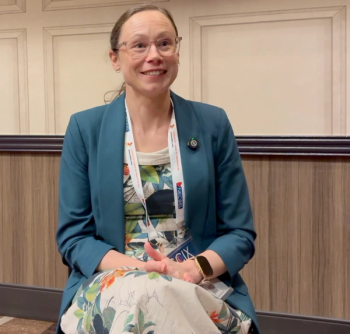
The inaugural Peter Griffiths Award winner discusses deep low-frequency Raman measurements through wax and what remains before clinical breast-imaging use.
The inaugural Peter Griffiths Award winner discusses deep low-frequency Raman measurements through wax and what remains before clinical breast-imaging use.

The 2026 Lester W. Strock Award recipient discusses how single-particle ICP-MS can distinguish engineered and natural nanoparticles and track metalloid pollution downwind of industrial sites.
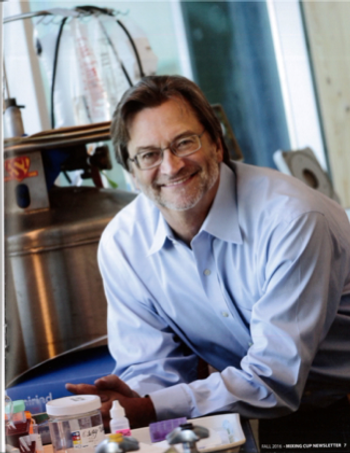
The recipient of the ACS Award in Spectrochemical Analysis discusses how surface-enhanced Raman scattering became a practical diagnostic readout and how close it is to clinical use.
A candid plenary on the incentives shaping academic science was followed by an afternoon of talks spanning flowing SERS detection, historical textiles, maple syrup, pathogen immunoassays, and electrochemical Raman microscopy.
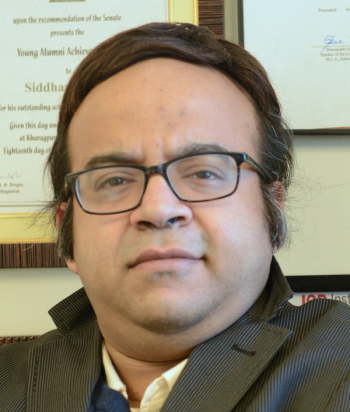
The 2026 AES Mid-Career Award recipient explains how molecular-scale simulations of polyelectrolyte brush-grafted nanochannels are revealing unexpected flow behavior.

The 2026 Ellis R. Lippincott Award recipient discusses the barriers to clinical adoption of photonic diagnostics and his vision for personalized optical digital twins.
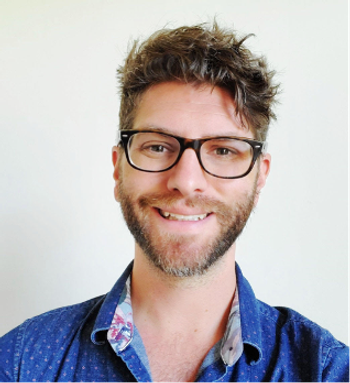
The University of Utah researcher discusses surface-area-enhanced Raman spectroscopy, lipid membrane studies, and his move into PFAS testing.
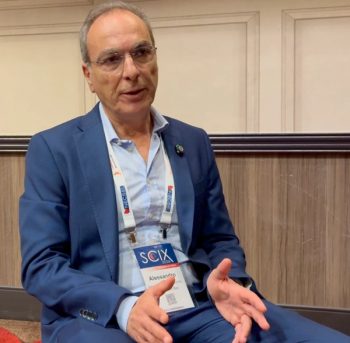
Honored with a dedicated Spectrochimica Acta Part B award session at SciX 2026, De Giacomo explains why larger nanoparticles produce stronger LIBS signals and what that means for sensing design.
Wednesday's program at SciX 2026 kept returning to one question: can spectroscopy perform outside the controlled laboratory? Speakers took surface-enhanced Raman scattering (SERS), laser-induced breakdown spectroscopy (LIBS), mid-infrared photonics, chemometrics, and fluorescence excitation–emission matrix (EEM) spectroscopy into clinics, food plants, reactor coolant loops, brine fields, and drinking water supplies.
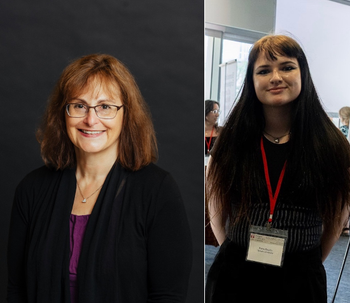
As part of our coverage of the SciX 2026 Conference, Nancy Pleshko and Petra Baylin of Temple University sat down with Spectroscopy to talk about their recent study, explaining how Fourier transform infrared (FT-IR) imaging of ultra-high weight molecular polyethylene (UHMWPE) implants permits oxidation evaluation throughout the sample yielding insight into failure.
Eight FACSS award winners at SciX 2026, One LIBS trailblazer. Forty-eight questions. And not one of them is a softball. Award season in spectroscopy usually means polite applause, a plaque, and a photo. We're not completely interested only in the award sessions. The eight scientists honored at SciX 2026 in Sparks, Nevada, along with LIBS researcher Alessandro De Giacomo, are pushing Raman into operating rooms, flying LIBS on drones, reading chemistry off Mars, and tracing toxic metals downwind of industrial sites. Their work makes big claims. In the coming days, Spectroscopy will sit down with eight of these researchers and ask whether those claims hold up. The interviews that follow won't just celebrate. They'll press on the gaps between simulation and experiment, between the lab bench and the clinic, and between a clever paper and an instrument someone will actually buy and use.

An upcoming talk at the SciX Conference will explore the concept of electroosmosis, and how machine learning (ML) can be used to understand electroosmotic flow behavior.
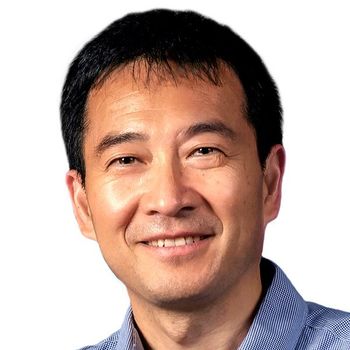
At the upcoming 2026 SciX Conference, Ji-Xin Cheng at Boston University will be recognized with the Charles Mann Award for Applied Raman Spectroscopy. Leading up to the conference, Cheng sat down with Spectroscopy to talk about the advancements being made in confocal Raman microscopy.
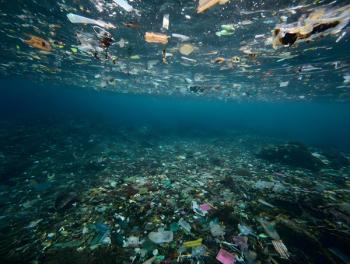
An upcoming talk at SciX 2026 Conference will describe a new multimodal platform using laser ablation inductively coupled plasma–mass spectrometry (LA-ICP-MS) elemental mapping that can detect nanoparticles and microplastics in biological tissue.
Top content published this week include a feature article on a new innovation called the Personalized Optical Digital Twin (PODT), a recap of the International Conference on Raman Spectroscopy (ICORS) 2026 show, and a Q&A on measuring nanoparticle formation in indoor air.
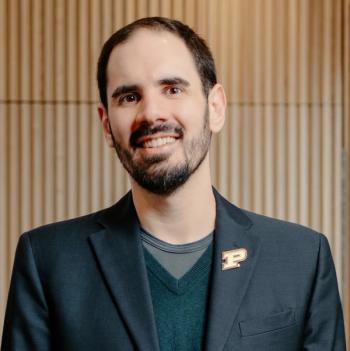
In the final part of our conversation with Brandon Boor of Purdue University, he explains the respiratory deposition model his team used to analyze indoor particle exposure.
In the second part of our interview with Brandon Boor of Purdue University, he discusses how his team controls experimental variables during cleaning experiments in order to obtain interpretable data.
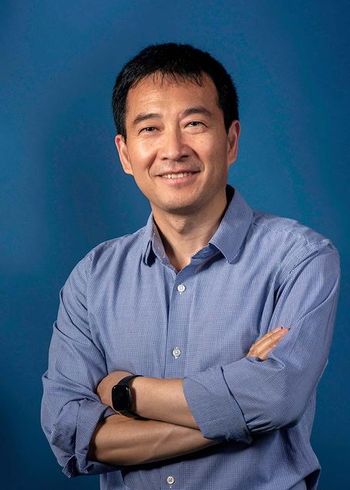
An upcoming interview with Ji-Xin Cheng, a Theodore Moustakas Distinguished Professor in Photonics and Optoelectronics at Boston University, will highlight his ongoing work in coherent Raman scattering microscopy.
In the first part of a multi-part Q&A, Brandon Boor, the Dr. Margery E. Hoffman Associate Professor in the Lyles School of Civil and Construction Engineering at Purdue University, describes the instrumentation and methodology behind measuring nanoparticle size distributions at the nanocluster scale (1–3 nm) and outlines the technical challenges of acquiring reliable, real-time data at these dimensions.
An upcoming presentation will explore how we can better understand and control nanoparticle morphology is critical for tuning material performance.

The 2026 SciX Conference will offer an assortment of short courses during the conference week in Sparks, Nevada. We highlight these courses below.

An upcoming interview with Brandon E. Boor, the Dr. Margery E. Hoffman Associate Professor in Purdue University's Lyles School of Civil and Construction Engineering, will recap his talk at the American Chemical Society (ACS) Fall 2026 Meeting.

An upcoming talk at SciX 2026 will explore how spectroscopy is being used to evaluate urban air pollution.

An upcoming talk at the 2026 SciX Conference will focus on nanoplastic analysis to distinguish between plastic and non-plastic particles.

In this preview of the 2026 SciX Conference, we offer an overview of the keynote presentation.
Jay P. Kitt, a University of Utah research assistant professor who has spent a decade extending confocal Raman microscopy from phospholipid membranes to nucleic acids and peptide-membrane interactions, is the recipient of Spectroscopy's 2026 Emerging Leader in Molecular Spectroscopy Award.

In this preview of the upcoming 2026 SciX Conference, we highlight a new social event that attendees should consider going to.

Trust and understanding are the two key principles to keep in mind when advising trade commissions in the food science industry.
This video clip addresses the current skills gaps that are being seen in the food industry.

The SciX 2026 Conference returns to Sparks, Nevada, this year. Here's what attendees can expect.