
Top articles include our coverage of the Pittcon 2026 conference and an inside look at spectroscopy and sustainability.
Top articles include our coverage of the Pittcon 2026 conference and an inside look at spectroscopy and sustainability.
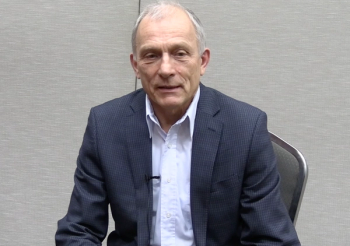
In this interview clip, Igor Lednev, a Distinguished Professor and Williams-Raycheff Endowed Professor at the University at Albany, State University of New York, discusses the advancements that have resulted from Raman spectroscopy being integrated with chemometrics.
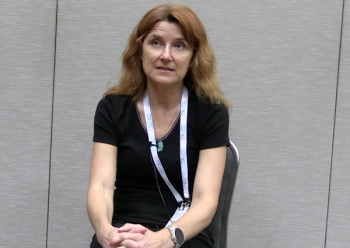
In this interview clip, Lenka Halámková, an assistant professor of high-dimensional data analysis at Texas Tech University, explains how ATR-FTIR spectroscopy captures chemical signatures of fentanyl within the nail’s keratin matrix.
In this interview clip, Igor Lednev, a Distinguished Professor and Williams-Raycheff Endowed Professor at the University at Albany, State University of New York, recaps his talk about the integration of Raman spectroscopy and machine learning for forensic purposes in biomedical applications.
In this video clip from Pittcon 2026, Lenka Halámková, an assistant professor at Texas Tech University, provides an overview of her talk at Pittcon.
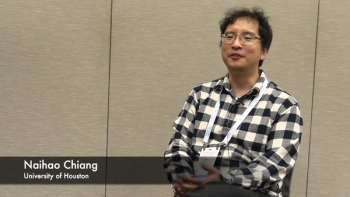
How was the Pittcon 2026 experience in San Antonio? In this video clip, Naihao Chiang, an assistant professor of chemistry at the University of Houston, addresses this question.
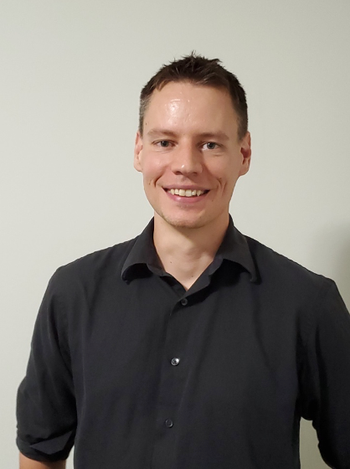
As part of our coverage of the Pittcon 2026 conference, Spectroscopy sat down with Seth Kenkel to talk about his work using nearfield infrared (IR) spectroscopy.

Interested in learning more about ultraviolet–visible (UV-vis) spectroscopy at Pittcon? The Spectroscopy editorial staff has you covered!

In this Pittcon preview, we highlight some important talks, workshops, and symposiums happening during the conference.

In this article, we highlight some of the important talks on atomic spectroscopy that will take place at Pittcon on Sunday March 8th.

If you have downtime at Pittcon 2026, here is how you should spend that time.
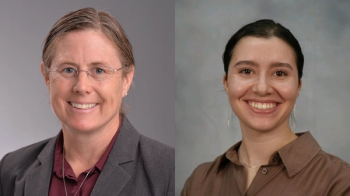
In this interview segment, Kelly Elkins and Jaden Force of Towson University focus to the challenges forensic scientists face, including how to position themselves for a career in this field.
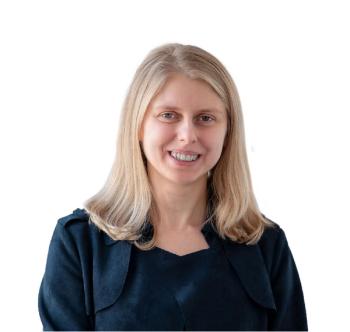
This year’s Emerging Leader in Atomic Spectroscopy Award recipient is Sarah Theiner, whose research is focused on the application of atomic spectroscopy techniques—laser ablation inductively coupled plasma–mass spectrometry (LA-ICP-MS) and single-cell ICP-MS—to expand these analytical techniques as tools for biological and clinical imaging and drug-distribution studies.

Pittcon, one of the foremost laboratory science conferences, makes its Texas debut at San Antonio’s Henry B. González Event Center from March 7 to 11. The conference’s technical program of over 1100 sessions provides analytical scientists with direct access to the latest research and developments from an international assembly of top scientists and research pioneers.
In a recent interview, we sat down with Kelly Elkins, a Professor of Chemistry at Towson University and Jaden Force, a Graduate Research Assistant at Towson University, to talk about the state of forensics and how they apply spectroscopic techniques in their research.
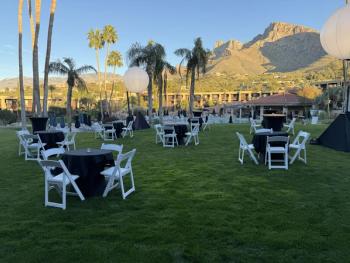
Tucson was a great host city for the 2026 Winter Conference on Plasma Spectrochemistry, but there are other cities that make sense to host future iterations of this conference. Here are our top five suggestions.

In this article, we look at the five major reasons why San Antonio is set to be a perfect host city for Pittcon this year.

The 12th Nordic Conference on Plasma Spectrochemistry and Ionization Principles in Mass Spectrometry will take place from June 14–18, 2026, in Loen, Norway. We preview the conference here.
Discover insights from Tom Spudich on forensic science advancements and challenges as AAFS 2026 approaches in New Orleans.
In Part III of our conversation with David Clases, we discuss how optical trapping better enables polymer identification via Raman spectroscopy, and where ICP-MS research is heading in the future.
In this interview previewing the American Academy of Forensic Sciences (AAFS 2026), Conference, Spectroscopy sat down with James Cizdziel of the University of Mississippi to discuss the state of forensic analysis.
Part II of our conversation with David Clases focused on his proof-of-concept analysis of microplastic and TiO₂ nanoparticles, and the new insights that emerged from simultaneously accessing size, molecular identity, and elemental composition at the single-particle level.
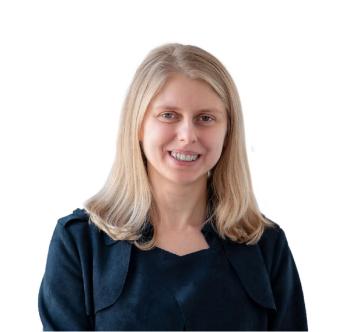
In this video segment, Sarah Theiner explains why using LA-ICP-TOF-MS was the ideal technique for this research compared to more conventional methods. She also touches upon how the findings from her study could inform the design of future chemotherapies and combination treatments.
In this interview clip, David Clasas of the University of Graz discusses the trapping mechanism of the OF2i and how it improves downstream Raman and ICP-TOFMS measurements and also highlights the multimodal approach his team used to improve microplastic analysis.
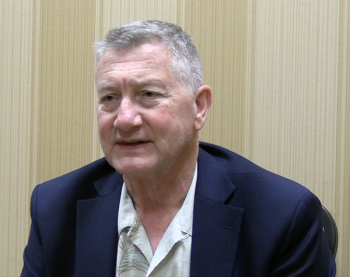
In the final part of our conversation with Ken Marcus, he discusses how external acquisition systems enhance isotopic precision and what spectroscopic trends experts should be paying attention to in 2026.
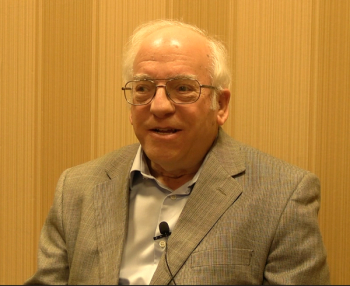
In this video segment, Alex Scheeline of the University of Illinois Urbana-Champaign discusses how hyphenated approaches are changing the nature of speciation analysis.
In this video segment, Sarah Theiner dives into the research that she conducted at the University of Vienna, which focused on how chemoresistance affects drug distribution in the tumor microenvironment.
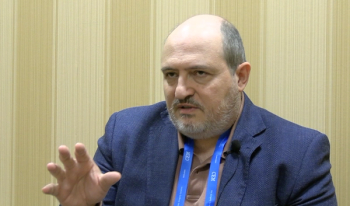
In the final part of our conversation with Martin Resano, he discusses how the use of partial least squares (PLS) regression improves the quality of the isotopic analysis data.
In this interview clip, we turn the focus to the advent of artificial intelligence (AI) and machine learning (ML) in spectroscopy, and Alex Scheeline discusses how AI and ML will enhance SIBS and LIBS calibration.
In the below video segment, we shifted our focus to the future, with Anika Retzmann of the University of Calgary giving her thoughts about what emerging applications will benefit the most from high-precision metal isotope analysis of biological systems.