

Researchers at Zhejiang University have developed an advanced optical modeling approach using spectroscopic ellipsometry, significantly enhancing the non-destructive analysis of amorphous silicon oxide thin films.
Researchers at Zhejiang University have developed an advanced optical modeling approach using spectroscopic ellipsometry, significantly enhancing the non-destructive analysis of amorphous silicon oxide thin films.

A recent study conducted by scientists in Brazil saw the development of a quick, non-invasive method to diagnose endometriosis.

"Inside the Laboratory" is a joint series with LCGC and Spectroscopy profiling analytical scientists and their research groups at universities worldwide. This series spotlights the current chromatographic and spectroscopic research their groups are conducting and the importance of their research in analytical chemistry and specific industries. In this edition of “Inside the Laboratory,” Johanna Nelson Weker of SLAC National Accelerator Laboratory discusses her laboratory’s work in battery analysis.
Researchers at Qiqihar Medical University have developed a dual-channel fluorescent probe, PYL-NBD, that enables highly sensitive, rapid, and selective detection of biothiols in food, pharmaceuticals, and living organisms.

Established to develop a community-sourced glossary covering key functional near-infrared spectroscopy (fNIRS) terms, including those related to the continuous-wave (CW), frequency-domain (FD), and time-domain (TD) NIRS techniques, the fNIRS Glossary Project features over 300 terms categorized into six key domains: analysis, experimental design, hardware, neuroscience, mathematics, and physics. It also includes abbreviations, symbols, synonyms, references, alternative definitions, and figures where relevant.
A new tutorial provides a step-by-step, hands-on guide to using multivariate data analysis tools like PCA and PLS to extract meaningful insights from complex pharmaceutical data sets.

Top articles published this week include a preview of our upcoming content series for National Space Day, a news story about air quality monitoring, and an announcement from Metrohm about their new Midwest office.
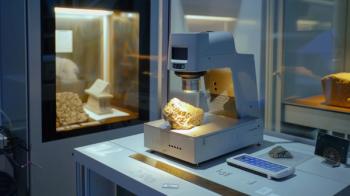
Researchers from Tsinghua University and Qinghai University have uncovered how specific ambient gas properties affect the stability and accuracy of laser-induced breakdown spectroscopy (LIBS) signals.


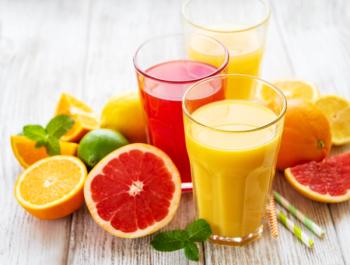
Researchers from SGF International and Geisenheim University combine 1H NMR and HPLC-DAD to elevate juice quality assurance.
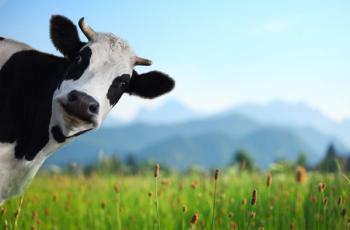
A new study published in Applied Food Research demonstrates that near-infrared spectroscopy (NIRS) can effectively detect subclinical bovine mastitis in milk, offering a fast, non-invasive method to guide targeted antibiotic treatment and support sustainable dairy practices.


Here is a collection of recent studies that used spectroscopic techniques in environmental analysis.
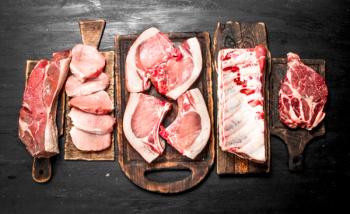
Jiangxi Agricultural University researchers use AI and vis-NIRS to predict meat quality and freezing duration with high accuracy.

Researchers from Jiangsu University and Zhejiang University of Water Resources and Electric Power have developed a transfer learning approach that significantly enhances the accuracy and adaptability of NIR spectroscopy models for detecting mycotoxins in cereals.
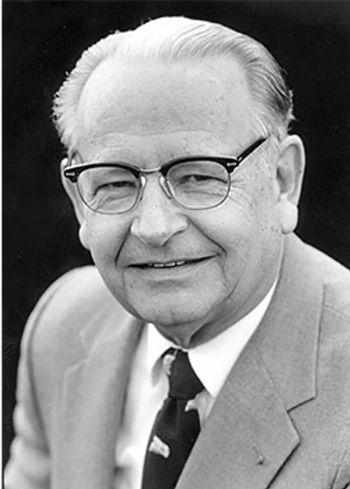
In this two-part "Icons of Spectroscopy" column, executive editor Jerome Workman Jr. details how Karl H. Norris has impacted the analysis of food, agricultural products, and pharmaceuticals over six decades. His pioneering work in optical analysis methods including his development and refinement of near-infrared spectroscopy, has transformed analysis technology. In this Part II article of a two-part series, we summarize Norris’ foundational publications in NIR, his patents, achievements, and legacy.

A recent study conducted by researchers from the Korea Institute of Fusion Energy and Jeonbuk National University presented a novel technique for analyzing lithium isotopes in liquid samples.
Top articles published this week include a tribute to John Albert Reffner, who was known for his work in infrared microspectroscopy, an application of Raman spectroscopy to improve recycling practices, and an Icons of Spectroscopy column on Karl Norris, known as the founder of near-infrared (NIR) spectroscopy.

In this brief segment from my full-length conversation with Monica Arienzo of the Desert Research Institute, she discusses the important key findings of her study.

In this brief segment from my full-length conversation with Monica Arienzo of the Desert Research Institute, she discusses the important key findings of her study.
In this brief segment from my full-length conversation with Monica Arienzo, who was the lead author of this study, she discusses whether there was a correlation between the different types of litter and the polymer type.

In this brief segment from my full-length conversation with Monica Arienzo, she explains why ATR FT-IR spectroscopy was the ideal technique of choice for her study characterizing polymers from the litter found on the lakebed of Lake Tahoe.

In the lead up to Earth Day 2025, we revisit an interview conducted with Monica Arienzo that discusses how ATR-FT-IR spectroscopy was used to classify polymers in plastic litter types found in Lake Tahoe back in 2023.
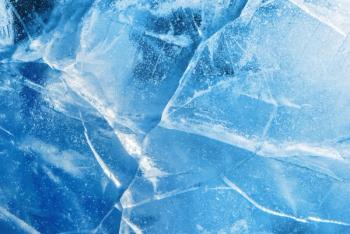
A new study published in Spectrochimica Acta Part A by Dominik Heger and colleagues at Masaryk University reveals that phenol's photophysical properties change significantly when frozen, potentially enabling its breakdown by sunlight in icy environments.

The Trump administration's proposed tariffs on multiple industries could profoundly impact analytical chemists working in industry, government, and academia.
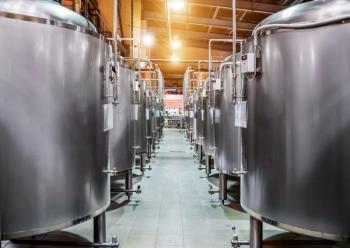
Researchers at Delft University of Technology have developed a novel method using single compound spectra to enhance the transferability and accuracy of Raman spectroscopy models for real-time fermentation monitoring.

Researchers from Gifu Pharmaceutical University and Gifu University Hospital unveil a novel polaprezinc (PLZ) mucoadhesive film designed to replace painful lozenges for cancer patients.
In this "Icons of Spectroscopy" column, executive editor Jerome Workman Jr. details how Karl H. Norris has impacted the analysis of food, agricultural products, and pharmaceuticals over six decades. His pioneering work in optical analysis methods including his development and refinement of near-infrared (NIR) spectroscopy has transformed analysis technology. This Part I article of a two-part series introduces Norris’ contributions to NIR.
