

Researchers from James Cook University highlight critical gaps and future directions for developing a large-scale, machine-learning-based satellite spectroscopy system to monitor sugarcane health and detect diseases and pests.
Researchers from James Cook University highlight critical gaps and future directions for developing a large-scale, machine-learning-based satellite spectroscopy system to monitor sugarcane health and detect diseases and pests.
This product review covers products introduced from May 2024 to April 2025.

In a press release on Tuesday May 6th, 2025, Waters Corporation, an analytical instrument, separations technology, and software manufacturer, announced several updates to its Empower software.

A recent review article highlights the promise of near-infrared (NIR) spectroscopy for on-farm analysis of liquid organic manure.

In this edition of “Inside the Laboratory,” Johanna Nelson Weker of SLAC National Accelerator Laboratory discusses her laboratory’s work in battery analysis. In the final part of our interview, Weker continues our discussion of battery cell geometries and why computed laminography is a good technique to use for this purpose.
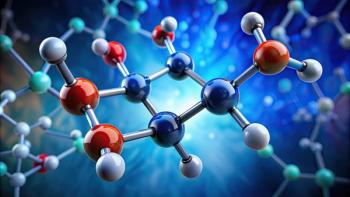
Carbonyl containing functional groups are strong infrared absorbers and a number of them are easy to identify by infrared spectroscopy. Here, we will review the spectra of ketone and carboxylic acids.

A new study published in Geoderma Regional by J. A. Arias-Rios and colleagues at IFAB demonstrates that near-infrared (NIR) spectroscopy is a rapid, cost-effective tool for assessing soil and tree traits critical to forest ecosystem monitoring and management.
In Part 3 of our conversation with Johanna Weker of SLAC National Accelerator Laboratory, she discusses battery cell geometry configurations and how they inform battery design.
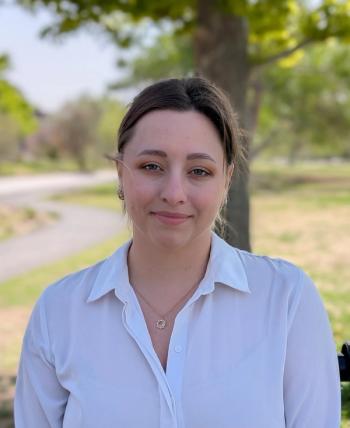
In this extended Q&A interview, we sit down with Kelsey Williams, a postdoctoral researcher at Los Alamos National Laboratory (LANL), who is working on planetary instrumentation using spectroscopic techniques such as laser-induced breakdown spectroscopy (LIBS) and laser ablation molecular isotopic spectrometry (LAMIS). In the final part of our conversation with Williams, she discusses how laser-based spectroscopic techniques might be used in the future to advance space exploration.
In this extended Q&A interview, we sit down with Kelsey Williams, a postdoctoral researcher at Los Alamos National Laboratory (LANL), who is working on planetary instrumentation using spectroscopic techniques such as laser-induced breakdown spectroscopy (LIBS) and laser ablation molecular isotopic spectrometry (LAMIS). In Part III, Williams goes into detail about ChemCam and SuperCam and how LIBS is used in both these instruments.
In this extended Q&A interview, we sit down with Kelsey Williams, a postdoctoral researcher at Los Alamos National Laboratory (LANL), who is working on planetary instrumentation using spectroscopic techniques such as laser-induced breakdown spectroscopy (LIBS) and laser ablation molecular isotopic spectrometry (LAMIS). In Part II of our conversation with Williams, she talks about the potential of mass spectrometry (MS) in space exploration applications.
Top articles published this week include interviews from our National Space Day content series, a news story about satellite-based spectroscopy, and an interview about battery analysis conducted at SLAC National Accelerator Laboratory.
Join us in celebrating National Space Day! Today, Spectroscopy magazine is teaming up with the Society for Applied Spectroscopy (SAS) to honor National Space Day and highlight the latest advancements in space exploration.
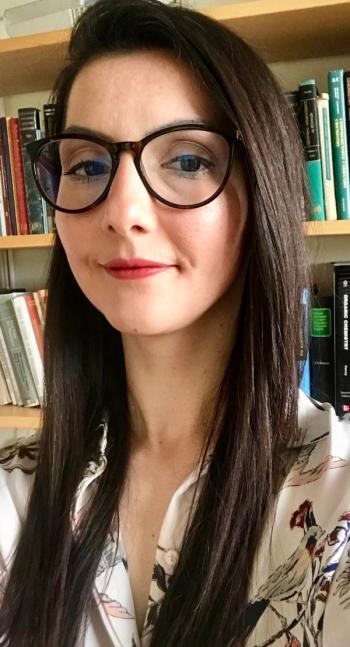
Research was conducted exploring the dehydration pathways of gypsum (CaSO₄·2H₂O) and its interactions with chloride (Cl) salts under a range of thermal and environmental conditions relevant to Earth and Mars.Spectroscopy spoke to Merve Yeşilbaş, corresponding author of a paper based on this work (1), about the research.
In honor of National Space Day, we interviewed Kelsey Williams, who is a postdoctoral researcher at Los Alamos National Laboratory (LANL) working on planetary instrumentation using spectroscopic techniques such as laser-induced breakdown spectroscopy (LIBS) and laser ablation molecular isotopic spectrometry (LAMIS). In Part I of our interview with Williams, she discusses how her background led her to her current position at LANL.

In this interview, S. Michael Angel, a consultant on the SuperCam team, explains how the instrument analyzes Martian rocks and what it reveals about Mars’ geology and potential for past life.
Spectroscopy sat down with Gabi Wenzel, SAO visiting scientist at the Center for Astrophysics, to discuss how spectroscopy is being used to explore the molecular universe.
Gabi Wenzel, visiting scientist at the Center for Astrophysics, reflects on the interdisciplinary nature of astrochemistry and emphasizes the importance of maintaining openness in collaborative, cross-disciplinary work.

The Perseverance rover is equipped with many cameras and different instruments to conduct scientific experiments on Mars, including several spectrometers. We describe some of them here.
In this interview, Gabi Wenzel, SAO visiting scientist at the Center for Astrophysics, explores how high-resolution cavity-enhanced Fourier Transform microwave (FTMW) spectroscopy advances her research.
Gabi Wenzel, a visiting scientist at the Center for Astrophysics, Harvard & Smithsonian, shares how spectroscopy has led to unexpected discoveries in her research on the molecular building blocks of the universe. Wenzel's research focuses on polycyclic aromatic hydrocarbons (PAHs) and their interactions with light.
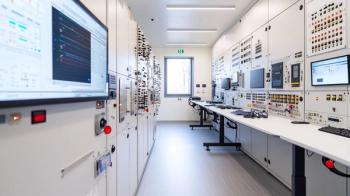
United States Pharmacopoeia (USP) general chapter <1058> on Analytical Instrument Qualification (AIQ) now has a new title from a draft update for public comment: Analytical Instrument and System Qualification (AISQ). A new three-phase integrated lifecycle phase approach to qualification and validation is described. But will laboratories and suppliers implement it?
In a new study published in Measurement, researchers explored the power of low-frequency Raman spectroscopy for non-invasive drug analysis.
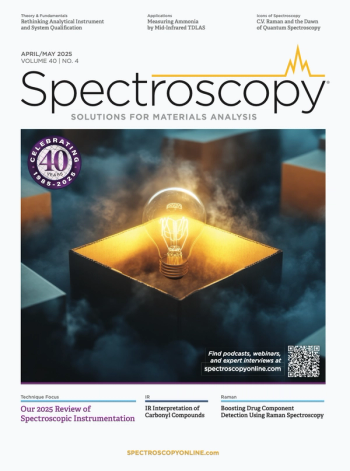
Click here to access the Spectroscopy April/May 2025 Europe PDF in an interactive format.
In Part 2 of our video interview with Johanna Weker of SLAC National Accelerator Laboratory, she discusses nutrient recovery systems and how X-ray techniques can improve them.
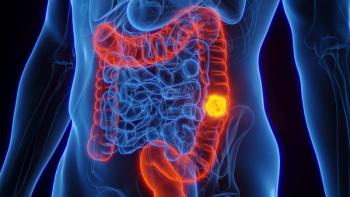
Researchers from Université de Tours have shown that serum mid-infrared spectroscopy (MIRS) may serve as a promising prognostic tool for identifying high-risk metastatic colorectal cancer patients undergoing first-line bevacizumab-based chemotherapy.

Researchers at Zhejiang University have developed an advanced optical modeling approach using spectroscopic ellipsometry, significantly enhancing the non-destructive analysis of amorphous silicon oxide thin films.

A recent study conducted by scientists in Brazil saw the development of a quick, non-invasive method to diagnose endometriosis.
"Inside the Laboratory" is a joint series with LCGC and Spectroscopy profiling analytical scientists and their research groups at universities worldwide. This series spotlights the current chromatographic and spectroscopic research their groups are conducting and the importance of their research in analytical chemistry and specific industries. In this edition of “Inside the Laboratory,” Johanna Nelson Weker of SLAC National Accelerator Laboratory discusses her laboratory’s work in battery analysis.
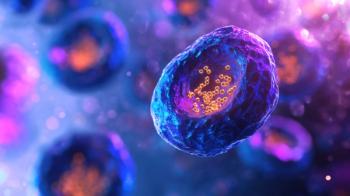
Researchers at Qiqihar Medical University have developed a dual-channel fluorescent probe, PYL-NBD, that enables highly sensitive, rapid, and selective detection of biothiols in food, pharmaceuticals, and living organisms.
