

Researchers develop a rapid method for measuring calcium and magnesium in surface water accurately.
Researchers develop a rapid method for measuring calcium and magnesium in surface water accurately.
In this full-length interview, Thomas (Tom) Metz, a Laboratory Fellow and Chief Science Officer of the Biological Sciences Division at Pacific Northwest National Laboratory, discusses his research and his thoughts from the American Academy of Forensic Sciences (AAFS) Conference.

A new study in Icarus by Fabian Seel and colleagues at the German Aerospace Center (DLR) reveals how atmospheric conditions significantly impact LIBS plasma behavior.

Tianjin University researchers develop an advanced AI model to enhance food safety.

A recent study explores a novel approach for improving data interpretation to provide a better understanding of food properties.

A recent study explored how nuclear magnetic resonance (NMR) techniques can be applied to characterize phospholipids in food analysis.

A compilation of some of the top articles from our Molecular Spectroscopy Workbench column is presented.

Top articles published this week include some of our columns in the most recent Spectroscopy magazine issue as well as more coverage from the American Academy of Forensic Sciences (AAFS) Conference.
In this video interview segment, we asked Claire Glynn about the latest technological developments, and what type of challenges forensic scientists are currently facing.
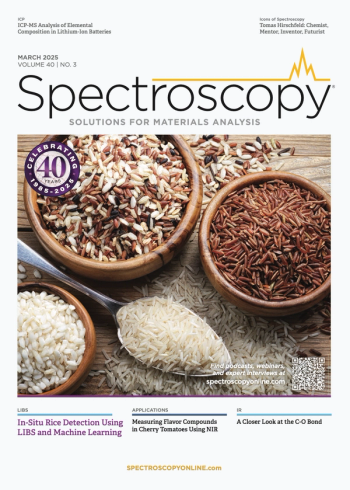
Click here to access the Spectroscopy March 2025 Europe PDF in an interactive format.

This research investigates the application of laser-induced breakdown spectroscopy (LIBS) and machine learning (ML) for detecting elemental composition of food, using rice as an example.

A recent review article highlights the growing use of electrochemical impedance spectroscopy (EIS) in battery research.
In this video interview segment, Glynn of the University of New Haven discusses the significant advancements in forensic technology, particularly the use of forensic investigative genetic genealogy (FIGG) for identifying human remains.

In the fifth installment of “The Big Review” of infrared (IR) spectral interpretation, we review the spectroscopy of functional groups containing C-O bonds, discuss alcohols and phenols, and see how to use IR spectroscopy to distinguish these alcohols from each other. We then discuss ethers and see how to use IR spectroscopy to distinguish the three different types from each other.
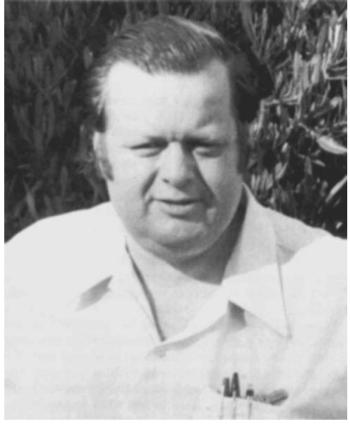
In this "Icons of Spectroscopy" column, executive editor Jerome Workman Jr. details how Tomas B. Hirschfeld has made many significant contributions to vibrational spectroscopy and has inspired and mentored many leading scientists of the past several decades.
This month’s column investigates the elemental composition of electrolytes in lithium-ion batteries (LIBs) using inductively coupled plasma–mass spectrometry (ICP-MS).
In this video interview clip, Claire Glynn highlights the advancements in portable DNA analysis, emphasizing its current role rather than future potential in forensic science.
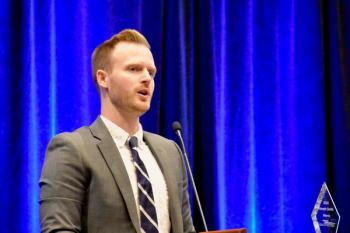
The editors of Spectroscopy are currently accepting nominations for the Emerging Leader in Molecular Spectroscopy Award and the Emerging Leader in Atomic Spectroscopy Award. Nominate someone you know today!
This interview segment shifts away from the technology that is impacting forensic sciences and instead focuses on a broader issue in the industry.

A study published in the International Journal of Dairy Technology by lead author Mark A. Fenelon and his team at Teagasc Food Research Centre and University College Dublin demonstrates that ATR-FT-IR spectroscopy can effectively monitor heat-induced structural changes in milk proteins and colloidal calcium phosphate, offering valuable insights for optimizing dairy product stability and quality.
In this video segment, Metz discusses advancements in field deployable units, such as miniaturized mass spectrometers and separation devices, which are notable for their size reduction.
In this video clip, Eldridge identifies three main challenges in the forensic science field: funding constraints, effective communication of results, and the implementation of new standards.
In this video clip, Metz discusses his focus on molecular measurement science using mass spectrometry (MS) to study small molecules, emphasizing the challenge of identifying and quantifying unknown compounds.

A recent study explored using surface-enhanced Raman spectroscopy (SERS) to detect β-agonists.
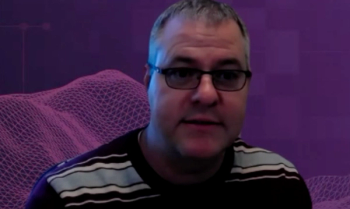
In this video clip, Metz discusses his research in helping to develop advanced MS instrumentation, and how he is applying his work to study diseases.
Top articles published this week include a video interview on the role of near-infrared (NIR) spectroscopy in food and bioanalysis, a recap of an important session at Pittcon, and a dynamic video that summarizes the highlights of the American Academy of Forensic Sciences (AAFS) Conference.
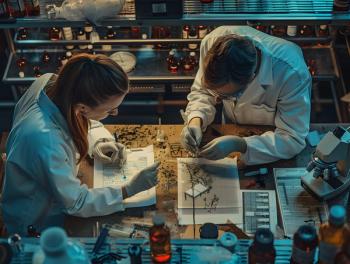
In this video interview, we speak with Tom Metz of the Pacific Northwest National Laboratory, Heidi Eldridge of George Washington University, and Claire Glynn of the University of New Haven, all of whom attended AAFS this year and delivered important talks that provide insight into the state of the forensic science industry. Metz, Eldridge, and Glynn offer some insights into what it was like to attend AAFS this year and give their thoughts as to what stood out to them throughout the week.

A new study published in the Journal of Dairy Science demonstrates that FT-MIR spectroscopy can effectively authenticate farming practices and dairy systems in Parmigiano Reggiano production but has limited ability to verify animal welfare parameters.
