

The recipient of the 2025 NYSAS Gold Medal Award is Geraldine L. Richmond, Presidential Chair in Science and Professor of Chemistry at the University of Oregon.
The recipient of the 2025 NYSAS Gold Medal Award is Geraldine L. Richmond, Presidential Chair in Science and Professor of Chemistry at the University of Oregon.

In the lead-up to the International Symposium on Molecular Spectroscopy conference, Brett McGuire of the Massachusetts Institute of Technology sat down with Spectroscopy to preview the ISMS conference.
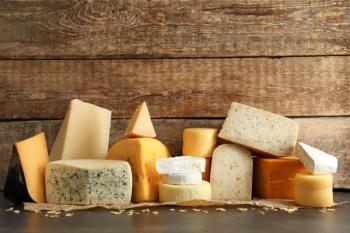
Researchers at Wittenborg University of Applied Sciences have developed a non-destructive method using hyperspectral imaging combined with chemometrics and machine learning to accurately predict fat and protein content in diverse cheese types.

Top articles published this week include a tribute to Alan G. Marshall, an interview series that highlights how inductively coupled plasma–optical emission spectroscopy (ICP-OES) can help analyze metal content in pet food, and an announcement from Rigaku about their latest handheld Raman instruments.
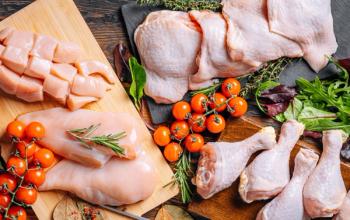
Researchers from the Institute of Agrifood Research and Technology (IRTA) in Catalunya, Spain used fluorescence and Raman spectroscopy to explore complex tissue changes behind wooden breast myopathy in chickens.

Because the United Arab Emirates is seeing an increase in pet ownership, the quality of both dry and wet pet food is undergoing greater scrutiny to ensure its safety and efficacy. Lucy Semerjian, who works as a Chair and Associate Professor in the Department of Environmental Health Science at the University of Sharjah in Sharjah, United Arab Emirates, recently explored this topic in a recent paper

In the final part of our interview with 2025 Charles Mann Award recipient Marc Porter, Distinguished Professor in Chemical Engineering at the University of Utah, imagines a world where diagnosing deadly diseases is as easy as pulling out a handheld device. With portable Raman spectrometers entering decentralized healthcare, even the most remote settings can benefit from instant analysis—slashing turnaround times and costs while boosting patient care.
A recent study conducted in the Journal of Food Composition and Analysis examined the concentrations of ten metals in 52 commercially available wet and dry cat food samples, assessing their compliance with U.S. and European pet food safety standards. The lead author of this study, Lucy Semerjian, recently sat down with Spectroscopy to discuss the findings of her study.

In the second part of our interview with 2025 Charles Mann Award recipient Marc Porter, Distinguished Professor in Chemical Engineering at the University of Utah, discusses how surface-enhanced resonance Raman scattering (SERRS) enables faster, more reliable detection in point-of-need settings, and explore its potential for real-world clinical deployment.
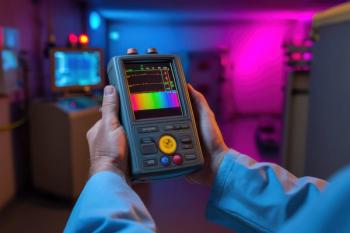
In an announcement on June 12, Rigaku Analytical Devices, which is a division of Rigaku Holdings Corporation headquartered in Akishima, Tokyo, announced the launch of its Icon series of 1064-nm Raman analyzers, its fourth-generation of the instrument.
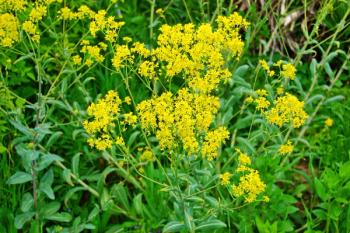
Researchers from Ca’ Foscari University of Venice and the University of Padua have uncovered the earliest direct evidence of Upper Palaeolithic humans deliberately processing the non-edible plant Isatis tinctoria, revealing complex behaviors involving medicinal or dye-related plant use over 32,000 years ago.

A Texas A&M AgriLife Research study published in Rangelands found that region-specific calibration significantly improves the accuracy of FNIRS-based nutritional monitoring for beef cattle grazing the Edwards Plateau.

Fourier transform infrared (FT-IR) spectroscopy was used in this paper to rapidly analyze seven light alkanes (methane, ethane, propane, n-butane, i-butane, n-pentane, and i-pentane) in wellhead gases.
Spectroscopy speaks with Marc Porter, Distinguished Professor in Chemical Engineering at the University of Utah, for the first of a three-part conversation regarding his work involving the development and evaluation of a highly sensitive biomarker detection strategy using surface-enhanced resonance Raman scattering (SERRS), which offers stronger signal amplification than traditional surface-enhanced Raman scattering (SERS). Porter will receive the 2025 Charles Mann Award, presented to an individual who has demonstrated advancement(s) in the field of applied Raman spectroscopy.
Top articles published this week include an interview about aromatic–metal interactions, a tutorial article about the recent advancements in tip-enhanced Raman spectroscopy (TERS), and a news article about using shortwave and near-infrared (SWIR/NIR) spectral imaging in cultural heritage applications.

A new study demonstrates how handheld near-infrared spectroscopy can be a powerful, accurate tool to distinguish real cashmere from wool.

Researchers from Hebei University and Hebei University of Engineering have developed a hyperspectral imaging method combined with data fusion and machine learning to accurately and non-destructively assess walnut quality and classify storage periods.

A new study demonstrates that paper bagging significantly enhances Fuji apple quality and appearance. Hyperspectral imaging combined with machine learning offers a powerful, non-destructive method for evaluating fruit grown under different cultivation conditions.

Lisa Flanagan and fellow researchers at the University of California, Irvine (Irvine, California) conducted a study exploring a method to isolate astrocyte-biased human neural stem and progenitor cells (hNSPCs), which are valuable for treating neurological diseases. Flanagan will receive the 2025 Mid-Career Award from the AES Electrophoresis Society, awarded for exceptional contributions to the field of electrophoresis, microfluidics, and related areas by an individual who is currently in the middle of their career.

In a recent study published in the journal Beverages, a team of researchers from the National Institute for Research and Development of Isotopic and Molecular Technologies and Babeș-Bolyai University explored a new way to improve wine authentication

A recent study published in the journal Food Chemistry explored Brazil’s cachaça industry, focusing on a new analytical method that can confirm the geographic origin of cachaças from the Brejo Paraibano region in Brazil.

In this study, a hyperspectral (400–1000 nm) system was utilized to acquire hyperspectral images of gardeniae fructus (GF) and construct a data set containing 3146 spectral data.

A new study highlights how chemometrics-powered spectroscopic techniques offer a fast, non-destructive, and cost-effective method for detecting phenolics and vitamins in foods.

Researchers in China propose novel postharvest processing mode using vis-NIR spectroscopy and deep learning to accurately measure pomelo sweetness.
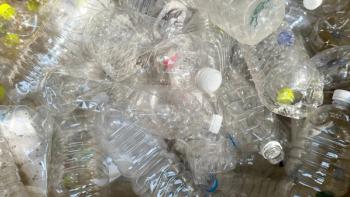
Researchers from Jinan University and Guangzhou Customs Technology Center have developed a cost-effective UV-vis spectroscopy and machine learning method to accurately identify recycled PET content as low as 10%, advancing sustainable packaging and circular economy efforts.
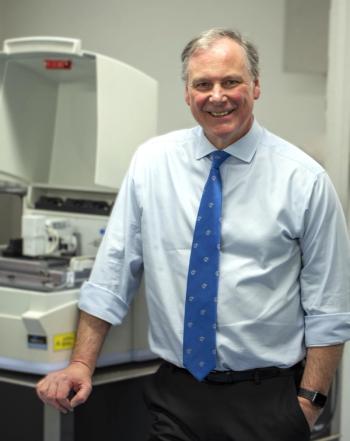
Spectroscopy spoke to Steven Bell, corresponding author of a paper revealing that aromatic molecules adsorb strongly onto Ag and Au nanoparticles via π-metal interactions under ambient conditions, using surface-enhanced Raman spectroscopy (SERS). This overturns the prior belief that such interactions are weak for IB metals like Ag and Au. Bell will receive the 2025 Charles Mann Award, awarded for outstanding contributions to the chemical sciences in the area of analytical chemistry.

In this tutorial article, Yukihiro Ozaki explores the recent advancements and broadening applications of tip-enhanced Raman scattering (TERS), a cutting-edge technique that integrates scanning probe microscopy (SPM) with surface-enhanced Raman scattering (SERS).
Top articles published this week include an interview with 2025 Clara Craver Award recipient Prashant Jain, an Icons of Spectroscopy column on Bruce R. Kowalski, and an interview with Pooja Sheevam about quantifying mineral basalts in the Hawaiian PTA-2 drill core.

In the final part of this video interview with Pooja Sheevam, she discusses the importance of her study in understanding the mineralogical and geochemical processes in Hawaii.
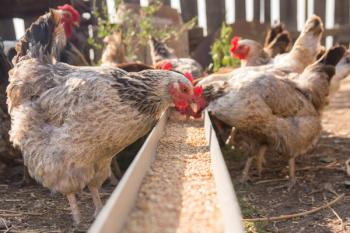
Researchers from Tianjin Agricultural University, Nankai University, and Zhejiang A&F University have developed a highly accurate method using near-infrared spectroscopy and machine learning to rapidly detect and classify microplastics in chicken feed.
