

At the upcoming SMASH NMR Conference in Burlington, Vermont, the Magnetic Resonance in Chemistry Early Career Research Symposium will take place on Sunday September 15th. Here is what attendees can expect.
At the upcoming SMASH NMR Conference in Burlington, Vermont, the Magnetic Resonance in Chemistry Early Career Research Symposium will take place on Sunday September 15th. Here is what attendees can expect.

A recent study published in Neuroscience & Biobehavioral Reviews examined functional near-infrared spectroscopy (fNIRS) hyperscanning studies to learn more about how the interpersonal neural synchronization (INS) affects close relationships.

Along with the one-day online event, Spectroscopy will also release an e-book containing additional, never-before-seen coverage.
Top articles published this week include a review article on the latest research in agriculture analysis, a peer-reviewed article on near-infrared (NIR) spectroscopy, and an interview about using fluorescence spectroscopy in cheese ripening.

A recent study from Australia used mid-infrared (MIR) spectroscopy to analyze the spectra of soil core samples taken from vegetated coastal ecosystems (VCEs).

The following is a short overview of what SMASH conference attendees can expect at the Mestrelab User Meeting, which will take place on Sunday September 15th at 1:00 pm EST.

On Sunday, September 15th, the SMASH NMR 2024 conference will kick off in Burlington, Vermont. Here is what attendees can expect at Bruker’s User Meeting.
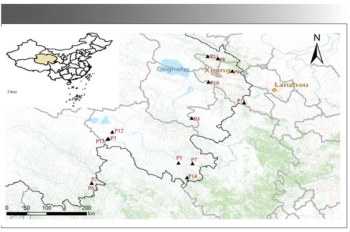
This study aimed to establish a fast, accurate method for quality evaluation of herbal medicine using NIR and chemometrics with ultraviolet-visible spectrophotometry (UV-vis) as a standard method to determine the total flavonoids content.

In part two of our exploration of wood forensics, a deep dive of a recent study from Panjab University explains why attenuated total reflectance Fourier transform infrared (ATR-FT-IR) spectroscopy improves on traditional methods in this space.

Wood forensics is an important field that helps authenticate wood and addresses the challenges that illegal logging brings. In this multipart article, we explore the wood forensics industry, and how spectroscopic techniques are contributing to its advancement.

A joint French-Canadian study examined the ripening process of commercially popular Comté and cheddar cheeses, which are widely consumed in those countries, utilizing mid-infrared (mid-IR) and synchronous fluorescence spectroscopy (SFS) in their analysis.

This review article explores recent advancements in Fourier transform infrared (FT-IR) spectroscopy, highlighting its advancing capabilities and applications across diverse scientific disciplines.

A recent article authored by scientists from the Institute of Sport and Preventive Medicine, part of the University of Saarland (Saarbrücken, Germany), discusses their investigation of the absolute and relative test-retest reliability of the Moxy Monitor, as well as their investigations into side differences of oxygen saturation at the vastus lateralis muscle of both legs in male cyclists.
Top articles published this week include an article on the upcoming SMASH 2024 Conference, a report on handheld near-infrared (NIR) spectrophotometers, and an inside look at the paprika and poultry industries.

Stanford University researchers introduce advanced predictive model for sustainable aviation fuels, significantly improving accuracy and efficiency.

Researchers from the University of Minnesota and Nanjing Agricultural University have highlighted the potential of deep learning to significantly improve the accuracy and robustness of fruit quality assessments using visible-near-infrared spectroscopy.

Researchers using a portable Raman spectroscopy system have begun in-field analysis of Stonehenge's Altar Stone, aiming to determine its origin and composition, potentially uncovering new insights into the ancient monument's history.

In the second part of this article, we dive into the methodology conducted by researchers from Yunnan Agricultural University in China that successfully used near-infrared (NIR) to analyze the protein content in chickens.

In this article, we continue our exploration of food analysis by providing an overview of how scientists are using near-infrared (NIR) spectroscopy to analyze the protein content in chickens.
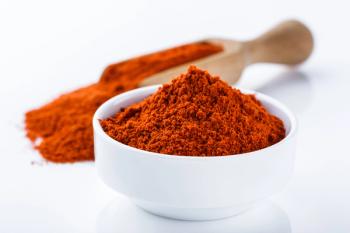
Food authentication is becoming increasingly important. In this article, the editors of Spectroscopy outline the methodology used in a recent study used to analyze paprika.

Food authentication is becoming increasingly important to ensure safety and quality. In the first part of this two part article, the editors of Spectroscopy provide an overview of the paprika industry and a study using Fourier transform near-infrared (FT-NIR) spectroscopy to validate the authenticity of paprika.

SMASH 2024, which will take place at the Hotel Champlain Vermont in Burlington, Vermont, will highlight the latest nuclear magnetic resonance (NMR) methods and spotlight the newest applications in the field.

Researchers at the University of Strasbourg have developed NMR-compatible microfluidic optical cavities for vibrational strong coupling (VSC), enabling new insights into molecular behavior under VSC and advancing the field of polaritonic chemistry.
Top articles published this week include an article on classifying space debris, a report on a new fiber-dispersive Raman spectrometer, and an examination of Fourier transform infrared (FT-IR) microscopy.

A trip to the Lyndon B. Johnson Space Center served as a reminder of the importance of space exploration and the key role spectroscopy plays in this industry.

A recent study led by Xaolin Cao at Yantai University demonstrated a rapid and highly sensitive method using magnetic molecularly imprinted polymers combined with surface-enhanced Raman spectroscopy (MMIPs-SERS) for detecting neonicotinoid pesticides in agricultural products.

A recent study highlights the critical role of Fourier transform infrared spectroscopy (FT-IR) in the qualitative and quantitative analysis of asphalt materials, focusing on its applications in quality control, material identification, and the analysis of modification and aging mechanisms.

In this tutorial, we examine the techniques for preparing samples for transmission analysis using single windows, compression cells, and, finally, epoxy “pucks” and microtomes.

By providing automated tools and guidance, an ECS would aim to streamline the calibration process, improve calibration transfer, enhance operator efficiency, and improve the overall consistency and reliability of analytical results produced using advanced chemometrics and machine earning techniques.

This review highlights very recent advancements in several key spectroscopic methods, including atomic, vibrational, molecular, electronic, and diffraction techniques.