

A recent study conducted in Faisalabad, Pakistan, evaluated the presence of heavy metals in their drinking water using atomic absorption spectroscopy (AAS) and optical emission spectroscopy (AES).
A recent study conducted in Faisalabad, Pakistan, evaluated the presence of heavy metals in their drinking water using atomic absorption spectroscopy (AAS) and optical emission spectroscopy (AES).

An exploration of the battery industry is presented here, with future outlooks described.

A recent study from Carbon highlights the application of Raman spectroscopy in investigating disorder levels in graphite materials.

Here, we spotlight a few recent studies that explored the integration of artificial intelligence (AI) with spectroscopic techniques.

A recent study demonstrated how near-infrared (NIR) spectroscopy can predict adulteration in apricot kernels with high accuracy.

Top articles this week on Spectroscopy covered topics such as Raman spectroscopy in cultural heritage applications, surface-enhanced Raman spectroscopy (SERS) in pesticide detection, and the impact of artificial intelligence on spectroscopy.

A new study examined chromatin configurations using a new method called interferometric scattering correlation spectroscopy (iSCORS).

A recent study examined how spectroscopic techniques are being utilized in food adulteration applications, and what the future holds in this field.

A recent study examined a new pyroelectric receiver that has advanced terahertz (THz) spectroscopy.

A recent study revealed new insights into the effects of ultraviolet (UV) radiation on Martian minerals.

A recent study examines a new Internet of Things (IoT) framework using visible and near-infrared spectroscopy technology to accurately delineate between male and female pigeon eggs.

Here, we take a look at some of the recent studies on Ancient Egyptian art and history, spotlighting how spectroscopic techniques are helping us learn more about the ancient past.

A recent study explores how the agriculture industry could benefit from using a new surface-enhanced Raman spectroscopy (SERS) technique to detect pesticide residue in crops.

A recent study tested the efficacy of Fourier transform infrared (FT-IR) spectroscopy on distinguishing between different types of bacteria.
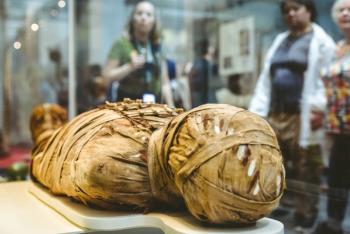
A recent study used fiber optics reflectance spectroscopy (FORS), X-ray fluorescence (XRF) spectroscopy, and Raman spectroscopy to characterize a painted shroud wrapped around a female Egyptian mummy.

A recent study used laser-induced breakdown spectroscopy (LIBS) to analyze artifacts from King Djoser’s Step Pyramid at Saqqara.

A recent study from Cork, Ireland, used x-ray fluorescence to study three Irish chalices to learn more about Irish history and art.

A recent study looked at how the advancement of microfluidic devices has improved environmental monitoring.
In this article, we show a cross-sectional map of a film compared to a depth profile to evaluate the quality of depth profile measurements.
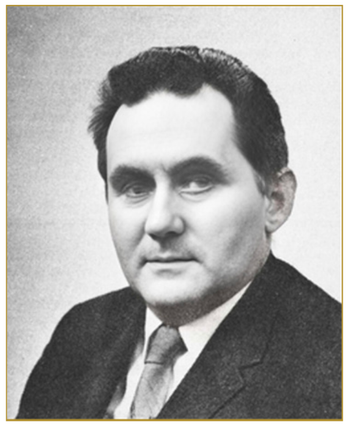
Ellis R. Lippincott is one of the most influential spectroscopists of the past 100 years. He has been a notable research figure in molecular spectra and structure studies using infrared and Raman spectroscopy; in the study of potential energy functions, including hydrogen bonding; and in the invention and study of high pressure spectroscopic studies using the high-pressure diamond anvil cell. He also has applied spectroscopic techniques and analysis to the study of planetary atmospheres, to biochemistry, and to chemical lasers.
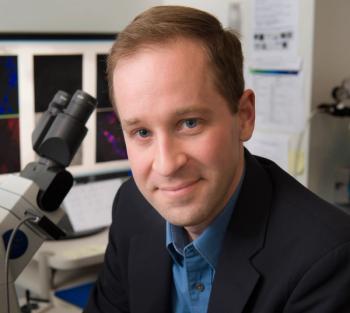
In this, the first of our 2024 SciX Award Winner interviews, Craver Award recipient Conor L. Evans of the Wellman Center for Photomedicine at Massachusetts General Hospital (Charlestown, Massachusetts) discusses his recently published study demonstrating sparse spectral sampling stimulated Raman scattering.

Here, the editors of Spectroscopy highlight a few recent studies that used spectroscopic techniques like Raman and FT-IR in food and beverage analysis.
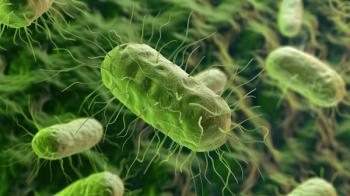
In this study, a glycerol-fed, lab-scale E. coli bioprocess producing representative pharmaceutical compounds was monitored offline with a portable, high-sensitivity Raman spectrometer.
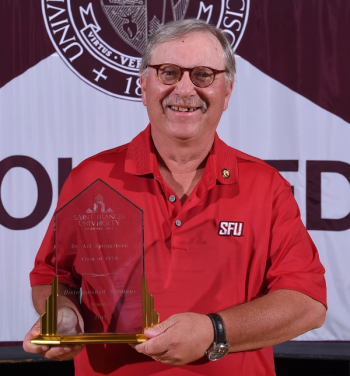
Arthur William Springsteen, a luminary in the field of spectroscopy, died on May 28, 2024. Here, we recap his life and career.

A recent study published in Foods explored using Fourier transform mid-infrared (FT-MIR) spectroscopy combined with multivariate analysis to predict various quality parameters in craft beer.
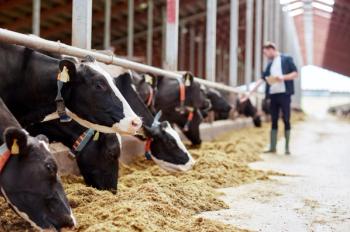
Dmitry Kurouski, an associate professor of biomedical engineering in the department of Biochemistry and Biophysics at Texas A&M University in College Station, Texas, USA, recently spoke to Spectroscopy about Raman spectroscopy’s role in determining crop yield of key food items as the world population continues to increase.
Top articles this week on Spectroscopy covered topics such as Raman spectroscopy in noninvasive lung cancer detection, forensic analysis, and mass spectrometry in pharmaceutical analysis.
A recent study from Japan used Raman scattering spectroscopy to predict the digestibility of rice starch.

A recent study from the Journal of Medicinal Chemistry examined how nuclear magnetic resonance (NMR) spectroscopy is being used in drug discovery.

Superlab Suisse announced the July 2024 opening of a new life sciences research facility in Basel.